Saltar al contenido principal
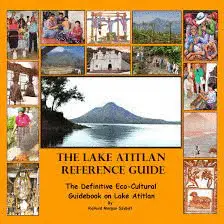
The Lake Atitlan Reference Guide

The Lake Atitlan Reference Guide

The Definitive Eco-Cultural Guidebook

Richard Morgan Szybist

The Lake Atitlan Reference Guide is an eco-cultural guide to the lake identified by Aldous Huxley (Brave New World) as "the most beautiful lake in the world." Atitlan is a volcanic caldera, located at 5,000 ft above sea level in the Mayan highlands of Guatemala.Atitlan means "at the water." It is a fusion of simple Nahuatl words that belies the complexity of the entity it ident...

Editorial:
20Th Cent.
ISBN:
978-0-9648706-3-5
Páginas:
100
Q. 100
IVA incluido
No disponible
Añadir a favoritos Avisar disponibilidad

Sinopsis

The Lake Atitlan Reference Guide is an eco-cultural guide to the lake identified by Aldous Huxley (Brave New World) as "the most beautiful lake in the world." Atitlan is a volcanic caldera, located at 5,000 ft above sea level in the Mayan highlands of Guatemala.

Atitlan means "at the water." It is a fusion of simple Nahuatl words that belies the complexity of the entity it identifies.

Lake Atitlan is both a place and an event in motion. Its life incorporates the visually stunning character of one of nature's most ambitious creations and the extraordinarily diverse cultural character of the human life that the Lake has drawn to its shores.

Atitlan was born violently, long ago, probably before the emergence of man here. Scientists still debate the exact nature of its birth, an event which created a nearly circular depression of 11 miles in diameter, 95 square miles of area, and over 1,000 feet deep. The cause of this huge cavity, a chain of events which began with an immense eruption, produced a unique microenvironment that has been drawing wanderers to the Lake's shores for at least thousands of years. Cultures have clashed to control it. Vagabonds have been absorbed by it, laid down roots, and quit "moving on." Traveling notables have been overwhelmed by its beauty and written about it in the loftiest of terms.

Any effort to empirically order the kaleidoscope of its elements is ultimately challenged by the spiritual and physical immensity of the subject. This work makes no such attempt. What is offered here instead is a summary of the Lake environment in terms of its physical location and nature, its cultural history, and its contemporary political and socioeconomic life. The text is supported by more than 100 quality fotos (most in color) and a variety of other illustrations.

Artículos relacionados

Serpent Tongue

Serpent Tongue

Grossinger, Annie

In 1954, during the height of the Cold War, the CIA carried out a coup to overthrow the first democratically-elected president in Guatemala. In the months leading up to the coup, the CIA Station Chief in Guatemala City was Grossinger's grandfather. Dying long before Grossinger was born, his presence still loomed like a mythological creature throughout much of her childhood. Ser...

Disponible

Q. 490

¿En Dónde Estamos Cuando Hablamos de Arte y Cultura en Guatemala?

¿En Dónde Estamos Cuando Hablamos de Arte y Cultura en Guatemala?

Magda García Von Hoegen

Una camisa de 11 varas¿Qué entendemos por cultura?Un poco de historiaUn recorrido por algunas leyes que nos importan como artistasUna breve explicación sobre el Ministerio de Cultura y DeportesEl sueño de un desarrollo cultural a largo plazoUn vistazo a las políticas culturales, deportivas y recreativasMás allá de nuestras fronteras, un viaje a la región centroamericana y el mu...

Único ejemplar, sujeto
a disponibilidad

Q. 135

El Violín Valsante de Huis. Armadel

El Violín Valsante de Huis. Armadel

Joaquin Orellana

Enmarcada bajo la Colección Memoria Viva de la Editorial Cara Parens, la obra intercala varios estilos narrativos para contar la historia de Huisderio Armadel, un músico excéntrico, injustamente incomprendido, rechazado y condenado por sus coetáneos de la aldea Imbervalt, cuyos modales son reminiscentes a los de la sociedad guatemalteca conservadora. Cartas dirigidas a amantes ...

Disponible

Q. 125

Viaje Al Centro de America - Voyage Au Centre de L'amerique

Viaje Al Centro de America - Voyage Au Centre de L'amerique

Yves Tremorin

Yves Tremorin no pudo resistir a la tentación de volver a "estas tierras brujas" del ombligo de América. El fotógrafo había entendido que éstos eran algunos de los lugares "más prodigiosamente fantásticos del planeta". Como en un poema de Miguel Ángel Asturias la atmósfera se llena de cazadores del aire y el pensamiento se convierte en soplo de colores. ...

Disponible

Q. 295

Lo que Soñé... lo Vivo

Lo que Soñé... lo Vivo

Varios Autores

Los artistas son protagonistas paralelos de una realidad metafísica. Facilitadores, todos, de hechos cuyas repercusiones son difíciles de medir, pero cuya acción redunda en una mejor sociedad.Esta es una comunidad marcada por la diversidad, la creatividad y principalmente, por el don de ver el entorno desde otra perspectiva para replicarlo ad libitum. De este modo, construyen i...

Único ejemplar, sujeto
a disponibilidad

Q. 220

La Marimba Mesoamericana

La Marimba Mesoamericana

Efraín Figueroa Lemus

El origen de la marimba en el continente americano está envuelto en el misterio. Su nombre evoca sonidos primordiales de culturas ancestrales en varios continentes. El fenómeno de la marimba en el Nuevo Mundo ha captado la atención de exploradores, antropólogos etnomusicólogos, poetas y artistas a través del tiempo. Su difusión en toda Mesoamérica ha sido corroborada por numero...

Único ejemplar, sujeto
a disponibilidad

Q. 130

Otros libros del autor

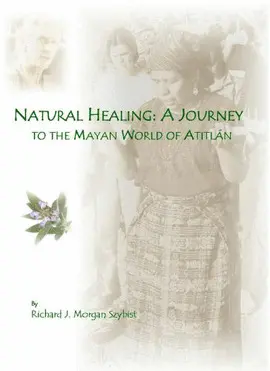
Natural Healing

Natural Healing

Richard Morgan Szybist

This is a book about energy, natural medicine, and the power of the mind/spirit toregulate the human body. The narration follows the author, on his personal odyssey, from the world of chemical cures to Lake Atitlan, a place where people are healed through traditional Mayan means, exploiting the use of natural medicines within the context of traditional beliefs. He includes a de...

Disponible

Q. 100

Otros clientes también compraron

La Pilastra Abalaustrada Serliana en el Reino de Guatemala (1730-1790)

La Pilastra Abalaustrada Serliana en el Reino de Guatemala (1730-1790)

Luis Lujan Muñoz

Estudio monográfico acerca de un tipo de pilastra o estípite que se dio en la arquitectura del Reino de Guatemala entre 1730 y 1790. Fue originalmente utilizado por el arquitecto Diego de Porres (1677-1741) quien llegó a ser Maestro Mayor de Santiago de Guatemala. Se le ha llamado serliana porque proviene de un ejemplo que aparece en la obra "Cinco libros de arquitectura" del a...

Disponible

Q. 95