Saltar al contenido principal
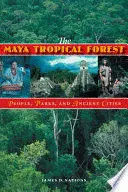
The Maya Tropical Forest

The Maya Tropical Forest

People, Parks, And Ancient Cities

James D. Nations

The Maya Tropical Forest, which occupies the lowlands of southern Mexico, Guatemala, and Belize, is the closest rainforest to the United States and one of the most popular tourist destinations in the Western Hemisphere. It has been home to the Maya peoples for nearly four millennia, starting around 1800 BC. Ancient cities in the rainforest such as Palenque, Yaxchilan, Tikal, an...

Editorial:
University Of Texas Press
Año de edición:
2006
Materia:
Estudios mayas
ISBN:
978-0-292-71318-5
Páginas:
368
Q. 410
IVA incluido
No disponible
Añadir a favoritos Avisar disponibilidad

Sinopsis

The Maya Tropical Forest, which occupies the lowlands of southern Mexico, Guatemala, and Belize, is the closest rainforest to the United States and one of the most popular tourist destinations in the Western Hemisphere. It has been home to the Maya peoples for nearly four millennia, starting around 1800 BC. Ancient cities in the rainforest such as Palenque, Yaxchilan, Tikal, and Caracol draw thousands of tourists and scholars seeking to learn more about the prehistoric Maya. Their contemporary descendants, the modern Maya, utilize the forest's natural resources in village life and international trade, while striving to protect their homeland from deforestation and environmental degradation.

Writing for both visitors and conservationists, James Nations tells the fascinating story of how ancient and modern Maya peoples have used and guarded the rich natural resources of the Maya Tropical Forest. He opens with a natural history that profiles the forest's significant animals and plants. Nations then describes the Maya peoples, biological preserves, and major archaeological sites in Mexico, Guatemala, and Belize. Drawing on more than twenty-five years of conservation work in the Maya Tropical Forest, Nations tells first-hand stories of the creation of national parks and other protected areas to safeguard the region's natural resources and archaeological heritage. He concludes with an expert assessment of the forest's future in which he calls for expanded archaeological tourism to create an ecologically sustainable economic base for the region.

Artículos relacionados

Popol Wuj

Popol Wuj

Anonimo / Rodríguez Guaján, Pakal B Alam (Adaptador)

Popol wuj, libro del Pueblo, Libro del Consejo. Es conocido como Popol wuj. La academia de las Lenguas Mayas de Guatemala, y de la Reforma Educativa, han hecho posible difundir el Popol wuj, como forma correcta. El popol Wuj es uno de los textos más importantes de la literatura maya. Incluye historias y mitología de la creación del mundo. Contiene un conjunto de conceptos, cree...

Disponible

Q. 55

Las Religiones Indígenas de Mesoamérica. Historia, Ritos y Transformaciones

Las Religiones Indígenas de Mesoamérica. Historia, Ritos y Transformaciones

Neurath, Johannes

Este libro ofrece una introducción general a las religiones de Mesoamérica. No persigue un fin enciclopedista, sino demostrar que, aun en la época de la hiperespecialización académica, los estudios mesoamericanos integrales no son imposibles. Un aporte fundamental de esta nueva propuesta es impulsar conceptos que no provienen de la teología y de la historia de las religiones, s...

Disponible

Q. 150

Listening To Ceramics. Understanding The Prehispanic Cultural Development Of The South Coast And Highlands Of Guatemala

Listening To Ceramics. Understanding The Prehispanic Cultural Development Of The South Coast And Highlands Of Guatemala

Marion Popenoe De Hatch

Doctor Marion Popenoe de Hatch is a Guatemalan-American archaeologist who has worked tirelessly to reconstruct an important part of Guatemala's prehispanic history. This book is the culmination of over 45 years of her research at many sites in Guatemala's Highlands and South Coast, particularly Monte Alto, Semetabaj, Tak'alik Ab'aj, and Kaminaljuyu.In addition to publishing ext...

Disponible

Q. 575

Códice de Dresde (Pasta Suave)

Códice de Dresde (Pasta Suave)

Universidad Mesoamericana

CÓDICE DE DRESDE es el séptimo librocon que la Universidad Mesoamericanapromueve el estudio, la comprensión yla valoración del pasado prehispánicomesoamericano y, en especial, de losconocimientos astronómicos, matemáticosy religiosos de los mayas.La Doctora Gabrielle Vail tradujo losglifos e incorporó explicaciones sobrelos cálculos astronómicos, calendáricos ymatemáticos que s...

Único ejemplar, sujeto
a consulta.

Q. 1.035

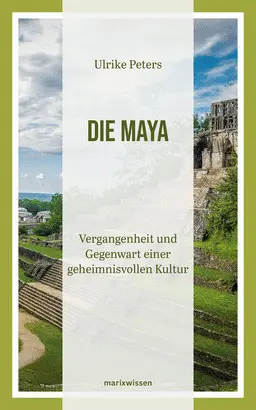
Die Maya: Vergangenheit Und Gegenwart Einer Geheimnisvollen Kultur

Die Maya: Vergangenheit Und Gegenwart Einer Geheimnisvollen Kultur

Ulrike Peters

Die Zivilisation der Maya ist eine der faszinierendsten Hochkulturen der Welt, die den Vergleich mit der Alten Welt nicht scheuen muss. Mit dem am weitesten entwickelten Schrift-, Zahl- und Kalendersystem waren sie die Genies unter den präkolumbianischen Kulturen. Sie kannten bereits die Null, eine Errungenschaft, die im Abendland erst mit dem arabischen Zahlsystem bekannt wurd...

Disponible

Q. 230

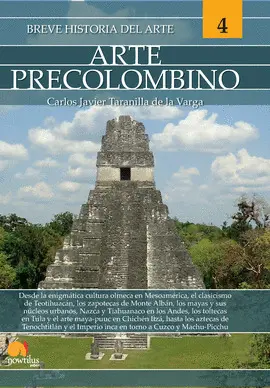
Breve Historia del Arte Precolombino

Breve Historia del Arte Precolombino

Taranilla De La Varga, Carlos Javier

Desde la enigmática cultura olmeca en Mesoamérica, el clasicismo de Teotihuacán, los zapotecas de Monte Albán, los mayas y sus núcleos urbanos, Nazca y Tiahuanaco en los Andes, los toltecas en Tula y el arte maya-puuc en Chichén Itzá, hasta los aztecas de Tenochtitlán y el Imperio inca en torno a Cuzco y Machu-Picchu. Con Breve historia del arte precolombino conocerá el desarro...

Único ejemplar, sujeto
a consulta.

Q. 285