Saltar al contenido principal
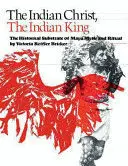
The Indian Christ, The Indian King

The Indian Christ, The Indian King

The Historical Substrate Of Maya Myth And Ritual

Victoria Reifler Bricker

Victoria Bricker shows that "history" sometimes rests on mythological foundations and that "myth" can contain valid historical information. Her book, which is a highly original critique of postconquest historiography about the Maya, challenges major assumptions about the relationship between myth and history implicit in structuralist interpretations. The focus of the book is et...

Editorial:
University Of Texas Press
Año de edición:
1981
Materia:
Estudios mayas
ISBN:
978-0-292-72141-8
Páginas:
382
Q. 560
IVA incluido
No disponible
Añadir a favoritos Avisar disponibilidad

Sinopsis

Victoria Bricker shows that "history" sometimes rests on mythological foundations and that "myth" can contain valid historical information. Her book, which is a highly original critique of postconquest historiography about the Maya, challenges major assumptions about the relationship between myth and history implicit in structuralist interpretations. The focus of the book is ethnic conflict, a theme that pervades Maya folklore and is also well documented historically.

The book begins with the Spanish conquest of the Maya. In chapters on the postconquest history of the Maya, five ethnic conflicts are treated in depth: the Cancuc revolt of 1712, the Quisteil uprising of 1761, the Totonicapan rebellion of 1820, the Caste War of Yucatan (1847-1901), and the Chamulan uprising in 1869. Analytical chapters consider the relationship between historical events and modern folklore about ethnic conflict. Bricker demonstrates that myths and rituals emphasize structure at the expense of temporal and geographical provenience, treating events separated by centuries or thousands of miles as equivalent and interchangeable.

An unexpected result of Bricker's research is the finding that many seemingly aboriginal elements in Maya folklore are actually of postconquest origin, and she shows that it is possible to determine precisely when and, more important, why they become part of myth and ritual. Furthermore, she finds that the patterning of the accretion of events in folklore over time provides clues to the function, or meaning, of myth and ritual for the Maya.

Bricker has made use of many unpublished documents in Spanish, English, and Maya, as well as standard synthetic historical works. The appendices contain extensive samples of the oral traditions that are explained by her analysis.

Artículos relacionados

Treasures Of The Aztecs, Inca & Other Mesoamericans

Treasures Of The Aztecs, Inca & Other Mesoamericans

Andrew Whitfield / Richard Mccoll

Mesoamerica experienced a significant flourishing in the years beginning with Early Classic period, through to the Maya civilisation and culminating in the eventual fall of the Aztec civilisation in the 16th Century CE. Through these treasures of fine art and architecture we can uncover the mysteries of the myths, gods and religions of the time and appreciate the true cultural ...

Disponible

Q. 250

El Códice Mendoza

El Códice Mendoza

Baltazar Brito Guadarrama

Aproximación histórica del Códice Mendocino a partir de la historia de su materialidad, sus ediciones y los diferentes estudios que se han hecho sobre el documento, así como una descripción detallada de cada uno de los folios que lo conforman. La obra incluye un análisis de las láminas dedicadas a la importancia política, histórica y militar que tuvo el hueyaltépetl mexica y de...

Único ejemplar, sujeto
a disponibilidad

Q. 140

Un Palacio en la Ciudad de los Dioses, Teotihuacán

Un Palacio en la Ciudad de los Dioses, Teotihuacán

Laurette Sejourne

Teotihuacan sigue siendo noticia. No sólo por los descubrimientos que se hayan realizado en la Pirámide de la Luna, sino por el reto que representa a los investigadores de nuestro pasado. Un palacio en la ciudad de los dioses: Teotihuacan significa una nueva y profunda mirada sobre el sentido ético y estético que animó a esa ciudad. Además reconstruye su espacio simbólico y men...

Disponible

Q. 185

Madre Tierra

Madre Tierra

Crisóstomo, Luis Javier

"La humanidad debe alfabetizarse en lectura y buena escucha acerca del lenguaje de la naturaleza puesto que es comu´n en la cultura de pueblos originarios escuchar dia´logos entre persona, entre personas y plantas y entre personaes y animales que viven en el entorno ...

Único ejemplar, sujeto
a disponibilidad

Q. 135

The Comitán Valley

The Comitán Valley

Caitlin C. Earley

"The Comitán Valley sits in what is now the state of Chiapas, Mexico, but a thousand years ago it was the western fringe of the Maya empire. The art in Comitán looks different from the art found in the nearest Maya capitals like Palenque and Yaxchilan, but also incorporates essential Maya techniques and ideas. For many years, those who bothered to study the art of Comitán, part...

Único ejemplar, sujeto
a disponibilidad

Q. 980

Los Mayas y Su Astronomia

Los Mayas y Su Astronomia

Polo Cossich, Carlos

1. Los mayas en Mesoamérica, contexto y períodos--2. Observaciones astronómicas de los mayas--3. Observaciones solares mayas--4. Arqueoastronomía maya--5. Crítica de las observaciones y orientaciones mayistas ...

Disponible

Q. 280