0
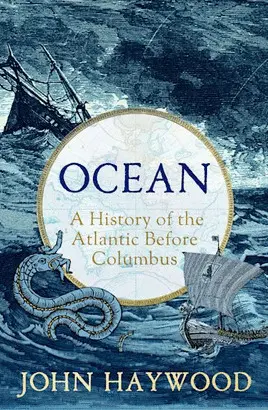
OCEAN

OCEAN

A HISTORY OF THE ATLANTIC BEFORE COLUMBUS

JOHN HAYWOOD

Q. 320
IVA incluido
Disponible
Editorial:
HEAD OF ZEUS
Año de edición:
2024
Materia:
Historia y Mitología
ISBN:
978-1-80110-990-1
Páginas:
432
Encuadernación:
CARTONÉ
Q. 320
IVA incluido
Disponible
Añadir a favoritos

Ocean is an ambitious history of the pre-Columbian Atlantic Ocean, a story that begins with the formation of the mid-Atlantic ridge some 200 million years ago and ends with the Castilian conquest of the Canary Islands in the fifteenth century, which provided a template for the methods used by the Spanish in their colonisation of the New World.John Haywood argues that the perception that Atlantic history begins with the first voyage of the celebrated Genoese navigator is a mistaken one, and that the seafaring and shipbuilding skills that enabled European global exploration and expansion did not arrive fully formed in the fifteenth century, but were learned over centuries and millennia in the Atlantic and its marginal seas. The pre-Columbian history of the Atlantic is the story of how Europeans learned to master the oceans. It is, therefore, key to understanding why it was Europeans, and not any of the world's other seafaring peoples, who 'discovered' the world.Informed by the author's extensive travels in and around the Atlantic Ocean, crossing Newfoundland's Grand Banks, the Sea of Darkness and the weed-covered Sargasso Sea to make landfall at locations as diverse as Vinland, Greenland, the Faroes and the Cape Verde Islands, and populated by a heterogeneous and multi-ethnic cast of seafarers, fishermen, monks, merchants and dreamers, Ocean is an in-depth history of a neglected subject, fusing geology, geography, mythology, cosmology, developing maritime technologies and the early history of exploration to narrate an enthralling and intriguing story - one which lies at the very heart of Europe's modern history and its relationship with the rest of the world. A history on a grand scale, Ocean offers the reader a feast of historical storytelling.

Artículos relacionados

  • FALSIFICAR LA HISTORIA
    FALSIFICAR LA HISTORIA
    JUAN MIGUEL ZUNZUNEGUI
    Nos gustan las mentiras. Tenemos la facultad de mentir, la capacidad de construir mentiras y la maravillosa inclinación de creer en ellas. Ese es el inicio y la premisa de Falsificar la historia. Un recorrido de miles de años por la historia, la filosofía y la religión; una aventura a través de la psicología individual y la de las masas, un viaje que no deja de moverse entre ...
    Único ejemplar, sujeto
    a disponibilidad

    Q. 110

  • ÉRASE UNA VEZ TENOCHTITLÁN
    ÉRASE UNA VEZ TENOCHTITLÁN
    ROSAS, ALEJANDRO
    Aunque nos separan siete siglos, mexicas y chilangos compartimos un pasado común escrito sobre un lugar donde alguna vez hubo un lago. La historia de Tenochtitlán es el preludio de la historia de la Ciudad de México y ha llegado la hora de mirarla a través de sus dioses y tlatoanis. Este es un relato al más puro estilo de Game of Thrones, pero mexica y verídico, en el que, mie...
    Disponible

    Q. 190

  • RUSIA CONTRA EL MUNDO
    RUSIA CONTRA EL MUNDO
    MARC MARGINEDAS
    Más de dos décadas de terrorismo de Estado, secuestros, mafia y propagandaTras la caída de la Unión Soviética en 1991, Rusia era un país empobrecido y caótico que parecía destinado a la irrelevancia internacional. Pero bajo el liderazgo de Vladímir Putin, ha recuperado una influencia que desafía el orden global. ¿Qué sostiene este «imperio» que con los años ha derivado hacia el...
    Disponible

    Q. 170

  • AL DIA SIGUIENTE DE LA CONQUISTA
    AL DIA SIGUIENTE DE LA CONQUISTA
    JUAN MIGUEL ZUNZUNEGUI
    Luego del éxito rotundo de El regreso de Quetzalcóatl y de Hernán Cortés, J. M. Zunzunegui regresa con Al día siguiente de la conquista, un libro que te desafiará a cambiar la narrativa aprendida en torno a la conquista. ¿Cómo sería México sin el encuentro de estos dos mundos? Un libro revelador y apasionante que desentraña las verdades ocultas de la historia detrás de la con...
    Agotado

    Q. 0

  • EL PACIENTE A
    EL PACIENTE A
    ERIC FRATTINI
    Conociendo las importantes decisiones que Hitler estaba tomando y que afectaban a millones de personas, cabe preguntarse cómo se vio afectada su conducta por los numerosos medicamentos que tomaba, desde estimulantes hasta sedantes, desde hormonas hasta multivitaminas, desde esteroides hasta belladona y cocaína.Hace medio siglo Joachim Fest publicó una de las más importantes bio...
    Disponible

    Q. 220

  • TIEMPOS DIFÍCILES
    TIEMPOS DIFÍCILES
    CANAL, JORDI
    Una valiosísima herramienta para comprender los importantes y decisivos cambios vividos en Europa occidental y América a finales del siglo XIX. Coordinado por el historiador Jordi Canal, este volumen desgrana cómo a finales del siglo XIX se definió la Euroamérica que hoy conocemos. Hacia el final del Ochocientos los países del oeste de Europa y del sur del continente americano...
    Disponible

    Q. 350