0
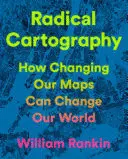
RADICAL CARTOGRAPHY

RADICAL CARTOGRAPHY

HOW CHANGING OUR MAPS CAN CHANGE OUR WORLD

WILLIAM RANKIN

Q. 260
IVA incluido
Único ejemplar, sujeto
a disponibilidad
Editorial:
DUTTON
Año de edición:
2025
ISBN:
978-0-525-55979-5
Páginas:
304
Q. 260
IVA incluido
Único ejemplar, sujeto
a disponibilidad
Añadir a favoritos

"This is it: the full download from a true genius of cartography. Radical Cartography will make you see maps, and, indeed, your place on the planet, with fresh eyes."—Daniel Immerwahr, author of How to Hide an Empire.

A stunning, thought-provoking exploration of how maps shape our understanding of the world—featuring over 150 full-color maps in a gorgeous package

Maps are ubiquitous in contemporary life??—not just for navigation, but for making sense of our society, our environment, and even ourselves. In an instant, huge datasets can be plotted on command and we can explore faraway places in exacting detail. Yet the new ease and speed of data mapping can often lead to the same results as ever: over-simplified maps are used as tools for top-down control.

Cartographer and historian William Rankin argues that it's time to reimagine what a map can be and how it can be used. Maps are not neutral visualizations of facts. They are innately political, defining how the world is divided, what becomes visible and what stays hidden, and whose voices are heard. What matters isn't the topics or the data, but how maps make arguments about how the world works. And the consequences are enormous. A map's visual argument can change how cities are designed and how rivers flow, how wars are fought and how land claims are settled, how children learn about race and how colonialism becomes a habit of mind. Maps don't just show us information—they help construct our world.

Brimming with vibrant maps, including many "radical" maps created by Rankin himself and by other cutting-edge mapmakers, Radical Cartography exposes the consequences of how maps represent boundaries, layers, people, projections, color, scale, and time. Challenging the map as a tool of the status quo, Rankin empowers readers to embrace three unexpected values for the future of cartography: uncertainty, multiplicity, and subjectivity. Changing the tools—changing the maps—can change the questions we ask, the answers we accept, and the world we build.

Artículos relacionados

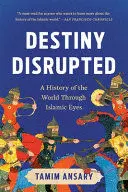
  • DESTINY DISRUPTED
    DESTINY DISRUPTED
    ANSARY, TAMIM
    "A must read for anyone who wants to learn more about the history of the Islamic world" (San Francisco Chronicle) We in the West share a common narrative of world history. But our story largely omits a whole civilization whose citizens shared an entirely different narrative for a thousand years as the Islamic world saw it, from the time of Mohammed through the fall of the Ot...
    Disponible

    Q. 230

  • ON ANTISEMITISM
    ON ANTISEMITISM
    MARK MAZOWER
    From one of our most eminent historians, a penetrating and timely examination of how the meaning of antisemitism has mutated, with unexpected and troubling consequencesWhat are we talking about when we talk about antisemitism? For most of its history it was understood to be a menace from the political Right, the province of ethno-nativists who built on Christendom's long-standi...
    Disponible

    Q. 270

  • THE DEVIL REACHED TOWARD THE SKY
    THE DEVIL REACHED TOWARD THE SKY
    GARRETT GRAFF
    On the eightieth anniversary of the Hiroshima and Nagasaki bombings, the Pulitzer Prize finalist whose work is "oral history at its finest" (Pittsburgh Post-Gazette) delivers an epic narrative of the atomic bomb's creation and deployment, woven from the voices of hundreds of scientists, generals, soldiers, and civilians.The building of the atomic bomb is the most audacious unde...
    Disponible

    Q. 325

  • THE DECLINE AND FALL OF THE HUMAN EMPIRE
    THE DECLINE AND FALL OF THE HUMAN EMPIRE
    GEE, HENRY
    Chosen by The Times as a 'Book to Look Out For' in 2025 'Put this at the head of your reading lists immediately people. Before it's too late' - Eric Idle 'Exhilarating . . . witty, measured and enlightening . . . Henry Gee is a sage' - Steve Brusatte, author of The Rise and Fall of the Dinosaurs From the winner of the 2022 Royal Society Science Book Prize, a thrilling and th...
    Disponible

    Q. 260

  • A HISTORY OF THE WORLD IN SIX PLAGUES
    A HISTORY OF THE WORLD IN SIX PLAGUES
    EDNA BONHOMME
    A deeply reported, insightful, and literary account of humankind's battles with epidemic disease, and their outsized role in deepening inequality along racial, ethnic, class, and gender lines—in the vein of Medical Apartheid and Killing the Black Body.Epidemic diseases enter the world by chance, but they become catastrophic by human design. With clear-eyed research and lush pr...
    Disponible

    Q. 310

  • MEDIEVAL CATS
    MEDIEVAL CATS
    CATHERINE NAPPINGTON
    A hilarious celebration of cats in artwork from medieval times.Look what the cat dragged in from the Middle Ages—a curious compendium of cats unlike any you've ever lapped up before.For more than a millennium, a myriad of medieval manuscripts and artworks painted a picture of cats as playful and curious but also lazy, selfish, and vicious. Today, these masterpieces live on, shi...
    Único ejemplar, sujeto
    a disponibilidad

    Q. 160

Otros libros del autor

  • NEWTON PARA PRINCIPIANTES
    NEWTON PARA PRINCIPIANTES
    WILLIAM RANKIN
    El arcoiris, la Luna, el trompo, el cometa, las mareas de los océanos... la caída de la manzana. Todo pertenece a uno sólo y un único universo. Isaac Newton, quien descubre sus secretos e interconexiones, uno de los más influyentes científicos de todos los tiempos, aún permanece como una figura misteriosa. Autodidacta, herético secreto, un místico, un alquimista, un genio...Esc...
    No disponible

    Q. 100