Saltar al contenido principal
More

More

The 10,000-Year Rise Of The World Economy

Philip Coggan

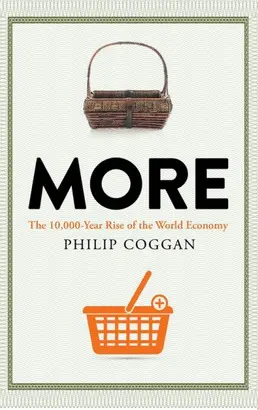
Where did all this stuff come from? There are seventeen ingredients in a typical tube of toothpaste, from titanium dioxide to xanthum gum, and that's not counting the tube. Everything had to come from somewhere and someone had to bring it all together. The humblest household product reveals a web of enterprise that stretches around the globe. More is the story of how we spun th...

Editorial:
Profile Books
Año de edición:
2020
ISBN:
978-1-78816-385-9
Páginas:
466
Q. 200
IVA incluido
No disponible
Añadir a favoritos Avisar disponibilidad

Sinopsis

Where did all this stuff come from? There are seventeen ingredients in a typical tube of toothpaste, from titanium dioxide to xanthum gum, and that's not counting the tube. Everything had to come from somewhere and someone had to bring it all together. The humblest household product reveals a web of enterprise that stretches around the globe. More is the story of how we spun that web. It begins with the earliest glimmerings of long-distance trade - obsidian blades that made their way from what is now Turkey to the Iran-Iraq border 7,000 years before Christ - and ends with the current Sino-American trade war. On such a grand scale, quirks of historical perspective leap out: futures contracts and commercial branding are among the many seemingly modern components of the global economy that have existed since ancient times. Yet it was only in the eighteenth century that a cascade of innovations began to drive up prosperity in a lasting way around the world. To piece this fascinating saga together, Philip Coggan takes the reader inside medieval cottages and hi-tech hydroponic farms, prehistoric Chinese burial mounds and modern central banks. At every step of our journey, he finds that it was connections between people that created our wealth. This gradual expansion of the human network brought us more of what we wanted, more of what we needed and more of what we never imagined. Will the same openness continue to serve us in the twenty-first century?

Artículos relacionados

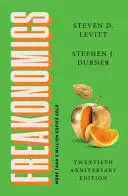
Freakonomics Twentieth Anniversary Edition

Freakonomics Twentieth Anniversary Edition

Steven D. Levitt / Stephen J. Dubner

The legendary bestseller that made millions look at the world in a radically different way returns in a beautiful 20th anniversary edition featuring a new foreword Which is more dangerous: a gun or a swimming pool? Why do drug dealers still live with their moms? What do real estate agents and the KKK have in common? These may not sound like typical questions for an economist to...

Único ejemplar, sujeto
a consulta.

Q. 210

Slow Down Or Die

Slow Down Or Die

Timothée Parrique

"One of the most deeply ingrained beliefs of our age is that perpetual economic growth is the solution to most, if not all, of society's problems. In Slow Down or Die, French economist Timothée Parrique brilliantly challenges this myth, demonstrating how producing more won't solve climate change, poverty, or inequality. In fact, our obsession with growth is accelerating social ...

Disponible

Q. 230

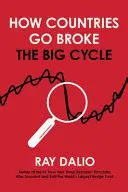
How Countries Go Broke

How Countries Go Broke

Dalio, Ray

An urgent warning about the American economy from Ray Dalio, the #1 New York Times bestselling author of Principles. Do big government debts threaten our collective well-being? Are there limits to debt growth? Can a big, important reserve currency country like the United States really go broke—and what would that look like? For decades, politicians, policymakers, and investors ...

Disponible

Q. 360

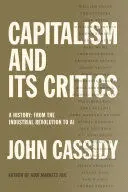
Capitalism And Its Critics

Capitalism And Its Critics

John Cassidy

A Financial Times Most Anticipated Book of 2025A Publishers Weekly Top 10 Book of 2025A sweeping, dramatic history of capitalism as seen through the eyes of its fiercest critics. Capitalism has long been understood as a driving force behind the biggest political, economic, and social dislocations of our time. But in this sweeping, kaleidoscopic history of the economic system th...

Disponible

Q. 410

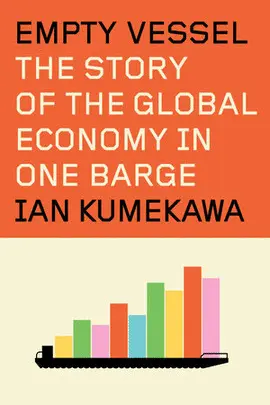
Empty Vessel

Empty Vessel

Ian Kumekawa

The rise of globalization and financialization as seen from a barge—one Swedish barge, to be exact, built in 1979What do a barracks for British troops in the Falklands War, a floating jail off the Bronx, and temporary housing for VW factory workers in Germany have in common? The Balder Scapa: a single barge that served all three roles. Though the name would eventually change to...

Disponible

Q. 200

Hubris Maximus

Hubris Maximus

Faiz Siddiqui

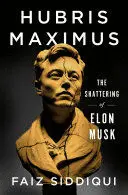
The rise, fall, and revival of the Caesar of Silicon Valley. Elon Musk has cast himself as the savior of humanity, an altruistic force whose fortune is tied to noble pursuits from halting our dependence on fossil fuels to colonizing Mars. Once frequently heralded as a modern-day Edison, Musk has taken up a new place in the public consciousness with his growing desire to disrupt...

Disponible

Q. 290

Otros libros del autor

Surviving The Daily Grind

Surviving The Daily Grind

Philip Coggan

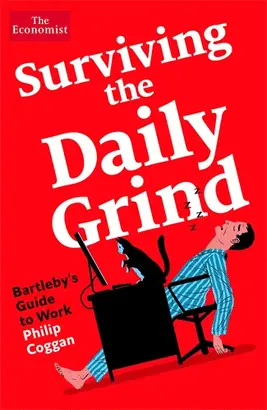
"We spend a lot of our time at work and would be depressed with nothing to do. But when it gets to Monday, many of us are already longing for the weekend and the prospect of escape. How did work become so tedious and stressful? And is there anything we can do to make it better? Based on his popular Economist Bartleby column, Philip Coggan rewrites the rules of work to help us s...

Disponible

Q. 150

Economics: The Economist Guide (Paperback)

Economics: The Economist Guide (Paperback)

Philip Coggan

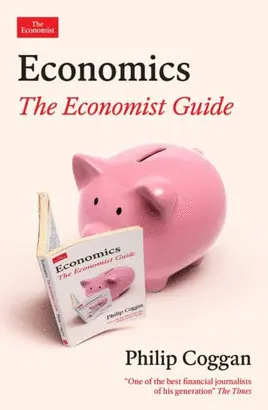
The definitive Economist guide to the world of economicsFrom its humble beginnings in Ancient Greece to today's mammoth global system, economics is all around us.Getting to grips with what it means is crucial to understanding how the world works: it's never been more important to know your macro from your micro and your fiscal from your monetary policy.In this invaluable guide,...

Disponible

Q. 160

More

More

Philip Coggan

Where did all this stuff come from? There are seventeen ingredients in a typical tube of toothpaste, from titanium dioxide to xanthum gum, and that's not counting the tube. Everything had to come from somewhere and someone had to bring it all together. The humblest household product reveals a web of enterprise that stretches around the globe. More is the story of how we spun th...

No disponible

Q. 290

Paper Promises: Debt, Money, And The New World Order

Paper Promises: Debt, Money, And The New World Order

Philip Coggan

For the past forty years western economies have splurged on debt. Now, as the reality dawns that many debts cannot be repaid, we find ourselves again in crisis. But the oncoming defaults have a time-worn place in our economic history. As with the crises in the 1930s and 1970s, governments will fall, currencies will lose their value, and new systems will emerge. Just as Britain ...

No disponible

Q. 275