Saltar al contenido principal
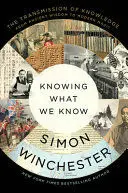
Knowing What We Know

Knowing What We Know

The Transmission Of Knowledge: From Ancient Wisdom To Modern Magic

Simon Winchester

"A delightful compendium of the kind of facts you immediately want to share with anyone you encounter . . . . Simon Winchester has firmly earned his place in history . . . as a promulgator of knowledge of every variety, perhaps the last of the famous explorers who crisscrossed the now-vanished British Empire and reported what they found to an astonished world." -- New York Time...

Editorial:
Harper
Año de edición:
2023
ISBN:
978-0-06-314288-6
Páginas:
432
Q. 360
IVA incluido
Único ejemplar, sujeto
a disponibilidad
Añadir a favoritos Avisar disponibilidad

Sinopsis

"A delightful compendium of the kind of facts you immediately want to share with anyone you encounter . . . . Simon Winchester has firmly earned his place in history . . . as a promulgator of knowledge of every variety, perhaps the last of the famous explorers who crisscrossed the now-vanished British Empire and reported what they found to an astonished world." -- New York Times

From the creation of the first encyclopedia to Wikipedia, from ancient museums to modern kindergarten classes--this is award winning writer Simon Winchester's brilliant and all-encompassing look at how humans acquire, retain, and pass on information and data, and how technology continues to change our lives and our minds.

With the advent of the internet, any topic we want to know about is instantly available with the touch of a smartphone button. With so much knowledge at our fingertips, what is there left for our brains to do? At a time when we seem to be stripping all value from the idea of knowing things--no need for math, no need for map-reading, no need for memorization--are we risking our ability to think? As we empty our minds, will we one day be incapable of thoughtfulness?

Addressing these questions, Simon Winchester explores how humans have attained, stored, and disseminated knowledge. Examining such disciplines as education, journalism, encyclopedia creation, museum curation, photography, and broadcasting, he looks at a whole range of knowledge diffusion--from the cuneiform writings of Babylon to the machine-made genius of artificial intelligence, by way of Gutenberg, Google, and Wikipedia to the huge Victorian assemblage of the Mundanaeum, the collection of everything ever known, currently stored in a damp basement in northern Belgium.

Studded with strange and fascinating details, Knowing What We Know is a deep dive into learning and the human mind. Throughout this fascinating tour, Winchester forces us to ponder what rational humans are becoming. What good is all this knowledge if it leads to lack of thought? What is information without wisdom? Does Rene Descartes's Cogito, ergo sum--"I think therefore I am," the foundation for human knowledge widely accepted since the Enlightenment--still hold?

And what will the world be like if no one in it is wise?

Artículos relacionados

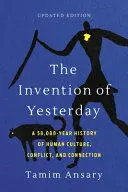
The Invention Of Yesterday

The Invention Of Yesterday

Ansary, Tamim

In this "terrific" (San Francisco Chronicle) book, an award-winning author tells the story of how humans invented history, from the Stone Age to the Virtual Age Traveling across millennia and cultures, The Invention of Yesterday argues that world history is a narrative we're constantly inventing. Fifty thousand years ago, we roamed the world as countless autonomous bands of...

Disponible

Q. 235

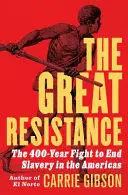
The Great Resistance

The Great Resistance

Carrie Gibson

For more than four centuries, enslaved people across the Americas, from the United States and the Caribbean to Brazil, fought any way they could to gain their freedom. For the first time, their dramatic stories are gathered in one sweeping narrative that offers a message of inspiration in our own time. "Among the emancipators are the millions whose stories will never be known. ...

Disponible

Q. 330

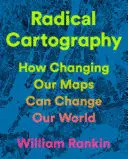
Radical Cartography

Radical Cartography

William Rankin

"This is it: the full download from a true genius of cartography. Radical Cartography will make you see maps, and, indeed, your place on the planet, with fresh eyes."—Daniel Immerwahr, author of How to Hide an Empire. A stunning, thought-provoking exploration of how maps shape our understanding of the world—featuring over 150 full-color maps in a gorgeous packageMaps are ubiqui...

Único ejemplar, sujeto
a disponibilidad

Q. 260

Destiny Disrupted

Destiny Disrupted

Ansary, Tamim

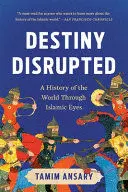
"A must read for anyone who wants to learn more about the history of the Islamic world" (San Francisco Chronicle) We in the West share a common narrative of world history. But our story largely omits a whole civilization whose citizens shared an entirely different narrative for a thousand years as the Islamic world saw it, from the time of Mohammed through the fall of the Ot...

Disponible

Q. 230

On Antisemitism

On Antisemitism

Mark Mazower

From one of our most eminent historians, a penetrating and timely examination of how the meaning of antisemitism has mutated, with unexpected and troubling consequencesWhat are we talking about when we talk about antisemitism? For most of its history it was understood to be a menace from the political Right, the province of ethno-nativists who built on Christendom's long-standi...

Disponible

Q. 270

History Matters

History Matters

David Mccullough

In this posthumous collection of thought-provoking essays—many never published before—Pulitzer Prize-winning historian and bestselling author David McCullough affirms the value of history, how we can be guided by its lessons, and the enduring legacy of American ideals.History Matters brings together selected essays by beloved historian David McCullough, some published here for ...

Disponible

Q. 270