Saltar al contenido principal
Know This

Know This

John Brockman

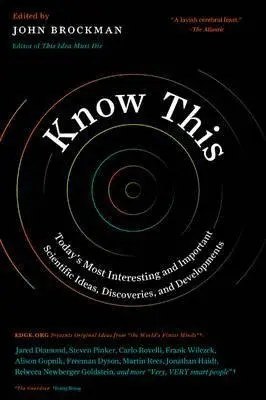
Today's most visionary thinkers reveal the cutting-edge scientific ideas and breakthroughs you must understand. Scientific developments radically change and enlighten our understanding of the world -- whether it's advances in technology and medical research or the latest revelations of neuroscience, psychology, physics, economics, anthropology, climatology, or genetics. And yet...

Editorial:
Harper
Año de edición:
2017
Materia:
Ciencia - STEM
ISBN:
978-0-06-256206-7
Encuadernación:
OTROS
Q. 160
IVA incluido
No disponible
Añadir a favoritos Avisar disponibilidad

Sinopsis

Today's most visionary thinkers reveal the cutting-edge scientific ideas and breakthroughs you must understand. Scientific developments radically change and enlighten our understanding of the world -- whether it's advances in technology and medical research or the latest revelations of neuroscience, psychology, physics, economics, anthropology, climatology, or genetics. And yet amid the flood of information today, it's often difficult to recognize the truly revolutionary ideas that will have lasting impact. In the spirit of identifying the most significant new theories and discoveries, John Brockman, publisher of Edge.org ("The world's smartest website" -- The Guardian), asked 198 of the finest minds What do you consider the most interesting recent scientific news? What makes it important? Pulitzer Prize-winning author of Guns, Germs, and Steel Jared Diamond on the best way to understand complex problems * author of Seven Brief Lessons on Physics Carlo Rovelli on the mystery of black holes * Harvard psychologist Steven Pinker on the quantification of human progress * TED Talks curator Chris J. Anderson on the growth of the global brain * Harvard cosmologist Lisa Randall on the true measure of breakthrough discoveries * Nobel Prize-winning physicist Frank Wilczek on why the twenty-first century will be shaped by our mastery of the laws of matter * philosopher Rebecca Newberger Goldstein on the underestimation of female genius * music legend Peter Gabriel on tearing down the barriers between imagination and reality * Princeton physicist Freeman Dyson on the surprising ability of small (and cheap) upstarts to compete with billion-dollar projects. Plus Nobel laureate John C. Mather, Sun Microsystems cofounder Bill Joy, Wired founding editor Kevin Kelly, psychologist Alison Gopnik, Genome author Matt Ridley, Harvard geneticist George Church, Why Does the World Exist? author Jim Holt, anthropologist Helen Fisher, and more.

Artículos relacionados

Profecia

Profecia

Véliz, Carissa

Un ensayo para reflexionar sobre los peligros de los nuevos oráculos que dominan nuestra era. «De los oráculos y horóscopos a los algoritmos, de los dados a los datos: cómo intentamos predecir el futuro y los riesgos de la seguridad que anhelamos. Carissa Véliz lo explica con una inteligencia abrumadora y un humor irónico que desnuda a los emperadores.» Irene Vallejo El lugar m...

Disponible

Q. 240

Muro de la Ignorancia, el

Muro de la Ignorancia, el

Yoro, Takeshi

6 millones de lectores. Uno de los pensadores más influyentes de Japón nos explica cómo procesamos la realidad. Un imprescindible y polémico ensayo sobre el funcionamiento del cerebro en la sociedad del individuo. A menudo creemos que podemos entender el mundo que hay a nuestro alrededor: lo que vemos, lo que oímos, lo que otros nos cuentan o lo que la experiencia nos ha enseña...

Disponible

Q. 130

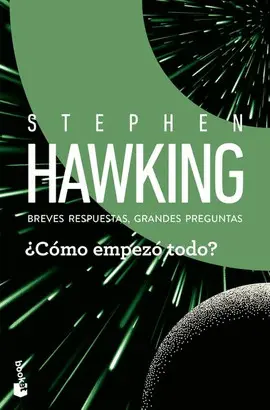
¿Cómo Empezó Todo?

¿Cómo Empezó Todo?

Stephen Hawking

Las grandes preguntas del universo respondidas brevemente por Stephen Hawking, una de las mentes más brillantes de nuestro tiempo.Breves respuestas a las grandes preguntas de Stephen Hawking: ¿Cómo empezó todo?, ¿Qué hay dentro de un agujero negro?, ¿Sobreviviremos en la Tierra?,¿Nos sobrepasará la inteligencia artificial? ¿Cómo empezó tod...

Disponible

Q. 80

La Vida Secreta de los Dinosaurios

La Vida Secreta de los Dinosaurios

Hone, David

Lo que Jurassic Park no te contó: la ciencia real detrás del comportamiento de los dinosaurios. ¿Cómo cazaban realmente los grandes depredadores? ¿Cómo se cortejaban, combatían o criaban a sus crías? Durante décadas, los dinosaurios fueron poco más que esqueletos: formas sin comportamiento ni vida interior, vestigios de un mundo perdido hace más de sesenta y cinco millones de...

Disponible

Q. 275

¿Qué Hay dentro de un Agujero Negro?

¿Qué Hay dentro de un Agujero Negro?

Hawking, Stephen

Las grandes preguntas del universo respondidas brevemente por Stephen Hawking, una de las mentes más brillantes de nuestro tiempo.Tras su éxito en el Reino Unido, llegan a España cuatro volúmenes que reúnen los capítulos esenciales del famoso libro Breves respuestas a las grandes preguntas de Stephen Hawking:¿Cómo empezó todo?, ¿Qué hay dentro de un agujero negro?, ¿Sobrevivire...

Disponible

Q. 80

Nevaban Mariposas

Nevaban Mariposas

Darwin, Charles

Viajamos a La Patagonia a bordo del Beagle. La Marina Real envió al HMS Beagle y a un naturalista experto a los confines del planeta con el objetivo de descubrir... cosas. No les importaba demasiado qué: mejores cartas náuticas, frascos llenos de especímenes, la abolición del Génesis; con tal de que mantuviera ocupados a los oficiales y a la tripulación. Lo que vieron durante l...

Disponible

Q. 220