Saltar al contenido principal
Extinction

Extinction

Douglas H. Erwin

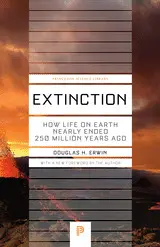
Some 250 million years ago, the earth suffered the greatest biological crisis in its history. Around 95 percent of all living species died out—a global catastrophe far greater than the dinosaurs' demise 185 million years later. How this happened remains a mystery. But there are many competing theories. Some blame huge volcanic eruptions that covered an area as large as the cont...

Editorial:
Princeton
Año de edición:
2015
Materia:
Ciencia - STEM
ISBN:
978-0-691-16565-3
Páginas:
320
Encuadernación:
Otros
Colección:
PRINCETON CLASSICS
Q. 200
IVA incluido
No disponible
Añadir a favoritos Avisar disponibilidad

Sinopsis

Some 250 million years ago, the earth suffered the greatest biological crisis in its history. Around 95 percent of all living species died out—a global catastrophe far greater than the dinosaurs' demise 185 million years later. How this happened remains a mystery. But there are many competing theories. Some blame huge volcanic eruptions that covered an area as large as the continental United States; others argue for sudden changes in ocean levels and chemistry, including burps of methane gas; and still others cite the impact of an extraterrestrial object, similar to what caused the dinosaurs' extinction.

Extinction is a paleontological mystery story. Here, the world's foremost authority on the subject provides a fascinating overview of the evidence for and against a whole host of hypotheses concerning this cataclysmic event that unfolded at the end of the Permian.

After setting the scene, Erwin introduces the suite of possible perpetrators and the types of evidence paleontologists seek. He then unveils the actual evidence—moving from China, where much of the best evidence is found; to a look at extinction in the oceans; to the extraordinary fossil animals of the Karoo Desert of South Africa. Erwin reviews the evidence for each of the hypotheses before presenting his own view of what happened.

Although full recovery took tens of millions of years, this most massive of mass extinctions was a powerful creative force, setting the stage for the development of the world as we know it today.

In a new preface, Douglas Erwin assesses developments in the field since the book's initial publication.

Artículos relacionados

El Pulgar del Violinista

El Pulgar del Violinista

Kean, Sam

Del autor del best seller internacional La cuchara menguante, este libro nos descubre los secretos que esconde nuestro código genético, y cómo su inminente decodificación está a punto de resolver cuestiones que llevamos siglos planteándonos.Paganini fue un violinista con un don tan grande que toda su vida tuvo que despejar los rumores de que había vendido su alma al diablo. Sin...

Disponible

Q. 220

El Viaje Cósmico de Merlín

El Viaje Cósmico de Merlín

Degrasse Tyson, Neil

El autor del bestseller Astrofísica para gente con prisa lleva ahora a los lectores a un entretenido y edificante recorrido por el universo.En este maravilloso viaje por el cosmos, Neil deGrasse Tyson, a través de un personaje legendario como el mago Merlín, responde a preguntas populares que le han formulado tanto niños como adultos. Merlín, un visitante atemporal del planeta ...

Disponible

Q. 180

Los Conflictos del Agua

Los Conflictos del Agua

Del Valle, Javier

Vivimos rodeados de titulares alarmistas que anuncian una inminente crisis mundial por falta de agua, pero ¿qué hay de cierto en esa afirmación? Este libro propone desmontar mitos con datos, cifras y análisis rigurosos. Con más de 1.386 millones de km³ de agua en el planeta, ¿cómo es posible que se hable de escasez? ¿Qué tensiones geopolíticas se esconden tras su control? ¿Pode...

Disponible

Q. 250

Si Einstein lo Hubiera Sabido

Si Einstein lo Hubiera Sabido

Aspect, Alain

Dios sí juega a los dados con el universo: el ganador del Nobel de Física en 2022 reúne un siglo de debates y avances científicos. Este libro presenta el trabajo por el cual Alain Aspect se ganó el título de «pionero de la segunda revolución cuántica». Es también el resultado de su fascinación por la historia de la física del último siglo, que aquí nos narra en un recorrido des...

Disponible

Q. 295

Agujeros Negros

Agujeros Negros

Riazuelo, Alain

Tras el nombre de agujeros negros, que alimenta el imaginario colectivo, se esconden cuerpos celestes conceptualmente muy simples y, al mismo tiempo, muy difíciles de estudiar. Simples por definición: son objetos capaces de atrapar la luz en su interior. Difíciles, por un lado, porque son el escenario de fenómenos gravitacionales extremos, y por otro, porque, p...

Disponible

Q. 260

La Ilusión del Tiempo

La Ilusión del Tiempo

Casas, Alberto

¿ES EL PASO DEL TIEMPO ALGO REAL... O ES UNA ILUSIÓN? El investigador y divulgador de referencia en física cuántica nos adentra en el misterio más fascinante de la ciencia. MÁS DE 10.000 LECTORES. «En cada parada de ese itinerario se despliegan respuestas y preguntas sobre cuestiones fundamentales de la existencia cotidiana». El País «Hay científicos capaces de conducirnos en u...

Disponible

Q. 260