Saltar al contenido principal
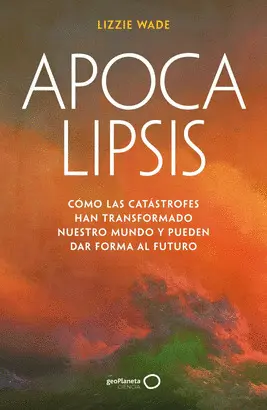
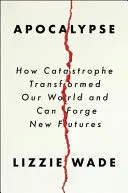
Apocalypse

Apocalypse

How Catastrophe Transformed Our World And Can Forge New Futures

Lizzie Wade

"Lizzie Wade is an exceptional journalist and a master storyteller. She reminds us that survival always has been, and still is, possible, and that our world always has been, and still is, a choice." -Ed Yong, author of An Immense World "This book upended my understanding of the ancient world. Wade renders our deep past in vivid prose, showing us that times of great rupture also...

Editorial:
Harper
Año de edición:
2025
ISBN:
978-0-06-309730-8
Páginas:
320
Q. 330
IVA incluido
Disponible
Añadir a favoritos

Sinopsis

"Lizzie Wade is an exceptional journalist and a master storyteller. She reminds us that survival always has been, and still is, possible, and that our world always has been, and still is, a choice." -Ed Yong, author of An Immense World "This book upended my understanding of the ancient world. Wade renders our deep past in vivid prose, showing us that times of great rupture also bring great possibilities for new ways of living, if we let them. Apocalypse is the best kind of history book: vibrant and vital." --Zoë Schlanger, author of The Light Eaters A richly imagined new view on the great human tradition of apocalypse, from the rise of Homo sapiens to the climate instability of our present, that defies conventional wisdom and long-held stories about our deep past to reveal how cataclysmic events are not irrevocable endings, but transformations. A drought lasts for decades, a disease rips through a city, a civilization collapses. When we finally uncover the ruins, we ask: What happened? The good news is, we've been here before. History is long, and people have already confronted just about every apocalypse we're facing today. But these days, archaeologists are getting better at seeing stories of survival, transformation, and even progress hidden within those histories of collapse and destruction. Perhaps, we begin to see, apocalypses do not destroy worlds, but create them anew. Apocalypse offers a new way of understanding human history, reframing it as a series of crises and cataclysms that we survived, moments of choice in an evolution of humanity that has never been predetermined or even linear. Here Lizzie Wade asks us to reckon with our long-held narratives of these events, from the end of Old Kingdom Egypt, the collapse of the Classic Maya, to the Black Death, and shows us how people lived through and beyond them--and even considered what a new world could look like in their wake. The more we learn about apocalypses past, the more hope we have that we will survive our own. It won't be pleasant. It won't be fair. The world will be different on the other side, and our cultures and communities--perhaps even our species--will be different too.

Artículos relacionados

The Great Resistance

The Great Resistance

Carrie Gibson

For more than four centuries, enslaved people across the Americas, from the United States and the Caribbean to Brazil, fought any way they could to gain their freedom. For the first time, their dramatic stories are gathered in one sweeping narrative that offers a message of inspiration in our own time. "Among the emancipators are the millions whose stories will never be known. ...

Disponible

Q. 330

Radical Cartography

Radical Cartography

William Rankin

"This is it: the full download from a true genius of cartography. Radical Cartography will make you see maps, and, indeed, your place on the planet, with fresh eyes."—Daniel Immerwahr, author of How to Hide an Empire. A stunning, thought-provoking exploration of how maps shape our understanding of the world—featuring over 150 full-color maps in a gorgeous packageMaps are ubiqui...

Único ejemplar, sujeto
a disponibilidad

Q. 260

Destiny Disrupted

Destiny Disrupted

Ansary, Tamim

"A must read for anyone who wants to learn more about the history of the Islamic world" (San Francisco Chronicle) We in the West share a common narrative of world history. But our story largely omits a whole civilization whose citizens shared an entirely different narrative for a thousand years as the Islamic world saw it, from the time of Mohammed through the fall of the Ot...

Disponible

Q. 230

On Antisemitism

On Antisemitism

Mark Mazower

From one of our most eminent historians, a penetrating and timely examination of how the meaning of antisemitism has mutated, with unexpected and troubling consequencesWhat are we talking about when we talk about antisemitism? For most of its history it was understood to be a menace from the political Right, the province of ethno-nativists who built on Christendom's long-standi...

Disponible

Q. 270

History Matters

History Matters

David Mccullough

In this posthumous collection of thought-provoking essays—many never published before—Pulitzer Prize-winning historian and bestselling author David McCullough affirms the value of history, how we can be guided by its lessons, and the enduring legacy of American ideals.History Matters brings together selected essays by beloved historian David McCullough, some published here for ...

Disponible

Q. 270

The Devil Reached Toward The Sky

The Devil Reached Toward The Sky

Garrett Graff

On the eightieth anniversary of the Hiroshima and Nagasaki bombings, the Pulitzer Prize finalist whose work is "oral history at its finest" (Pittsburgh Post-Gazette) delivers an epic narrative of the atomic bomb's creation and deployment, woven from the voices of hundreds of scientists, generals, soldiers, and civilians.The building of the atomic bomb is the most audacious unde...

Disponible

Q. 325