
Saltar al contenido principal
1873

1873

The Rothschilds, The First Great Depression, And The Making Of The Modern World

Liaquat Ahamed

A Financial Times Business Book of the Year finalist • Named a Best Book of the Year by Bloomberg and Publishers Weekly"The book to read right now [is 1873] . . . All of us are reading this." —Satya Nadella, CEO of MicrosoftFrom the author of the Pulitzer Prize-winning Lords of Finance, a magnificent and timely reckoning with the first truly global financial calamity and the fa...

Editorial:
Penguin
Año de edición:
2026
ISBN:
978-1-59420-417-3
Páginas:
368
Q. 330
IVA incluido
No disponible
Añadir a favoritos Avisar disponibilidad

Sinopsis

A Financial Times Business Book of the Year finalist • Named a Best Book of the Year by Bloomberg and Publishers Weekly

"The book to read right now [is 1873] . . . All of us are reading this." —Satya Nadella, CEO of Microsoft

From the author of the Pulitzer Prize-winning Lords of Finance, a magnificent and timely reckoning with the first truly global financial calamity and the famous banking family at the center of the whirlwind

Over the course of the 1850s and 1860s, during the first era of globalization, the world experienced an unprecedented economic boom. Fueling this expansion was an explosion in the global bond market, at the hub of which stood one family—the Rothschilds, arguably the wealthiest banking family in history. While the giant sums of capital provided through the bond market built the railroads, the century's most transformative investments, the money raised also unleashed a frenzy of speculation, massive overinvestment, and wasteful borrowing by governments.

With excessive euphoria leading to disappointed expectations, in the early 1870s the bubble burst. Stock markets from Vienna to New York crashed, and dozens of railroads and many governments defaulted. Financial officials responded by blundering into a precipitous remaking of the global currency system—exacerbating the ensuing economic collapse and setting the stage for decades of a punitive deflation that sparked waves of anti-globalist populism. As Liaquat Ahamed shows us in this enthralling history, the crisis of 1873 was, among other things, a death blow to Reconstruction in the United States and the proximate cause of the Ottoman Empire's slow death spiral. Ironically, though the Rothschilds had presciently kept a low profile during the bubble, when the deluge came, they were viciously scapegoated as part of a wider hatred directed at "Jewish finance," a strain of antisemitism that would come to full evil flower during the twentieth century.

1873 is a bird's-eye reckoning with the full dimension of the crisis, from its buildup to its long aftermath. The Rothschilds and a cast of other witnesses give us the human perspective. And we have a brilliant financial historian's grasp of the larger forces at play, resulting in a global narrative with thrilling explanatory power.

Artículos relacionados

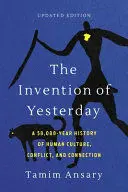
The Invention Of Yesterday

The Invention Of Yesterday

Ansary, Tamim

In this "terrific" (San Francisco Chronicle) book, an award-winning author tells the story of how humans invented history, from the Stone Age to the Virtual Age Traveling across millennia and cultures, The Invention of Yesterday argues that world history is a narrative we're constantly inventing. Fifty thousand years ago, we roamed the world as countless autonomous bands of...

Disponible

Q. 235

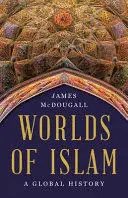
Worlds Of Islam

Worlds Of Islam

Mcdougall, James

A sweeping global history of Islam, tracing the 1,400-year evolution of a diverse community of faith and its place in the modern world "Anyone who wants to understand not just the past of Islam but its present and future should read Worlds of Islam."--Reza Aslan, author of No god but God From its birth in seventh-century Arabia, Islam has been a faith on the move. Over the spa...

Único ejemplar, sujeto
a consulta.

Q. 410

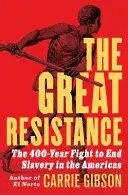
The Great Resistance

The Great Resistance

Carrie Gibson

For more than four centuries, enslaved people across the Americas, from the United States and the Caribbean to Brazil, fought any way they could to gain their freedom. For the first time, their dramatic stories are gathered in one sweeping narrative that offers a message of inspiration in our own time. "Among the emancipators are the millions whose stories will never be known. ...

Disponible

Q. 330

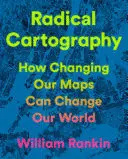
Radical Cartography

Radical Cartography

William Rankin

"This is it: the full download from a true genius of cartography. Radical Cartography will make you see maps, and, indeed, your place on the planet, with fresh eyes."—Daniel Immerwahr, author of How to Hide an Empire. A stunning, thought-provoking exploration of how maps shape our understanding of the world—featuring over 150 full-color maps in a gorgeous packageMaps are ubiqui...

Único ejemplar, sujeto
a consulta.

Q. 260

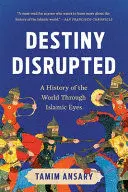
Destiny Disrupted

Destiny Disrupted

Ansary, Tamim

"A must read for anyone who wants to learn more about the history of the Islamic world" (San Francisco Chronicle) We in the West share a common narrative of world history. But our story largely omits a whole civilization whose citizens shared an entirely different narrative for a thousand years as the Islamic world saw it, from the time of Mohammed through the fall of the Ot...

Único ejemplar, sujeto
a consulta.

Q. 230

On Antisemitism

On Antisemitism

Mark Mazower

From one of our most eminent historians, a penetrating and timely examination of how the meaning of antisemitism has mutated, with unexpected and troubling consequencesWhat are we talking about when we talk about antisemitism? For most of its history it was understood to be a menace from the political Right, the province of ethno-nativists who built on Christendom's long-standi...

Disponible

Q. 270

Otros libros del autor

Los Señores de las Finanzas

Los Señores de las Finanzas

Liaquat Ahamed

Los señores de las finanzas es una obra magistral que nos sumerge en una época y unos personajes que nos dan una perspectiva única de la situación económica actual. En el año 29 se produjo una de las peores crisis financieras de la historia. Mucho se ha escrito sobre las consecuencias que tuvo pero poco sobre sus causas. Durante años se ha considerado que ésta se produjo por un...

No disponible

Q. 260