Saltar al contenido principal
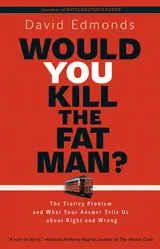
Would You Kill The Fat Man?
-15%

Would You Kill The Fat Man?

The Trolley Problem And What Your Answer Tells Us About Right And Wrong

David Edmonds

A runaway train is racing toward five men who are tied to the track. Unless the train is stopped, it will inevitably kill all five men. You are standing on a footbridge looking down on the unfolding disaster. However, a fat man, a stranger, is standing next to you: if you push him off the bridge, he will topple onto the line and, although he will die, his chunky body will stop ...

Editorial:
Princeton
Año de edición:
2015
Materia:
Filosofía
ISBN:
978-0-691-16563-9
Páginas:
240
Encuadernación:
OTROS
Q. 150
Q. 128
IVA incluido
No disponible
Añadir a favoritos Avisar disponibilidad

Sinopsis

A runaway train is racing toward five men who are tied to the track. Unless the train is stopped, it will inevitably kill all five men. You are standing on a footbridge looking down on the unfolding disaster. However, a fat man, a stranger, is standing next to you: if you push him off the bridge, he will topple onto the line and, although he will die, his chunky body will stop the train, saving five lives. Would you kill the fat man?

The question may seem bizarre. But it's one variation of a puzzle that has baffled moral philosophers for almost half a century and that more recently has come to preoccupy neuroscientists, psychologists, and other thinkers as well. In this book, David Edmonds, coauthor of the best-selling Wittgenstein's Poker, tells the riveting story of why and how philosophers have struggled with this ethical dilemma, sometimes called the trolley problem. In the process, he provides an entertaining and informative tour through the history of moral philosophy. Most people feel it's wrong to kill the fat man. But why? After all, in taking one life you could save five. As Edmonds shows, answering the question is far more complex—and important—than it first appears. In fact, how we answer it tells us a great deal about right and wrong.

Artículos relacionados

Una Filosofía de la Resistencia -15%

Una Filosofía de la Resistencia

González Serrano, Carlos Javier

UN CONTUNDENTE ENSAYO DE UNO DE LOS FILÓSOFOS CON MÁS PROYECCIÓN DEL MOMENTO.3.ª edición. Una defensa de la filosofía contra la manipulación intelectual y el totalitarismo emocional.Vivimos en una sociedad en la que la tecnología tiene cada vez más protagonismo, donde impera el ruido permanente, la hiperestimulación constante y una violenta rapidez. Un mundo en el que la silenc...

Disponible
Q. 130

Q. 111

Wittgenstein -15%

Wittgenstein

John Heaton

Ludwig Wittgenstein ha conquistado la imaginación popular como el Sócrates moderno, el fascinante maestro del razonamiento enigmático quien, con su fría lógica, convenció a Bertrand Russell de que había un hipopótamo en la habitación. Es un icono del modernismo, pero ¿qué es lo que dijo realmente? En Wittgenstein, una guía ilustrada, nos encontramos con un hombre extraño, un ló...

Disponible
Q. 210

Q. 179

Lógica -15%

Lógica

Cryan, Dan / Shatil, Sharron

La lógica es la columna vertebral de la civilización occidental, lo que sostiene nuestros sistemas de filosofía, ciencia y legislación. La lógica también se encuentra en nuestra vida cotidiana, desde los idiomas que hablamos hasta las operaciones más básicas de nuestros teléfonos móviles. Nos puede incluso informar sobre cómo está diseñada una telenovela. Lógica, una guía ilust...

Disponible
Q. 210

Q. 179

Filosofía Helenística -15%

Filosofía Helenística

Sellars, John

Una introducción a la filosofía helenística, que incluye el cinismo, el epicureísmo, el estoicismo y el escepticismo, de la mano del aclamado filósofo John Sellars, en la que destaca su relevancia práctica y su influencia en la filosofía moderna.El periodo helenístico fue una época fascinante con un panorama filosófico vibrante y diverso: no solo nacieron dos nuevas escuelas de...

Disponible
Q. 260

Q. 221

Filosofía y Poesía -15%

Filosofía y Poesía

Zambrano, María

La gran obra con la que María Zambrano inicia el camino hacia la razón poética.«Hoy, poesía y pensamiento se nos aparecen como dos formas insuficientes; y se nos antojan dos mitades del hombre: el filósofo y el poeta. No se encuentra el hombre entero en la filosofía; no se encuentra la totalidad de lo humano en la poesía. En la poesía encontramos directamente al hombre concreto...

Disponible
Q. 160

Q. 136

El Aciago Demiurgo -15%

El Aciago Demiurgo

Cioran, E.m.

Un autor de culto. Una punzante reflexión sobre la existenica del mal y del error. ¿Cómo pudieron conciliar los cristianos la idea de un dios bueno con la presencia del mal en el mundo? Inspirado por los gnósticos, Cioran dedicó en este libro páginas magistrales a esta cuestión, así como al conflicto entre politeísmo y monoteísmo, cuyas repercusiones filosóficas y políticas sig...

Disponible
Q. 230

Q. 196