Saltar al contenido principal
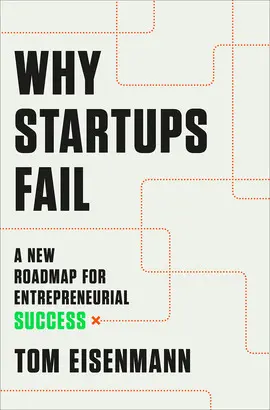
Why Startups Fail
-15%

Why Startups Fail

A New Roadmap For Entrepreneurial Success

Thomas Eisenmann

If you want your startup to succeed, you need to understand why startups fail.Why do startups fail? That question hit Harvard Business School professor Tom Eisenman with full force when he realized he couldn't explain it. And since more than two thirds of new ventures fail, that left a lot of explaining to do.So he launched a multi-year research project to find out. In Why Star...

Editorial:
Penguin
ISBN:
978-0-593-23939-1
Páginas:
368
Q. 190
Q. 162
IVA incluido
No disponible
Añadir a favoritos Avisar disponibilidad

Sinopsis

If you want your startup to succeed, you need to understand why startups fail.

Why do startups fail? That question hit Harvard Business School professor Tom Eisenman with full force when he realized he couldn't explain it. And since more than two thirds of new ventures fail, that left a lot of explaining to do.

So he launched a multi-year research project to find out. In Why Startups Fail, Eisenmann unveils the results: six distinct patterns that account for the vast majority of startup failures. He offers frameworks for detecting when a venture is vulnerable to these patterns, along with a wealth of strategies and tactics for avoiding them.

Bad Bedfellows. Startup success is thought to rest largely on the founder's talents and instincts. But the wrong team, investors, or partners can sink a startup just as quickly.

False Starts. Despite the oft-cited advice to "fail fast," and "launch before you're ready," doing so risks wasting time and capital on the wrong solutions.

False Promises. Success with early adopters is often misleading and gives founders unwarranted confidence to expand.

Speed Traps. There's lots of pressure on startups to prioritize speed over efficiency and "Get Big Fast." But hypergrowth can spell disaster for even the most promising ventures.

Help Wanted. Rapidly scaling startups need lots of capital and talent, but they can make mistakes that leave them suddenly in short supply.

Cascading Miracles. Silicon Valley exhorts entrepreneurs to dream big; as Peter Thiel put it, "they promised us flying cars; what we got was 140 characters." But the bigger the vision, the more things can go wrong.

Through fascinating stories of ventures that failed to fulfill their early promise—from home furnishings retailer Dot & Bo to the concierge dog walking service Baroo, to the makers of a sophisticated social robot named Jibo, to Better Place, which sought to build a massive network of charging stations for electric vehicles (and more)—Eisenmann shows readers how to spot and sidestep roadblocks on their entrepreneurial journey, and sets them on the fail-safe path to startup success.

Artículos relacionados

El Arte de Gastar Dinero -15%

El Arte de Gastar Dinero

Housel, Morgan / Housel, Morgan

Tras ayudar a millones de personas a replantearse su relación con el dinero, cómo ganarlo, ahorrarlo e invertirlo, Morgan Housel nos invita ahora a reflexionar sobre algo igual de importante: aprender a gastar con sentido.El mayor retorno de una inversión no es económico, es la tranquilidad. Sin embargo, a menudo gastamos ese dinero en cosas inútiles, más preocupados por la ima...

Disponible
Q. 180

Q. 153

Los Cinco Talentos que Importan (The Five Talents That Really Matter Spanish Edition) -15%

Los Cinco Talentos que Importan (The Five Talents That Really Matter Spanish Edition)

Barry Conchie

Cómo los grandes líderes impulsan un rendimiento extraordinario.Los cinco talentos que de verdad importan es una guía innovadora de Barry Conchie y Sarah Dalton que derriba mitos sobre el liderazgo y ofrece un modelo claro y práctico para identificar líderes de alto rendimiento.A diferencia de la idea de que cualquiera puede convertirse en un gran líder solo con esfuerzo, esta ...

Disponible
Q. 240

Q. 204

Cuatro Días a la Semana: un Nuevo Modelo Labora -15%

Cuatro Días a la Semana: un Nuevo Modelo Labora

Schor, Juliet

Un análisis pionero sobre los beneficios de una semana laboral más reducida. En todo el mundo, las largas jornadas laborales y la intensa presión están pasando factura a los trabajadores. Tras la llegada de la pandemia en 2020, los niveles globales de estrés laboral y agotamiento se dispararon, y muchas personas llegaro...

Disponible
Q. 190

Q. 162

El Líder Sistemico -15%

El Líder Sistemico

Robert E. Siegel

El profesor de la Escuela de Negocios de Stanford y consultor de algunos de los CEO más grandes e innovadores de la actualidad comparte un plan revolucionario que les enseña a los líderes a dominar las presiones cruzadas del mundo en que vivimos: ejecutar al mismo tiempo que innovar, pensar en los asuntos locales y globales, además de proyectar ambición y diplomacia por igual....

Disponible
Q. 180

Q. 153

Amplitud (Range) -15%

Amplitud (Range)

Epstein, David

Este gran éxito del New York Times ha generado debates y discusiones en el ámbito de la gestión empresarial, la educación, la formación, el deporte, la psicología y la crianza de los hijos. Es el mismo autor del exitoso El gen deportivo. Un interesante debate acerca de la amplitud de conocimientos y herramientas, que es más necesaria que nunca, en un mundo que nos quieren vende...

Disponible
Q. 190

Q. 162

Buffettología -15%

Buffettología

Buffett, Mary / Clark, David

En el mundo de la inversión, el nombre de Warren Buffett ha sido sinónimo de éxito y beneficios. A sus noventa años, el hombre que convirtió 105.000 dólares en 20.000 millones sigue siendo el modelo a seguir y, hasta la fecha, su metodología había sido un misterio. Este libro revela desde una perspectiva privilegiada la pregunta más formulada en Wall Street: ¿cómo, dónde y cuán...

Único ejemplar, sujeto
a disponibilidad
Q. 170

Q. 145