Saltar al contenido principal
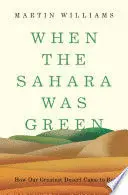
When The Sahara Was Green: How Our Greatest Desert Came To Be

When The Sahara Was Green: How Our Greatest Desert Came To Be

How Our Greatest Desert Came To Be

Williams, Martin

u003cpu003eu003cbu003eThe little-known history of how the Sahara was transformed from a green and fertile land into the largest hot desert in the worldu003c/bu003eu003cbru003eu003cbru003eThe Sahara is the largest hot desert in the world, equal in size to China or the United States. Yet, this arid expanse was once a verdant, pleasant land, fed by rivers and lakes. The Sahara sus...

Editorial:
Princeton University Press
Año de edición:
2021
ISBN:
978-0-691-20162-7
Páginas:
272
Encuadernación:
OTROS
Q. 290
IVA incluido
Único ejemplar, sujeto
a disponibilidad
Añadir a favoritos Avisar disponibilidad

Sinopsis

u003cpu003eu003cbu003eThe little-known history of how the Sahara was transformed from a green and fertile land into the largest hot desert in the worldu003c/bu003eu003cbru003eu003cbru003eThe Sahara is the largest hot desert in the world, equal in size to China or the United States. Yet, this arid expanse was once a verdant, pleasant land, fed by rivers and lakes. The Sahara sustained abundant plant and animal life, such as Nile perch, turtles, crocodiles, and hippos, and attracted prehistoric hunters and herders. What transformed this land of lakes into a sea of sands? u003ciu003eWhen the Sahara Was Greenu003c/iu003e describes the remarkable history of Earth's greatest desert—including why its climate changed, the impact this had on human populations, and how scientists uncovered the evidence for these extraordinary events.u003cbru003eu003cbru003eFrom the Sahara's origins as savanna woodland and grassland to its current arid incarnation, Martin Williams takes us on a vivid journey through time. He describes how the desert's ancient rocks were first fashioned, how dinosaurs roamed freely across the land, and how it was later covered in tall trees. Along the way, Williams addresses many questions: Why was the Sahara previously much wetter, and will it be so again? Did humans contribute to its desertification? What was the impact of extreme climatic episodes—such as prolonged droughts—upon the Sahara's geology, ecology, and inhabitants? Williams also shows how plants, animals, and humans have adapted to the Sahara and what lessons we might learn for living in harmony with the harshest, driest conditions in an ever-changing global environment.u003cbru003eu003cbru003eA valuable look at how an iconic region has changed over millions of years, u003ciu003eWhen the Sahara Was Greenu003c/iu003e reveals the desert's surprising past to reflect on its present, as well as its possible future.u003c/pu003e

Artículos relacionados

Superconvergence

Superconvergence

Metzl, Jamie

From a leading futurist and OneShared.World founder, a "brilliant" (Sanjay Gupta) book that explores how artificial intelligence and other revolutionary technologies are transforming our lives-and our future New technologies have the potential to improve our health, feed billions of people, supercharge our economies, store essential information for millions of years, and save ...

Disponible

Q. 230

The Forgotten Teachers

The Forgotten Teachers

Isett, Brian

Interweaving science and storytelling, spirituality and art, a neuroscientist and an artist guide us toward a deeper understanding of how radically interconnected all of life is. A Kirkus Reviews Fall Preview selection! Starting from science, while reaching for spiritual truth, The Forgotten Teachers charts the evolution of life on Earth under the mentorship of six teachers: O...

Disponible

Q. 260

The Secret Life Of The Universe

The Secret Life Of The Universe

Nathalie A. Cabrol

One of the world's leading astrobiologists takes us on an awe-inspiring journey across the cosmos to investigate some of humanity's most profound questions: Are we alone in the universe? And how did life on Earth begin?We are in a golden age in astronomy, living on the cusp of breakthroughs that will revolutionize our understanding of our place in the cosmos. Yet a profound que...

Disponible

Q. 200

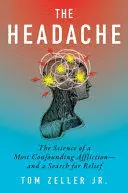
The Headache

The Headache

Tom Zeller Jr.

"Required reading for anyone with a head."--Mary Roach, New York Times bestselling author of Stiff and FuzzFor the many millions of headache sufferers, a deeply reported, sometimes harrowing, and frequently humorous journey into the author's own excruciating headaches, and the science behind these surprisingly mysterious disorders that may, finally, offer relief. Virtually ever...

Disponible

Q. 310

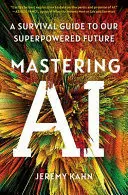
Mastering Ai

Mastering Ai

Jeremy Kahn

A Fortune magazine journalist draws on his expertise and extensive contacts among the companies and scientists at the forefront of artificial intelligence to offer dramatic predictions of AI's impact over the next decade, from reshaping our economy and the way we work, learn, and create to unknitting our social fabric, jeopardizing our democracy, and fundamentally altering the ...

Disponible

Q. 190

The Last Drop

The Last Drop

Tim Smedley

The Times Book of the Year pick‘Smart, sobering, and scholarly. ' - Steve Brusatte, the Sunday Times bestselling author of The Rise and Fall of DinosaursA gripping, thought-provoking and ultimately optimistic investigation into the world's next great climate crisis - the scarcity of water.Water scarcity is the next big climate crisis. Water stress - not just scarcity, but also ...

Disponible

Q. 160