Saltar al contenido principal
What Went Wrong With Capitalism

What Went Wrong With Capitalism

Ruchir Sharma

An "eye-opening" (The New York Times), "absolutely fascinating" (Fareed Zakaria, CNN host and commentator) look at a how a century of expanding government has distorted financial markets, stoked massive inequality, and soaked America in debt.Capitalism didn't fail, it was ruined... What went wrong with capitalism? Ruchir Sharma's account is not like any you will have heard befo...

Editorial:
Atria Books
ISBN:
978-1-6680-0827-0
Páginas:
384
Q. 195
IVA incluido
No disponible
Añadir a favoritos Avisar disponibilidad

Sinopsis

An "eye-opening" (The New York Times), "absolutely fascinating" (Fareed Zakaria, CNN host and commentator) look at a how a century of expanding government has distorted financial markets, stoked massive inequality, and soaked America in debt.

Capitalism didn't fail, it was ruined...

What went wrong with capitalism? Ruchir Sharma's account is not like any you will have heard before. He says progressives are right, in part, when they mock modern capitalism as "socialism for the rich." For a century, governments have expanded in just about every measurable dimension, from spending to regulation and the scale of financial rescues when the economy wobbles. The result is expensive state guarantees for everyone—bailouts for the rich, entitlements for the middle class, welfare for the poor.

Taking you back to the 19th century, Sharma shows how completely the reflexes of government have changed: from hands-off to hands-on, from doing too little to help anyone in hard times to today trying to prevent anyone suffering any economic pain, ever. Trading sins of omission and indifference for excesses of spending and meddling, governments from the United States to Europe and Japan have pumped so much money into their economies that financial markets can no longer invest all that capital efficiently.

Inadvertently, they have fueled the rise of monopolies, "zombie" firms, and billionaires. They have made capitalism less fair and less efficient, which is slowing economic growth and fueling popular anger. The first step to a cure is a correct diagnosis of the problem. Capitalism has been badly distorted by constant government intervention and the relentless spread of a bailout culture. Building an even bigger state will only double down on what ruined capitalism in the first place.

What Went Wrong with Capitalism is a "superbly written" (The Wall Street Journal), "fresh and accessible" (Robert Rubin, former Secretary of the Treasury and chairman of Citigroup) look at the issues confronting our capitalistic society and will ultimately reshape how you think about world.

Artículos relacionados

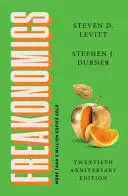
Freakonomics Twentieth Anniversary Edition

Freakonomics Twentieth Anniversary Edition

Steven D. Levitt / Stephen J. Dubner

The legendary bestseller that made millions look at the world in a radically different way returns in a beautiful 20th anniversary edition featuring a new foreword Which is more dangerous: a gun or a swimming pool? Why do drug dealers still live with their moms? What do real estate agents and the KKK have in common? These may not sound like typical questions for an economist to...

Único ejemplar, sujeto
a consulta.

Q. 210

Slow Down Or Die

Slow Down Or Die

Timothée Parrique

"One of the most deeply ingrained beliefs of our age is that perpetual economic growth is the solution to most, if not all, of society's problems. In Slow Down or Die, French economist Timothée Parrique brilliantly challenges this myth, demonstrating how producing more won't solve climate change, poverty, or inequality. In fact, our obsession with growth is accelerating social ...

Disponible

Q. 230

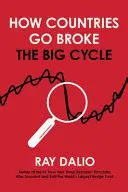
How Countries Go Broke

How Countries Go Broke

Dalio, Ray

An urgent warning about the American economy from Ray Dalio, the #1 New York Times bestselling author of Principles. Do big government debts threaten our collective well-being? Are there limits to debt growth? Can a big, important reserve currency country like the United States really go broke—and what would that look like? For decades, politicians, policymakers, and investors ...

Disponible

Q. 360

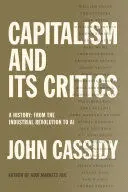
Capitalism And Its Critics

Capitalism And Its Critics

John Cassidy

A Financial Times Most Anticipated Book of 2025A Publishers Weekly Top 10 Book of 2025A sweeping, dramatic history of capitalism as seen through the eyes of its fiercest critics. Capitalism has long been understood as a driving force behind the biggest political, economic, and social dislocations of our time. But in this sweeping, kaleidoscopic history of the economic system th...

Disponible

Q. 410

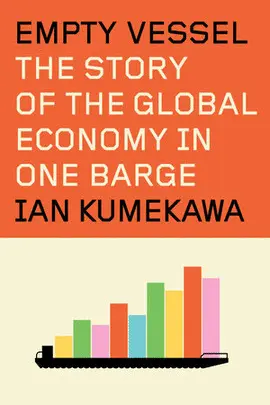
Empty Vessel

Empty Vessel

Ian Kumekawa

The rise of globalization and financialization as seen from a barge—one Swedish barge, to be exact, built in 1979What do a barracks for British troops in the Falklands War, a floating jail off the Bronx, and temporary housing for VW factory workers in Germany have in common? The Balder Scapa: a single barge that served all three roles. Though the name would eventually change to...

Disponible

Q. 200

Hubris Maximus

Hubris Maximus

Faiz Siddiqui

The rise, fall, and revival of the Caesar of Silicon Valley. Elon Musk has cast himself as the savior of humanity, an altruistic force whose fortune is tied to noble pursuits from halting our dependence on fossil fuels to colonizing Mars. Once frequently heralded as a modern-day Edison, Musk has taken up a new place in the public consciousness with his growing desire to disrupt...

Disponible

Q. 290