Saltar al contenido principal
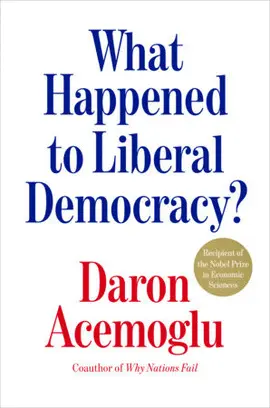
What Happened To Liberal Democracy? (Exp)

What Happened To Liberal Democracy? (Exp)

Remaking a Politics Of Shared Prosperity

Daron Acemoglu

From Daron Acemoglu, 2024 Nobel laureate in economics and coauthor of Why Nations Fail, an ambitious and expansive inquiry into the biggest story in global politics over the last hundred years: the rise and fall of liberal democracyWith the fall of the Berlin Wall in 1989, it seemed like we were one step closer to the triumph of liberalism—with more and more of the world popula...

Editorial:
Portfolio
ISBN:
979-8-217-18658-7
Q. 250
IVA incluido
No disponible
Añadir a favoritos Avisar disponibilidad

Sinopsis

From Daron Acemoglu, 2024 Nobel laureate in economics and coauthor of Why Nations Fail, an ambitious and expansive inquiry into the biggest story in global politics over the last hundred years: the rise and fall of liberal democracy

With the fall of the Berlin Wall in 1989, it seemed like we were one step closer to the triumph of liberalism—with more and more of the world population living in liberal democracies and benefiting from sustained growth and shared prosperity. A generation later, one can only ask: What happened?

Nobel laureate Daron Acemoglu argues in this powerful and persuasive book that liberal democracy flourished when it pursued its core promises of shared prosperity, democratic governance at the local and national level, and the free pursuit of knowledge. But liberalism, a philosophy built to challenge power, never fully adjusted to becoming the establishment. Nor was it able to deal with the economic and social disruptions that digital technologies wrought. Worse, liberalism lost its way in the postindustrial economy and turned its back on its core promises. Acemoglu, using the wide interdisciplinary lens that has won him acclaim, documents the extraordinary, unparalleled progress that liberalism created, and how this philosophy and liberal democratic institutions plunged themselves into a crisis over the last four decades.

Looking at rapid advances in technology, shifts in regulatory environments, global political history, and economics, Acemoglu lucidly lays out the successes and failures of our most important political system. He explains how the postindustrial society where the college educated have come to be politically dominant and separated from the rest sowed the seeds of widespread inequality and intensifying social engineering.

But this book is also an invitation to remake liberalism as a new and more effective political philosophy—in the form of working-class liberalism prioritizing shared prosperity, valuing community, and differences in values and views.

Artículos relacionados

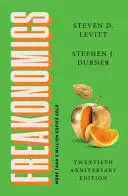
Freakonomics Twentieth Anniversary Edition

Freakonomics Twentieth Anniversary Edition

Steven D. Levitt / Stephen J. Dubner

The legendary bestseller that made millions look at the world in a radically different way returns in a beautiful 20th anniversary edition featuring a new foreword Which is more dangerous: a gun or a swimming pool? Why do drug dealers still live with their moms? What do real estate agents and the KKK have in common? These may not sound like typical questions for an economist to...

Único ejemplar, sujeto
a disponibilidad

Q. 210

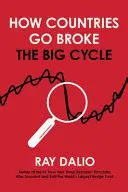
How Countries Go Broke

How Countries Go Broke

Dalio, Ray

An urgent warning about the American economy from Ray Dalio, the #1 New York Times bestselling author of Principles. Do big government debts threaten our collective well-being? Are there limits to debt growth? Can a big, important reserve currency country like the United States really go broke—and what would that look like? For decades, politicians, policymakers, and investors ...

Disponible

Q. 360

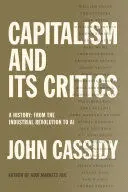
Capitalism And Its Critics

Capitalism And Its Critics

John Cassidy

A Financial Times Most Anticipated Book of 2025A Publishers Weekly Top 10 Book of 2025A sweeping, dramatic history of capitalism as seen through the eyes of its fiercest critics. Capitalism has long been understood as a driving force behind the biggest political, economic, and social dislocations of our time. But in this sweeping, kaleidoscopic history of the economic system th...

Disponible

Q. 410

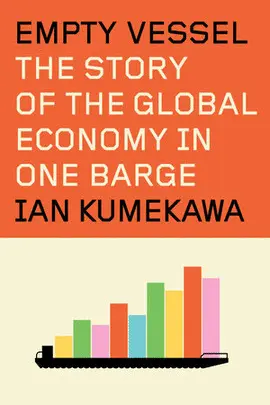
Empty Vessel

Empty Vessel

Ian Kumekawa

The rise of globalization and financialization as seen from a barge—one Swedish barge, to be exact, built in 1979What do a barracks for British troops in the Falklands War, a floating jail off the Bronx, and temporary housing for VW factory workers in Germany have in common? The Balder Scapa: a single barge that served all three roles. Though the name would eventually change to...

Disponible

Q. 200

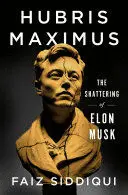
Hubris Maximus

Hubris Maximus

Faiz Siddiqui

The rise, fall, and revival of the Caesar of Silicon Valley. Elon Musk has cast himself as the savior of humanity, an altruistic force whose fortune is tied to noble pursuits from halting our dependence on fossil fuels to colonizing Mars. Once frequently heralded as a modern-day Edison, Musk has taken up a new place in the public consciousness with his growing desire to disrupt...

Disponible

Q. 290

Ai Valley

Ai Valley

Gary Rivlin

A veteran Pulitzer Prize-winning journalist shadows the top thinkers in the field of Artificial Intelligence, introducing the breakthroughs and developments that will change the way we live and work. Artificial Intelligence has been "just around the corner" for decades, continually disappointing those who long believed in its potential. But now, with the emergence and growing u...

Disponible

Q. 330