0
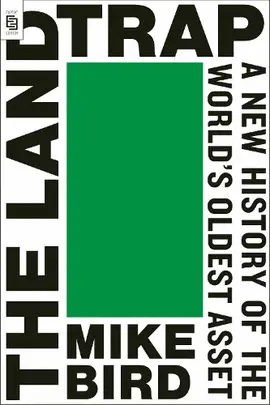
THE LAND TRAP
-15%

THE LAND TRAP

MIKE BIRD

Q. 240
Q. 204
IVA incluido
Disponible
Editorial:
PORTFOLIO
Año de edición:
2025
ISBN:
979-8-217-17892-6
Q. 240
Q. 204
IVA incluido
Disponible
Añadir a favoritos

How the world's oldest asset secretly shapes our modern economy

In The Land Trap, Mike Bird—Wall Street editor at The Economist—reveals how this ancient asset still exerts outsize influence over the modern world. From the speculative land grabs of colonial America to China's real estate crisis today, Bird shows how fortunes are built—and destroyed—on the bedrock of land.

Tracing three centuries of history, Bird explores how land quietly became the linchpin of the global banking system, driving everything from soaring housing prices to rising geopolitical tensisons. As governments wrestle with inequality and land grows ever scarcer, The Land Trap offers a powerful new framework for understanding the hidden force behind today's most urgent challenges.

This is the book for anyone who wants to see beyond markets and money to the real game being played on a foundation as old as civilization itself. Timely, provocative, and essential, The Land Trap will change how you see the ground beneath your feet.

Artículos relacionados

  • HOW COUNTRIES GO BROKE -15%
    HOW COUNTRIES GO BROKE
    RAY DALIO
    An urgent warning about the American economy from Ray Dalio, the #1 New York Times bestselling author of Principles. Do big government debts threaten our collective well-being? Are there limits to debt growth? Can a big, important reserve currency country like the United States really go broke—and what would that look like? For decades, politicians, policymakers, and investors ...
    Disponible

    Q. 330Q. 281

  • EMPTY VESSEL -15%
    EMPTY VESSEL
    IAN KUMEKAWA
    The rise of globalization and financialization as seen from a barge—one Swedish barge, to be exact, built in 1979What do a barracks for British troops in the Falklands War, a floating jail off the Bronx, and temporary housing for VW factory workers in Germany have in common? The Balder Scapa: a single barge that served all three roles. Though the name would eventually change to...
    Disponible

    Q. 200Q. 170

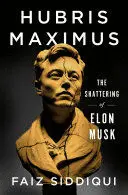
  • HUBRIS MAXIMUS -15%
    HUBRIS MAXIMUS
    FAIZ SIDDIQUI
    The rise, fall, and revival of the Caesar of Silicon Valley. Elon Musk has cast himself as the savior of humanity, an altruistic force whose fortune is tied to noble pursuits from halting our dependence on fossil fuels to colonizing Mars. Once frequently heralded as a modern-day Edison, Musk has taken up a new place in the public consciousness with his growing desire to disrupt...
    Disponible

    Q. 290Q. 247

  • AI VALLEY -15%
    AI VALLEY
    GARY RIVLIN
    A veteran Pulitzer Prize-winning journalist shadows the top thinkers in the field of Artificial Intelligence, introducing the breakthroughs and developments that will change the way we live and work. Artificial Intelligence has been "just around the corner" for decades, continually disappointing those who long believed in its potential. But now, with the emergence and growing u...
    Disponible

    Q. 330Q. 281

  • WELCOME TO THE METAVERSE -15%
    WELCOME TO THE METAVERSE
    DAVID L. SHRIER
    A clear-eyed guide to the metaverse and how this powerful technology--along with advances in spatial computing, VR, and AR--will impact our economy, our lives, and our world. The metaverse. That term elicits a wide range of ideas and opinions. For many, it represents the next evolutionary phase of the internet--a fully immersive, digital universe where people can interact, work...
    Disponible

    Q. 330Q. 281

  • POOR ECONOMICS -15%
    POOR ECONOMICS
    BANERJEE, ABHIJIT / DUFLO, ESTHER
    In this new edition of their classic work, the winners of the Nobel Prize in Economics upend the most common assumptions about how economics works, providing a "rich and humane" (Financial Times) examination of how poor people actually live Why do the poor borrow to save? Why do they miss out on free lifesaving immunizations but pay for unnecessary drugs? Why do children fro...
    Disponible

    Q. 210Q. 179