0
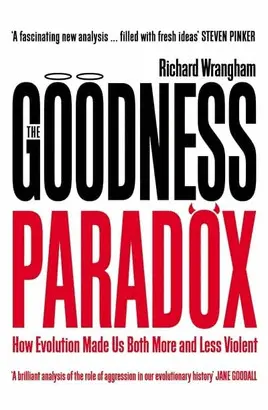
THE GOODNESS PARADOX

THE GOODNESS PARADOX

HOW EVOLUTION MADE US BOTH MORE AND LESS VIOLENT

RICHARD WRANGHAM

Q. 130
IVA incluido
No disponible
Editorial:
PROFILE BOOKS
Materia:
Historia y Mitología
ISBN:
978-1-78125-584-1
Q. 130
IVA incluido
No disponible
Añadir a favoritos

Professor Richard Wrangham advances a provocative new theory of what makes human civilisation special: the nature of our violence.

'A fascinating new analysis of human violence, filled with fresh ideas and gripping evidence from our primate cousins, historical forebears, and contemporary neighbours' - Steven Pinker

'A brilliant analysis of the role of aggression in our evolutionary history' - Jane Goodall

It may not always seem so, but day-to-day interactions between individual humans are extraordinarily peaceful. That is not to say that we are perfect, just far less violent than most animals, especially our closest relatives, the chimpanzee and their legendarily docile cousins, the Bonobo. Perhaps surprisingly, we rape, maim, and kill many fewer of our neighbours than all other primates and almost all undomesticated animals. But there is one form of violence that humans exceed all other animals in by several degrees: organized proactive violence against other groups of humans. It seems, we are the only animal that goes to war.

In the Goodness Paradox, Richard Wrangham wrestles with this paradox at the heart of human behaviour. Drawing on new research by geneticists, neuroscientists, primatologists, and archaeologists, he shows that what domesticated our species was nothing less than the invention of capital punishment which eliminated the least cooperative and most aggressive among us. But that development is exactly what laid the groundwork for the worst of our atrocities.

Artículos relacionados

  • FALSIFICAR LA HISTORIA
    FALSIFICAR LA HISTORIA
    JUAN MIGUEL ZUNZUNEGUI
    Nos gustan las mentiras. Tenemos la facultad de mentir, la capacidad de construir mentiras y la maravillosa inclinación de creer en ellas. Ese es el inicio y la premisa de Falsificar la historia. Un recorrido de miles de años por la historia, la filosofía y la religión; una aventura a través de la psicología individual y la de las masas, un viaje que no deja de moverse entre ...
    Disponible

    Q. 110

  • ENDURANCE. LA PRISIÓN BLANCA
    ENDURANCE. LA PRISIÓN BLANCA
    ALFRED LANSING
    Uno de los grandes clásicos de la narrativa de no ficción. El mejor libro sobre una de las historias más épicas del siglo XXEn diciembre de 1914, sir Ernest Shackleton y una tripulación de veintisiete hombres embarcaron en el Endurance rumbo al Polo Sur, con el objetivo de cruzar por tierra la Antártida, el último continente inexplorado. Un mes más tarde, el barco encallaba en ...
    Disponible

    Q. 170

  • RUSIA CONTRA EL MUNDO
    RUSIA CONTRA EL MUNDO
    MARC MARGINEDAS
    Más de dos décadas de terrorismo de Estado, secuestros, mafia y propagandaTras la caída de la Unión Soviética en 1991, Rusia era un país empobrecido y caótico que parecía destinado a la irrelevancia internacional. Pero bajo el liderazgo de Vladímir Putin, ha recuperado una influencia que desafía el orden global. ¿Qué sostiene este «imperio» que con los años ha derivado hacia el...
    Disponible

    Q. 170

  • AL DIA SIGUIENTE DE LA CONQUISTA
    AL DIA SIGUIENTE DE LA CONQUISTA
    JUAN MIGUEL ZUNZUNEGUI
    Luego del éxito rotundo de El regreso de Quetzalcóatl y de Hernán Cortés, J. M. Zunzunegui regresa con Al día siguiente de la conquista, un libro que te desafiará a cambiar la narrativa aprendida en torno a la conquista. ¿Cómo sería México sin el encuentro de estos dos mundos? Un libro revelador y apasionante que desentraña las verdades ocultas de la historia detrás de la con...
    Agotado

    Q. 0

  • TIEMPOS DIFÍCILES
    TIEMPOS DIFÍCILES
    CANAL, JORDI
    Una valiosísima herramienta para comprender los importantes y decisivos cambios vividos en Europa occidental y América a finales del siglo XIX. Coordinado por el historiador Jordi Canal, este volumen desgrana cómo a finales del siglo XIX se definió la Euroamérica que hoy conocemos. Hacia el final del Ochocientos los países del oeste de Europa y del sur del continente americano...
    Disponible

    Q. 350

  • INNOVADORES
    INNOVADORES
    FERNANDEZ AMIL, IVAN
    50 ideas geniales. 50 personajes asombrosos. 50 innovaciones que cambiaron el mundo. El libro en que encontrarás por qué todo es posible si te arriesgas. ¿Sabías que doblar el salario de sus empleados convirtió a Henry Ford en multimillonario? ¿O que el TAC no existiría de no ser por los Beatles? ¿Y si te digo que la premiada película La lista de Schindler fue el Proyecto de Fi...
    Disponible

    Q. 240