Saltar al contenido principal
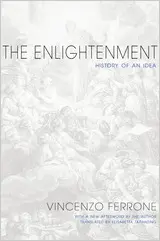
The Enlightenment

The Enlightenment

Vincenzo Ferrone

In this concise and powerful book, one of the world's leading historians of the Enlightenment provides a bracing and clarifying new interpretation of this watershed period. Arguing that philosophical and historical views of the era have long been hopelessly confused, Vincenzo Ferrone makes the case that it is only by separating these views and taking an approach grounded in soc...

Editorial:
Princeton
ISBN:
978-0-691-16145-7
Q. 300
IVA incluido
No disponible
Añadir a favoritos Avisar disponibilidad

Sinopsis

In this concise and powerful book, one of the world's leading historians of the Enlightenment provides a bracing and clarifying new interpretation of this watershed period. Arguing that philosophical and historical views of the era have long been hopelessly confused, Vincenzo Ferrone makes the case that it is only by separating these views and taking an approach grounded in social and cultural history that we can begin to grasp what the Enlightenment was—and why it is still relevant today.

Examining Kant, Hegel, Marx, Nietzsche, Horkheimer, Adorno, Foucault, and Pope Benedict XVI, Ferrone shows how transhistorical, philosophical interpretations of the Enlightenment have diverged from ones based on careful historical reconstructions of the ideas, practices, and institutions of eighteenth-century Europe. He then offers a new reading of the Enlightenment, arguing that it was "the laboratory of modernity," a profound and wide-ranging cultural revolution that reshaped Western identity, reformed politics through the invention of human rights, and redefined knowledge by creating a critical culture. Not confined to a group of radical elites, these new ways of thinking gave birth to new values that spread throughout society and changed how everyday life was lived and thought of.

Original and provocative, The Enlightenment provides a compelling reevaluation of the true nature and legacy of one of the most important and contested periods in Western history. And, in a new afterword, Ferrone describes how his argument challenges the work of Anglophone interpreters of the Enlightenment, including Jonathan Israel.

The translation of this work has been funded by SEPS—Segretariato Europeo per le Pubblicazioni Scientifiche.

Artículos relacionados

100 Fragmentos del Mundo Clásico

100 Fragmentos del Mundo Clásico

Hernández De La Fuente, David

Un compendio fascinante de mitos, leyendas y realidades históricas¿Existió la ciudad de la Atlántida? ¿Pronunció Julio César las famosas palabras «¿Tú también, hijo?», antes de morir? A veces, la narración patrimonial y literaria difiere de los hechos. Así, este libro, escrito con afán divulgativo, pretende transitar por la delgada línea roja que separa los relatos de tintes le...

Disponible

Q. 150

Érase una Vez Tenochtitlán

Érase una Vez Tenochtitlán

Rosas, Alejandro

Aunque nos separan siete siglos, mexicas y chilangos compartimos un pasado común escrito sobre un lugar donde alguna vez hubo un lago. La historia de Tenochtitlán es el preludio de la historia de la Ciudad de México y ha llegado la hora de mirarla a través de sus dioses y tlatoanis. Este es un relato al más puro estilo de Game of Thrones, pero mexica y verídico, en el que, mie...

Único ejemplar, sujeto
a disponibilidad

Q. 190

Fernando el Católico

Fernando el Católico

Belenguer, Ernest

La cara oculta, tras la larga sombra de Isabel, del reinado que reconfiguró el mapa político del mundo e inauguró el Renacimiento.En 1469, Isabel I de Castilla y Fernando II de Aragón contrajeron matrimonio tras firmar las Capitulaciones de Cervera, mucho más favorables para Isabel que para Fernando. De alguna manera, el espíritu de ese acuerdo ha llegado hasta la historiograf...

Disponible

Q. 200

Las Mujeres que Empuñaron la Espada

Las Mujeres que Empuñaron la Espada

Bendriss, Ernest Y.

Guerreras olvidadas. Heroínas silenciadas. Durante siglos, la historia de la guerra ha sido contada de forma casi exclusiva en masculino. Pero desde los campos de batalla de la Antigüedad hasta las trincheras de la Segunda Guerra Mundial, miles de mujeres empuñaron armas, lideraron ejércitos y combatieron en primera línea, ignorando los roles que sus tiempos les imponían. Un vi...

Disponible

Q. 275

Las Entrevistas de Núremberg

Las Entrevistas de Núremberg

Goldensohn, Leon

Un documento único: la transcripción de las conversaciones que mantuvo Leon Goldensohn, psiquiatra del Ejército Estadounidense, con los principales encausados en el proceso de Núremberg. En 1946, con los juicios de Núremberg en marcha, el psiquiatra del ejército estadounidense Leon Goldensohn recibió el encargo de entrevistar a dos docenas de líderes alemanes encausados, así co...

Disponible

Q. 390

El Temperamento Revolucionario

El Temperamento Revolucionario

Darnton, Robert

¿Qué llevó a Francia a la Revolución? Un ensayo excepcional sobre el temperamento responsable de cambiar el curso de la Historia. «Este libro es, sencillamente, un festín que, gracias a su magnífica narración, es fácil de digerir». Gerard de Groot, The Times Cuando una multitud asaltó la Bastilla en julio de 1789, se cerró una etapa histórica y nació un mundo nuevo. La mayoría ...

Único ejemplar, sujeto
a disponibilidad

Q. 470