Saltar al contenido principal
The End Of History And The Last Man

The End Of History And The Last Man

Francis Fukuyama

Ever since its first publication in 1992, The End of History and the Last Man has provoked controversy and debate. Francis Fukuyama's prescient analysis of religious fundamentalism, politics, scientific progress, ethical codes, and war is as essential for a world fighting fundamentalist terrorists as it was for the end of the Cold War. Now updated with a new afterword, The End ...

Editorial:
Free Press
ISBN:
978-0-7432-8455-4
Páginas:
464
Q. 180
IVA incluido
No disponible
Añadir a favoritos Avisar disponibilidad

Sinopsis

Ever since its first publication in 1992, The End of History and the Last Man has provoked controversy and debate. Francis Fukuyama's prescient analysis of religious fundamentalism, politics, scientific progress, ethical codes, and war is as essential for a world fighting fundamentalist terrorists as it was for the end of the Cold War. Now updated with a new afterword, The End of History and the Last Man is a modern classic.

Artículos relacionados

100 Fragmentos del Mundo Clásico

100 Fragmentos del Mundo Clásico

Hernández De La Fuente, David

Un compendio fascinante de mitos, leyendas y realidades históricas¿Existió la ciudad de la Atlántida? ¿Pronunció Julio César las famosas palabras «¿Tú también, hijo?», antes de morir? A veces, la narración patrimonial y literaria difiere de los hechos. Así, este libro, escrito con afán divulgativo, pretende transitar por la delgada línea roja que separa los relatos de tintes le...

Disponible

Q. 150

Érase una Vez Tenochtitlán

Érase una Vez Tenochtitlán

Rosas, Alejandro

Aunque nos separan siete siglos, mexicas y chilangos compartimos un pasado común escrito sobre un lugar donde alguna vez hubo un lago. La historia de Tenochtitlán es el preludio de la historia de la Ciudad de México y ha llegado la hora de mirarla a través de sus dioses y tlatoanis. Este es un relato al más puro estilo de Game of Thrones, pero mexica y verídico, en el que, mie...

Único ejemplar, sujeto
a disponibilidad

Q. 190

Fernando el Católico

Fernando el Católico

Belenguer, Ernest

La cara oculta, tras la larga sombra de Isabel, del reinado que reconfiguró el mapa político del mundo e inauguró el Renacimiento.En 1469, Isabel I de Castilla y Fernando II de Aragón contrajeron matrimonio tras firmar las Capitulaciones de Cervera, mucho más favorables para Isabel que para Fernando. De alguna manera, el espíritu de ese acuerdo ha llegado hasta la historiograf...

Disponible

Q. 200

Las Entrevistas de Núremberg

Las Entrevistas de Núremberg

Goldensohn, Leon

Un documento único: la transcripción de las conversaciones que mantuvo Leon Goldensohn, psiquiatra del Ejército Estadounidense, con los principales encausados en el proceso de Núremberg. En 1946, con los juicios de Núremberg en marcha, el psiquiatra del ejército estadounidense Leon Goldensohn recibió el encargo de entrevistar a dos docenas de líderes alemanes encausados, así co...

Disponible

Q. 390

El Temperamento Revolucionario

El Temperamento Revolucionario

Darnton, Robert

¿Qué llevó a Francia a la Revolución? Un ensayo excepcional sobre el temperamento responsable de cambiar el curso de la Historia. «Este libro es, sencillamente, un festín que, gracias a su magnífica narración, es fácil de digerir». Gerard de Groot, The Times Cuando una multitud asaltó la Bastilla en julio de 1789, se cerró una etapa histórica y nació un mundo nuevo. La mayoría ...

Único ejemplar, sujeto
a disponibilidad

Q. 470

Las Mujeres que Empuñaron la Espada

Las Mujeres que Empuñaron la Espada

Bendriss, Ernest Y.

Guerreras olvidadas. Heroínas silenciadas. Durante siglos, la historia de la guerra ha sido contada de forma casi exclusiva en masculino. Pero desde los campos de batalla de la Antigüedad hasta las trincheras de la Segunda Guerra Mundial, miles de mujeres empuñaron armas, lideraron ejércitos y combatieron en primera línea, ignorando los roles que sus tiempos les imponían. Un vi...

Disponible

Q. 275

Otros libros del autor

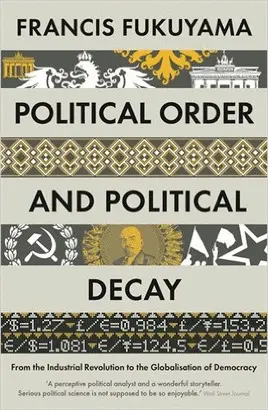
Political Order And Political Decay

Political Order And Political Decay

Francis Fukuyama

Writing in The Wall Street Journal, David Gress called Francis Fukuyama's Origins of Political Order "magisterial in its learning and admirably immodest in its ambition." In The New York Times Book Review, Michael Lind described the book as "a major achievement by one of the leading public intellectuals of our time." And in The Washington Post, Gerard DeGrott exclaimed "this is...

Disponible

Q. 210

Identity

Identity

Francis Fukuyama

Currently in Bill Gates's bookbag and FT Books of 2018 Increasingly, the demands of identity direct the world's politics. Nation, religion, sect, race, ethnicity, gender: these categories have overtaken broader, inclusive ideas of who we are. We have built walls rather than bridges. The result: increasing in anti-immigrant sentiment, rioting on college campuses, and the return ...

Disponible

Q. 160

The Origins Of Political Order

The Origins Of Political Order

Francis Fukuyama

A New York Times Notable Book for 2011A Globe and Mail Best Books of the Year 2011 TitleA Kirkus Reviews Best Nonfiction of 2011 title Virtually all human societies were once organized tribally, yet over time most developed new political institutions which included a central state that could keep the peace and uniform laws that applied to all citizens. Some went on to create go...

Único ejemplar, sujeto
a disponibilidad

Q. 230

Liberalism And Its Discontents

Liberalism And Its Discontents

Francis Fukuyama

A short book about the challenges to liberalism from the right and the left by the bestselling author of The Origins of Political Order .Classical liberalism is in a state of crisis. Developed in the wake of Europe's wars over religion and nationalism, liberalism is a system for governing diverse societies, which is grounded in fundamental principles of equality and the rule of...

No disponible

Q. 140

Our Posthuman Future

Our Posthuman Future

Francis Fukuyama

No disponible

Q. 270

The Origins Of Political Order

The Origins Of Political Order

Francis Fukuyama

Virtually all human societies were once organized tribally, yet over time most developed new political institutions which included a central state that could keep the peace and uniform laws that applied to all citizens. Some went on to create governments that were accountable to their constituents. We take these institutions for granted, but they are absent or are unable to per...

No disponible

Q. 190