Saltar al contenido principal
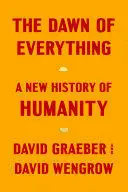
The Dawn Of Everything

The Dawn Of Everything

A New History Of Humanity

David Graeber / David Wengrow

u003cpu003eu003cbu003eA dramatically new understanding of human history, challenging our most fundamental assumptions about social evolution—from the development of agriculture and cities to the origins of the state, democracy, and inequality—and revealing new possibilities for human emancipation.u003cbru003eu003c/bu003eu003cbru003eFor generations, our remote ancestors have bee...

Editorial:
Farrar, Straus And Giroux
Año de edición:
2021
ISBN:
978-0-374-15735-7
Páginas:
704
Q. 390
IVA incluido
No disponible
Añadir a favoritos Avisar disponibilidad

Sinopsis

u003cpu003eu003cbu003eA dramatically new understanding of human history, challenging our most fundamental assumptions about social evolution—from the development of agriculture and cities to the origins of the state, democracy, and inequality—and revealing new possibilities for human emancipation.u003cbru003eu003c/bu003eu003cbru003eFor generations, our remote ancestors have been cast as primitive and childlike—either free and equal innocents, or thuggish and warlike. Civilization, we are told, could be achieved only by sacrificing those original freedoms or, alternatively, by taming our baser instincts. David Graeber and David Wengrow show how such theories first emerged in the eighteenth century as a conservative reaction to powerful critiques of European society posed by Indigenous observers and intellectuals. Revisiting this encounter has startling implications for how we make sense of human history today, including the origins of farming, property, cities, democracy, slavery, and civilization itself.u003cbru003eu003cbru003eDrawing on pathbreaking research in archaeology and anthropology, the authors show how history becomes a far more interesting place once we learn to throw off our conceptual shackles and perceive what's really there. If humans did not spend 95 percent of their evolutionary past in tiny bands of hunter-gatherers, what were they doing all that time? If agriculture, and cities, did not mean a plunge into hierarchy and domination, then what kinds of social and economic organization did they lead to? The answers are often unexpected, and suggest that the course of human history may be less set in stone, and more full of playful, hopeful possibilities, than we tend to assume.u003cbru003eu003cbru003eu003ciu003eThe Dawn of Everythingu003c/iu003e fundamentally transforms our understanding of the human past and offers a path toward imagining new forms of freedom, new ways of organizing society. This is a monumental book of formidable intellectual range, animated by curiosity, moral vision, and a faith in the power of direct action.u003cbru003eu003cbru003eu003cbu003eIncludes Black-and-White Illustrationsu003c/bu003eu003c/pu003e

Artículos relacionados

La Historia del Mundo en 50 Fracasos

La Historia del Mundo en 50 Fracasos

Gazur, Ben

¿SABÍAS QUE...? Los alquimistas chinos descubrieron por accidente la primera receta de la pólvora en sus intentos fallidos por crear el elixir de la inmortalidad. Gengis Kan hizo caer todo un imperio por la ejecución en público de un embajador mongol, en violación de todas las leyes de la diplomacia y la hospitalidad. ...

Único ejemplar, sujeto
a disponibilidad

Q. 170

Una Breve Historia de la Humanidad en 50 Objetos

Una Breve Historia de la Humanidad en 50 Objetos

Harford, Tim

Con dos millones de libros vendidos, Tim Harford «el economista camuflado» vuelve con 50 innovaciones que han cambiado el mundo. «Siempre lúcido y lleno de sorpresas, justo lo que uno espera de Tim Harford». BILL BRYSON En Una breve historia de la humanidad en 50 objetos, el economista superventas Tim Harford nos sorprende con una nueva recopilación de innovaciones e ideas ext...

Disponible

Q. 265

Los Caminos a Roma

Los Caminos a Roma

Fletcher, Catherine

Un viaje fascinante por dos mil años de historia europea a través de las carreteras romanas. «Todos los caminos llevan a Roma». El proverbio medieval no es solo una metáfora: las carreteras que hoy recorren Europa siguen, en muchos casos, los trazos del antiguo Imperio romano. Durante más de dos mil años, los caminos de Roma han sido transitados por cruzados y peregrinos, revol...

Disponible

Q. 320

Roma Victa

Roma Victa

Martin, Iban

Los secretos mejor guardados de la Ciudad Eterna no solo hablan de triunfo: hasta el mayor imperio de la historia tiene debilidades fatales. Roma victa recoge una mirada nueva, apasionante y rigurosa, además de profundamente humana, de todo lo que Roma fue pero a veces trató de olvidar.Roma no fue invicta: fue resistente.No fue perfecta: fue humana.Y cada cicatriz la construyó ...

Disponible

Q. 285

Cartago

Cartago

Macdonald, Eve

La épica historia de uno de los imperios más ricos y poderosos de la Antigüedad.La historia de Cartago suele contarse desde la mirada de quienes la destruyeron. Pero durante casi seiscientos años, esta poderosa ciudad del norte de África fue una de las civilizaciones más ricas, influyentes y temidas del Mediterráneo occidental. Hogar de figuras legendarias como Aníbal y Dido, d...

Disponible

Q. 310

Pirámides, Dioses y Sabidurías Perdidas del Mundo Antiguo

Pirámides, Dioses y Sabidurías Perdidas del Mundo Antiguo

Vivas, Tito

Descubre los lugares donde historia y misterio se encuentran.¿Existen enigmas que la ciencia aún no ha resuelto?¿O lo que llamamos «misterios del pasado» son, en realidad, preguntas mal planteadas?Pirámides, dioses y sabidurías perdidas es una expedición a los grandes escenarios del misterio arqueológico: de las pirámides imposibles a los templos más antiguos de la humanidad, d...

Disponible

Q. 275

Otros libros del autor

The Dawn Of Everything

The Dawn Of Everything

David Graeber / David Wengrow

A dramatically new understanding of human history, challenging our most fundamental assumptions about social evolution--from the development of agriculture and cities to the origins of the state, democracy, and inequality--and revealing new possibilities for human emancipation.For generations, our remote ancestors have been cast as primitive and childlike--either free and equal...

No disponible

Q. 170