Saltar al contenido principal
The Bureaucratic Phenomenon

The Bureaucratic Phenomenon

Michel Crozier

In The Bureaucratic Phenomenon Michel Crozier demonstrates that bureaucratic institutions need to be understood in terms of the cultural context in which they operate. The originality of the study lies in its association of two widely different approaches: the theory of decision-making in large organizations and the cultural analysis of social patterns of action.The book opens ...

Editorial:
Routledge
Año de edición:
2010
Materia:
Sociología
ISBN:
978-1-4128-1158-3
Páginas:
320
Encuadernación:
TAPA BLANDA/ PAPERBACK
Q. 885
IVA incluido
No disponible
Añadir a favoritos Avisar disponibilidad

Sinopsis

In The Bureaucratic Phenomenon Michel Crozier demonstrates that bureaucratic institutions need to be understood in terms of the cultural context in which they operate. The originality of the study lies in its association of two widely different approaches: the theory of decision-making in large organizations and the cultural analysis of social patterns of action.

The book opens with a detailed examination of two forms of French public service. These studies show that professional training and distortions alone cannot ex plain the rise of routine behavior and dysfunctional vicious circles. The role of various bureaucratic systems appears to depend on the pattern of power relation ships between groups and individuals. Crozier's findings lead him to the view that bureaucratic structures form a necessary protection against the risks inherent in collective action.

Since systems of protection are built around basic cultural traits, the author presents a French bureaucratic model based on centralization, strata isolation, and individual sparkle-one that that can be contrasted with an American, Russian, or Japanese model. He points out how the same patterns can be found in several areas of French life: education, industrial relations, politics, business, and the colonial policy. Bureaucracy, Crozier concludes, is not a modern disease resulting from organizational progress but rather a bulwark against development. The breakdown of the traditional bureaucratic system in modern France offers hope for new and fruitful forms of action.

Artículos relacionados

Nexus

Nexus

Yuval Noah Harari

El esperado nuevo libro de Yuval Noah Harari, uno de los pensadores más innovadores, interesantes y clarividentes de la actualidad, y autor de Sapiens, el fenómeno literario global que ha cautivado a millones de lectores. Las historias nos unieron. Los libros difundieron nuestras ideas y nuestras mitologías. Internet prometió conocimiento infinito. El algoritmo descubrió nuestr...

Disponible

Q. 240

Identidad

Identidad

Zygmunt Bauman

Una exploración de la noción de identidad en el mundo contemporáneoMientras lidiamos con la inseguridad y la incertidumbre propias de la modernidad líquida, Bauman sostiene que nuestras identidades —sociopolíticas, culturales, profesionales, religiosas o sexuales— también están en un proceso de transformación constante y, hoy, son más frágiles que nunca: vivimos en una época de...

Único ejemplar, sujeto
a consulta.

Q. 150

Somos Otros

Somos Otros

Roitberg, Sergio

Para reflexionar sobre el antes y el después de la pandemia del COVID19, Sergio Roitberg entrevistó a más de cien expertos y líderes en educación, neurociencia, sociología, negocios, finanzas, tecnología e inteligencia artificial. Con ellos intentó poner en palabras lo que nos pasó pero, sobre todo, descifrar qué cambió y qué permanece tras el estremecimiento global más profund...

Disponible

Q. 250

Algo de Feminismo

Algo de Feminismo

Pardo Bazán, Emilia

Las brillantes y afiladas crónicas feministas de Emilia Pardo Bazán en La Ilustración Artística.Durante dos décadas, entre 1895 y 1916, la prolífica escritora Emilia Pardo Bazán publicó de manera quincenal la columna «La Vida Contemporánea». Esos escritos, que abordan temas tan variados como los discursos políticos, la moda, el divorcio o los mujericidios, están plenamente atra...

Disponible

Q. 115

Tiempos Líquidos

Tiempos Líquidos

Zygmunt Bauman

Un clásico imperecedero, escrito por el gran sociólogo de la modernidad líquida.La caracterización de la modernidad como un «tiempo líquido» es uno de los mayores aciertos de la sociología contemporánea. La expresión, acuñada por Zygmunt Bauman, describe con precisión el tránsito de una modernidad «sólida» -estable, repetitiva- a una «líquida» -cambiante, voluble- en la que las...

Disponible

Q. 135

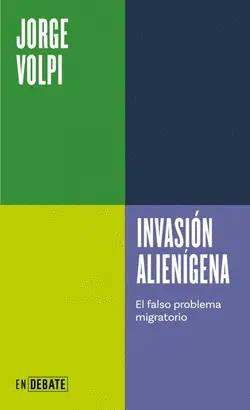
Invasión Alienígena (Serie Endebate)

Invasión Alienígena (Serie Endebate)

Volpi, Jorge

Una lúcida exploración sobre las fronteras, la identidad y las ficciones que nos dividen.La invasión alienígena no existe. Los migrantes no colapsan las fronteras, no aumentan el crimen, no arrebatan empleos. Y, sin embargo, millones de personas están convencidas de que hordas de extranjeros amenazan su forma de vida. ¿Cómo hemos llegado hasta aquí? Este ensayo desmonta, con ar...

Disponible

Q. 160