Saltar al contenido principal
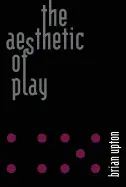
The Aesthetic Of Play

The Aesthetic Of Play

Upton Brian

A game designer considers the experience of play, why games have rules, and the relationship of play and narrative. The impulse toward play is very ancient, not only pre-cultural but pre-human; zoologists have identified play behaviors in turtles and in chimpanzees. Games have existed since antiquity; 5,000-year-old board games have been recovered from Egyptian tombs. And yet w...

Editorial:
Mit Press
ISBN:
978-0-262-02851-6
Q. 365
IVA incluido
No disponible
Añadir a favoritos Avisar disponibilidad

Sinopsis

A game designer considers the experience of play, why games have rules, and the relationship of play and narrative.

The impulse toward play is very ancient, not only pre-cultural but pre-human; zoologists have identified play behaviors in turtles and in chimpanzees. Games have existed since antiquity; 5,000-year-old board games have been recovered from Egyptian tombs. And yet we still lack a critical language for thinking about play. Game designers are better at answering small questions ("Why is this battle boring?") than big ones ("What does this game mean?"). In this book, the game designer Brian Upton analyzes the experience of play-how playful activities unfold from moment to moment and how the rules we adopt constrain that unfolding. Drawing on games that range from Monopoly to Dungeons & Dragons to Guitar Hero, Upton develops a framework for understanding play, introducing a set of critical tools that can help us analyze games and game designs and identify ways in which they succeed or fail.

Upton also examines the broader epistemological implications of such a framework, exploring the role of play in the construction of meaning and what the existence of play says about the relationship between our thoughts and external reality. He considers the making of meaning in play and in every aspect of human culture, and he draws on findings in pragmatic epistemology, neuroscience, and semiotics to describe how meaning emerges from playful engagement. Upton argues that play can also explain particular aspects of narrative; a play-based interpretive stance, he proposes, can help us understand the structure of books, of music, of theater, of art, and even of the process of critical engagement itself.

Artículos relacionados

La Psicología del Dinero

La Psicología del Dinero

Housel, Morgan

La riqueza no es fruto de nuestra inteligencia, talento o trabajo. Es fruto de nuestro comportamiento.MÁS DE 7.000.000 DE EJEMPLARES VENDIDOS EN TODO EL MUNDO. «Cualquiera que quiera hacerse rico debería tener una copia de este libro.» JAMES CLEAR, autor de Hábitos atómicos ...

Disponible

Q. 140

Ganar-Ganar

Ganar-Ganar

Angela Jackson

Éxito de ventas instantáneo de The New York TimesGanador de los Good Business Book Awards 2025Finalista de los IAN Book Awards 2025 ...

Disponible

Q. 200

Ambición Moral

Ambición Moral

Rutger Bregman

El esperado regreso del intelectual que incomoda al poder: vuelve con un antídoto contra la apatía y el talento perdido.¿Y si el verdadero éxito no se midiera por lo que acumulamos, sino por lo que aportamos? En Ambición moral, el autor e intelectual estrella de la izquierda progresista, Rutger Bregman, nos invita a repensar nuestros objetivos profesionales. Con más de 2.000 se...

Disponible

Q. 200

Vivir a Jornada Completa

Vivir a Jornada Completa

Mar Cabra

LOS CINCO PILARES PARA VIVIR Y TRABAJAR MEJOR DE LA ESPAÑOLA GANADORA DE UN PULITZERImagina llegar a lo más alto de tu carrera y que, en la cima, en lugar de ser feliz, sientas inseguridad, agotamiento..., sientas que el éxito es una mierda o incluso que eres incapaz de centrar tu atención ante cualquier tarea.Eso mismo le ocurrió a Mar Cabra cuando ganó el premio Pulitzer como...

Disponible

Q. 220

Un Pequeño Empujón

Un Pequeño Empujón

Thaler, Richard H. / Sunstein, Cass R.

La nueva edición de uno de los libros más influyentes de las últimas dos décadas. Ampliada y revisada por los autores: el premio Nobel de Economía Richard H. Thaler y Cass R. Sunstein. El libro que inspiró a Barack Obama los fundamentos de la política al demostrar el poder de un pequeño empujón. «Se puede decir que pocos libros han cambiado el mundo, pero Un pequeño empujón l...

Disponible

Q. 285

¡Viva el Capitalismo, Viva la Libertad!

¡Viva el Capitalismo, Viva la Libertad!

Cuesta, Carlos

Carlos Cuesta desmonta mitos y leyendas y reivindica el capitalismo como el verdadero motor del progreso.La experiencia histórica y los datos lo avalan: ningún sistema ha generado más prosperidad, innovación y oportunidades que el capitalismo. Frente a los viejos fantasmas totalitarios y las nuevas formas de populismo, Carlos Cuesta —una de las voces actuales más influyentes de...

Disponible

Q. 260