Saltar al contenido principal
Renewing The Maya World

Renewing The Maya World

Expressive Culture In a Highland Town

Garrett W. Cook

Each year in the Highland Guatemala town of Santiago Momostenango, Maya religious societies, dance teams, and cofradías perform the annual cycle of rituals and festivals prescribed by Costumbre (syncretized Maya Christian religion), which serves to renew the cosmic order. In this richly detailed ethnography, Garrett Cook explores how these festivals of Jesucristo and the saints...

Editorial:
University Of Texas Press
Año de edición:
2000
Materia:
Estudios mayas
ISBN:
978-0-292-71225-6
Páginas:
292
Q. 340
IVA incluido
No disponible
Añadir a favoritos Avisar disponibilidad

Sinopsis

Each year in the Highland Guatemala town of Santiago Momostenango, Maya religious societies, dance teams, and cofradías perform the annual cycle of rituals and festivals prescribed by Costumbre (syncretized Maya Christian religion), which serves to renew the cosmic order. In this richly detailed ethnography, Garrett Cook explores how these festivals of Jesucristo and the saints derive from and reenact three major ancient Maya creation myths, thus revealing patterns of continuity between contemporary expressive culture and the myths, rituals, and iconography of the Classic and Postclassic Maya.

Drawing on fieldwork conducted in the 1970s and renewed in the 1990s, Cook describes the expressive culture tradition performed in and by the cofradías and their dance teams. He listens as dancers and cofrades explain the meaning of service and of the major ritual symbols in the cults of the saints and Jesucristo. Comparing these symbols to iconographic evidence from Palenque and myths from the Popol Vuh, Cook persuasively argues that the expressive culture of Momostenango enacts major Maya creation myths—the transformative sunrise, the representation of the year as the life cycle of anthropomorphized nature, and the erection of an axis mundi.

This research documents specific patterns of continuity and discontinuity in the communal expression of Maya religious and cosmogonic themes. Along with other recent research, it demonstrates the survival of a basic Maya pattern—the world-creating vegetative renewal cycle—in the highland Maya cults of the saints and Jesucristo.

Artículos relacionados

Popol Wuj

Popol Wuj

Anonimo / Rodríguez Guaján, Pakal B Alam (Adaptador)

Popol wuj, libro del Pueblo, Libro del Consejo. Es conocido como Popol wuj. La academia de las Lenguas Mayas de Guatemala, y de la Reforma Educativa, han hecho posible difundir el Popol wuj, como forma correcta. El popol Wuj es uno de los textos más importantes de la literatura maya. Incluye historias y mitología de la creación del mundo. Contiene un conjunto de conceptos, cree...

Único ejemplar, sujeto
a consulta.

Q. 55

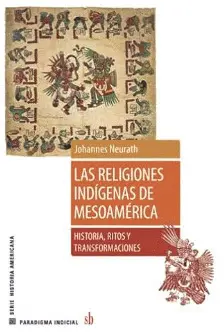
Las Religiones Indígenas de Mesoamérica. Historia, Ritos y Transformaciones

Las Religiones Indígenas de Mesoamérica. Historia, Ritos y Transformaciones

Neurath, Johannes

Este libro ofrece una introducción general a las religiones de Mesoamérica. No persigue un fin enciclopedista, sino demostrar que, aun en la época de la hiperespecialización académica, los estudios mesoamericanos integrales no son imposibles. Un aporte fundamental de esta nueva propuesta es impulsar conceptos que no provienen de la teología y de la historia de las religiones, s...

Disponible

Q. 150

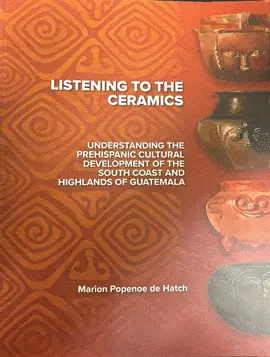
Listening To Ceramics. Understanding The Prehispanic Cultural Development Of The South Coast And Highlands Of Guatemala

Listening To Ceramics. Understanding The Prehispanic Cultural Development Of The South Coast And Highlands Of Guatemala

Marion Popenoe De Hatch

Doctor Marion Popenoe de Hatch is a Guatemalan-American archaeologist who has worked tirelessly to reconstruct an important part of Guatemala's prehispanic history. This book is the culmination of over 45 years of her research at many sites in Guatemala's Highlands and South Coast, particularly Monte Alto, Semetabaj, Tak'alik Ab'aj, and Kaminaljuyu.In addition to publishing ext...

Único ejemplar, sujeto
a consulta.

Q. 575

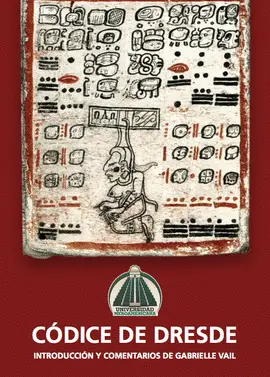
Códice de Dresde (Pasta Suave)

Códice de Dresde (Pasta Suave)

Universidad Mesoamericana

CÓDICE DE DRESDE es el séptimo librocon que la Universidad Mesoamericanapromueve el estudio, la comprensión yla valoración del pasado prehispánicomesoamericano y, en especial, de losconocimientos astronómicos, matemáticosy religiosos de los mayas.La Doctora Gabrielle Vail tradujo losglifos e incorporó explicaciones sobrelos cálculos astronómicos, calendáricos ymatemáticos que s...

Único ejemplar, sujeto
a consulta.

Q. 1.035

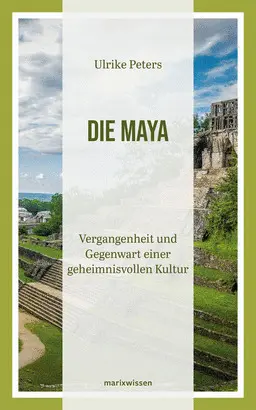
Die Maya: Vergangenheit Und Gegenwart Einer Geheimnisvollen Kultur

Die Maya: Vergangenheit Und Gegenwart Einer Geheimnisvollen Kultur

Ulrike Peters

Die Zivilisation der Maya ist eine der faszinierendsten Hochkulturen der Welt, die den Vergleich mit der Alten Welt nicht scheuen muss. Mit dem am weitesten entwickelten Schrift-, Zahl- und Kalendersystem waren sie die Genies unter den präkolumbianischen Kulturen. Sie kannten bereits die Null, eine Errungenschaft, die im Abendland erst mit dem arabischen Zahlsystem bekannt wurd...

Único ejemplar, sujeto
a consulta.

Q. 230

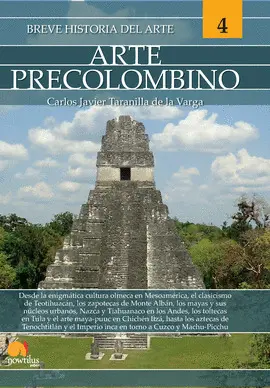
Breve Historia del Arte Precolombino

Breve Historia del Arte Precolombino

Taranilla De La Varga, Carlos Javier

Desde la enigmática cultura olmeca en Mesoamérica, el clasicismo de Teotihuacán, los zapotecas de Monte Albán, los mayas y sus núcleos urbanos, Nazca y Tiahuanaco en los Andes, los toltecas en Tula y el arte maya-puuc en Chichén Itzá, hasta los aztecas de Tenochtitlán y el Imperio inca en torno a Cuzco y Machu-Picchu. Con Breve historia del arte precolombino conocerá el desarro...

Único ejemplar, sujeto
a consulta.

Q. 285