Saltar al contenido principal
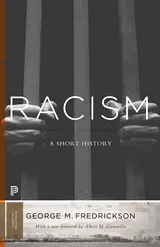
Racism

Racism

George M. Fredrickson

Are antisemitism and white supremacy manifestations of a general phenomenon? Why didn't racism appear in Europe before the fourteenth century, and why did it flourish as never before in the eighteenth and nineteenth centuries? Why did the twentieth century see institutionalized racism in its most extreme forms? Why are egalitarian societies particularly susceptible to virulent ...

Editorial:
Princeton
ISBN:
978-0-691-16705-3
Q. 200
IVA incluido
No disponible
Añadir a favoritos Avisar disponibilidad

Sinopsis

Are antisemitism and white supremacy manifestations of a general phenomenon? Why didn't racism appear in Europe before the fourteenth century, and why did it flourish as never before in the eighteenth and nineteenth centuries? Why did the twentieth century see institutionalized racism in its most extreme forms? Why are egalitarian societies particularly susceptible to virulent racism? What do apartheid South Africa, Nazi Germany, and the American South under Jim Crow have in common? How did the Holocaust advance civil rights in the United States?

With a rare blend of learning, economy, and cutting insight, George Fredrickson surveys the history of Western racism from its emergence in the late Middle Ages to the present. Beginning with the medieval antisemitism that put Jews beyond the pale of humanity, he traces the spread of racist thinking in the wake of European expansionism and the beginnings of the African slave trade. And he examines how the Enlightenment and nineteenth-century romantic nationalism created a new intellectual context for debates over slavery and Jewish emancipation.

Fredrickson then makes the first sustained comparison between the color-coded racism of nineteenth-century America and the antisemitic racism that appeared in Germany around the same time. He finds similarity enough to justify the common label but also major differences in the nature and functions of the stereotypes invoked. The book concludes with a provocative account of the rise and decline of the twentieth century's overtly racist regimes--the Jim Crow South, Nazi Germany, and apartheid South Africa--in the context of world historical developments.

This illuminating work is the first to treat racism across such a sweep of history and geography. It is distinguished not only by its original comparison of modern racism's two most significant varieties--white supremacy and antisemitism--but also by its eminent readability.

Artículos relacionados

La Historia del Mundo en 50 Fracasos

La Historia del Mundo en 50 Fracasos

Gazur, Ben

¿SABÍAS QUE...? Los alquimistas chinos descubrieron por accidente la primera receta de la pólvora en sus intentos fallidos por crear el elixir de la inmortalidad. Gengis Kan hizo caer todo un imperio por la ejecución en público de un embajador mongol, en violación de todas las leyes de la diplomacia y la hospitalidad. ...

Disponible

Q. 170

El Mundo Contemporáneo

El Mundo Contemporáneo

Villares, Ramon / Bahamonde, Angel

La gran síntesis histórica de los dos siglos que han configurado nuestro mundo ahora ampliada con los primeros años del siglo XXI.Nuestra visión del mundo se ha transformando de un modo radical en los últimos doscientos años. Este libro interpreta, desde una perspectiva histórica, las claves del mundo contemporáneo y analiza las líneas básicas de lo que solemos denominar el «la...

Disponible

Q. 320

Voces de Chernóbil (Edición Especial en Tapa Dura)

Voces de Chernóbil (Edición Especial en Tapa Dura)

Alexievich, Svetlana

La escritora bielorrusa Premio Nobel de Literatura 2015 da voz a aquellas personas que sobrevivieron al desastre de Chernóbil y que fueron silenciadas y olvidadas por su propio gobierno. Este libro les da la oportunidad de contar su historia.Chernóbil, 1986. «Cierra las ventanillas y acuéstate. Hay un incendio en la central. Vendré pronto.» Esto fue lo último que un joven bombe...

Disponible

Q. 195

La Guerra que Cambió España

La Guerra que Cambió España

Santamarina, Miguel Angel

Una forma única de comprender la Guerra Civil: el pulso de la historia y la emoción de una crónica contada mes a mes, año a año.Cuando se cumplen noventa años del inicio de la guerra civil española, Miguel Ángel Santamarina ofrece un análisis exhaustivo de los momentos más decisivos del enfrentamiento armado. A través de un recorrido cronológico mes a mes, el autor examina desd...

Disponible

Q. 275

Fugitivos

Fugitivos

Orbach, Danny

¿Qué hicieron los nazis después de su derrota? Esta es la historia de los mercenaries que, tras el colapso del Tercer Reich, vendieron sus servicios a las grandes potencias. Cuando Alemania se rindió, miles de antiguos oficiales del régimen se esfumaron en la confusión de la posguerra. Algunos fueron juzgados y otros escaparon, pero muchos fueron reclutados. Reinhard Gehlen, ge...

Único ejemplar, sujeto
a disponibilidad

Q. 210

Santos y Mentirosos

Santos y Mentirosos

Dwork, Deborah

Una lectura profundamente humana que demuestra que, incluso frente al mal absoluto, la esperanza puede sobrevivir en manos de los valientes. Antes de que Estados Unidos entrara en la Segunda Guerra Mundial, un puñado de ciudadanos comunes tomó la decisión de enfrentar al nazismo desde sus posibilidades, con humanidad y coraje. Martha y Waitstill Sharp, una pareja de Boston que...

Disponible

Q. 160