Saltar al contenido principal
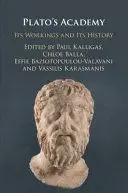
Plato's Academy

Plato's Academy

Its Workings And Its History

Paul Kalligas / Chloe Balla / Effie Baziotopoulou-Valavani / Vassilis Karasmanis

The Academy was a philosophical school established by Plato that safeguarded the continuity and the evolution of Platonism over a period of about 300 years. Its contribution to the development of Hellenistic philosophical and scientific thinking was decisive, but it also had a major impact on the formation of most of the other philosophical trends emerging during this period. T...

Editorial:
Cambridge University Press
Año de edición:
2021
ISBN:
978-1-108-44515-3
Páginas:
446
Q. 670
IVA incluido
No disponible
Añadir a favoritos Avisar disponibilidad

Sinopsis

The Academy was a philosophical school established by Plato that safeguarded the continuity and the evolution of Platonism over a period of about 300 years. Its contribution to the development of Hellenistic philosophical and scientific thinking was decisive, but it also had a major impact on the formation of most of the other philosophical trends emerging during this period. This volume surveys the evidence for the historical and social setting in which the Academy operated, as well as the various shifts in the philosophical outlook of Platonism during its existence. Its contribution to the evolution of special sciences such as mathematics is also examined. The book further includes the first complete annotated translation in English of Philodemus' History of the Academy, preserved on a papyrus from Herculaneum. It thus offers a comprehensive picture of one of the most prominent and influential of all educational institutions in ancient Greece.

Artículos relacionados

How To Dream

How To Dream

Nhat Hanh, Thich

In the final book of the best-selling Mindfulness Essentials series, Zen Master Thich Nhat Hanh shows us how to realize our dreams in this very moment.We all want our lives to be useful and meaningful. The aspiration to transform suffering—our own, each other's, and the Earth's—can give us the energy we need to continue on a wholesome path. In How to Dream, Thich Nhat Hanh expl...

Único ejemplar, sujeto
a disponibilidad

Q. 110

Catastrophe Ethics

Catastrophe Ethics

Travis Rieder

Philosopher Travis Rieder outlines a new ethics for the age of humanmade catastrophe. We are all asking, in a hyperglobalised world hurtling towards environmental destruction: how do we determine the right actions? Do our individual efforts to avoid plastic or air travel, or to drive electric, make any real difference? We urgently need to expand our ethical toolkit. The mental ...

Único ejemplar, sujeto
a disponibilidad

Q. 130

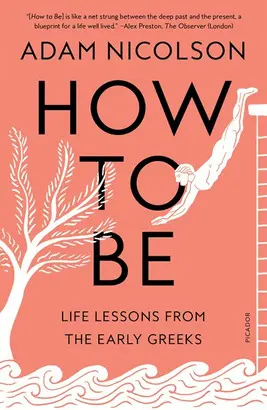
How To Be

How To Be

Adam Nicolson

Nicolson crafts a geography of the ancient world and a brilliant exploration of our connections to the past.What is the nature of things?What is justice? How can I be myself?How should we treat each other?Before the Greeks, the idea of the world was dominated by god-kings and their priests. Twenty-five hundred years ago, in a succession of small eastern Mediterranean harbor cit...

Disponible

Q. 230

The Invention Of Good And Evil

The Invention Of Good And Evil

Sauer, Hanno

For almost five million years, humans have been locked in a relationship with morality, inventing and reinventing the concepts of 'Good' and 'Evil', and weaving them into our cities, laws and customs. Morality is often associated with restraint and coercion; restriction and sacrifice; inquisition, confession and a guilty conscience. Joyless and claustrophobic, it is a device us...

Disponible

Q. 340

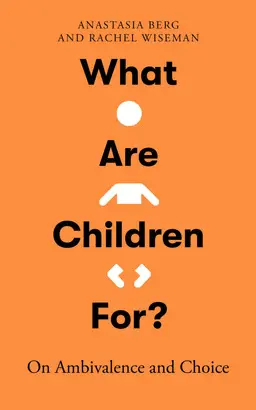
What Are Children For?

What Are Children For?

Anastasia Berg / Wise, Rachel

Having children is one of the biggest decisions you'll make in your life. Increasingly, we aren't making it at all. A NEW STATESMAN BEST BOOK OF 2024 'A book for lovers of sound reasoning.' THE NEW YORKER Across the developed world, fewer and fewer people are becoming parents. We seek self-fulfilment; we want women to find meaning and self-worth outside the household; we wish t...

Disponible

Q. 310

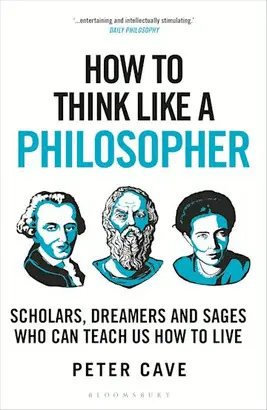
How To Think Like a Philosopher

How To Think Like a Philosopher

Peter Cave

An entertaining guide to history's most fascinating philosophers - from Sappho to Kant, and Aristotle to Simone de Beauvoir - which seeks to help us answer life's big questions.In showing how the great philosophers of human history lived and thought - and what they thought about - Peter Cave provides an accessible and enjoyable introduction to thinking philosophically and how i...

Disponible

Q. 130