Saltar al contenido principal
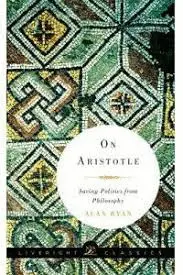
On Aristotle

On Aristotle

Saving Politics From Philosophy

Ryan, Alan

In On Aristotle: Saving Politics from Philosophy, Alan Ryan examines Plato's most famous student and sharpest critic, whose writing has helped shape over two millennia of Western philosophy, science, and religion. The first thinker to posit that a society should be ruled by laws and not men, Aristotle was born in Stagira, Macedon, in 384 BCE. He would go on to join Plato's Acad...

Editorial:
Liveright Publishing Corp
Año de edición:
2015
Materia:
Filosofía
ISBN:
978-1-63149-057-6
Páginas:
224
Q. 150
IVA incluido
No disponible
Añadir a favoritos Avisar disponibilidad

Sinopsis

In On Aristotle: Saving Politics from Philosophy, Alan Ryan examines Plato's most famous student and sharpest critic, whose writing has helped shape over two millennia of Western philosophy, science, and religion. The first thinker to posit that a society should be ruled by laws and not men, Aristotle was born in Stagira, Macedon, in 384 BCE. He would go on to join Plato's Academy and eventually become tutor to Alexander the Great. During his lifetime he would see the revival of Athens following its destruction in the Peloponnesian War, before the ultimate extinction of its radical form of democracy after the Macedonian conquest. Aristotle's strongly empirical cast of mind was brought to bear on a stunning range of subjects, from rhetoric to physics, from the history of political institutions and mathematics to zoology and botany. The resulting system dominated European thought from the thirteenth to seventeenth centuries.
In Nicomachean Ethics and Politics?both excerpted here?Aristotle attempted to delineate the ideal virtues of a both public and private life as well as critique the utopian antipolitics of his former teacher, Plato. For Aristotle, life in a polis was the natural state of man and provided the greatest opportunity for human beings to fulfill their potential. Unlike his scientific theories, which would eventually be displaced by Galileo, Newton, and Darwin, Aristotle's meticulous thinking on the nature of human affairs, ethics, politics, citizenship, and virtue in a civil society remains as vital today as it was in his own time.

Artículos relacionados

Una Filosofía de la Resistencia

Una Filosofía de la Resistencia

González Serrano, Carlos Javier

UN CONTUNDENTE ENSAYO DE UNO DE LOS FILÓSOFOS CON MÁS PROYECCIÓN DEL MOMENTO.3.ª edición. Una defensa de la filosofía contra la manipulación intelectual y el totalitarismo emocional.Vivimos en una sociedad en la que la tecnología tiene cada vez más protagonismo, donde impera el ruido permanente, la hiperestimulación constante y una violenta rapidez. Un mundo en el que la silenc...

Disponible

Q. 130

Wittgenstein

Wittgenstein

John Heaton

Ludwig Wittgenstein ha conquistado la imaginación popular como el Sócrates moderno, el fascinante maestro del razonamiento enigmático quien, con su fría lógica, convenció a Bertrand Russell de que había un hipopótamo en la habitación. Es un icono del modernismo, pero ¿qué es lo que dijo realmente? En Wittgenstein, una guía ilustrada, nos encontramos con un hombre extraño, un ló...

Disponible

Q. 210

Lógica

Lógica

Cryan, Dan / Shatil, Sharron

La lógica es la columna vertebral de la civilización occidental, lo que sostiene nuestros sistemas de filosofía, ciencia y legislación. La lógica también se encuentra en nuestra vida cotidiana, desde los idiomas que hablamos hasta las operaciones más básicas de nuestros teléfonos móviles. Nos puede incluso informar sobre cómo está diseñada una telenovela. Lógica, una guía ilust...

Disponible

Q. 210

Filosofía Helenística

Filosofía Helenística

Sellars, John

Una introducción a la filosofía helenística, que incluye el cinismo, el epicureísmo, el estoicismo y el escepticismo, de la mano del aclamado filósofo John Sellars, en la que destaca su relevancia práctica y su influencia en la filosofía moderna.El periodo helenístico fue una época fascinante con un panorama filosófico vibrante y diverso: no solo nacieron dos nuevas escuelas de...

Disponible

Q. 260

Filosofía y Poesía

Filosofía y Poesía

Zambrano, María

La gran obra con la que María Zambrano inicia el camino hacia la razón poética.«Hoy, poesía y pensamiento se nos aparecen como dos formas insuficientes; y se nos antojan dos mitades del hombre: el filósofo y el poeta. No se encuentra el hombre entero en la filosofía; no se encuentra la totalidad de lo humano en la poesía. En la poesía encontramos directamente al hombre concreto...

Disponible

Q. 160

El Aciago Demiurgo

El Aciago Demiurgo

Cioran, E.m.

Un autor de culto. Una punzante reflexión sobre la existenica del mal y del error. ¿Cómo pudieron conciliar los cristianos la idea de un dios bueno con la presencia del mal en el mundo? Inspirado por los gnósticos, Cioran dedicó en este libro páginas magistrales a esta cuestión, así como al conflicto entre politeísmo y monoteísmo, cuyas repercusiones filosóficas y políticas sig...

Disponible

Q. 230

Otros libros del autor

On Marx

On Marx

Ryan, Alan

In On Marx, Alan Ryan examines Marx's political and economic philosophy within the Victorian context of Marx's own life and times as well as glancing forward to the uses and abuses of his ideas by his many successors. Tracing Marx's influences from Hegel to Feuerbach, from French socialism to British political economy, and documenting his ideological battles with his contempora...

No disponible

Q. 150

On Machiavelli

On Machiavelli

Ryan, Alan

A well-educated son of Florence, Machiavelli was originally in charge of the Florentine Republic s militia, but in 1512 the city fell to papal forces led by Cardinal Giovanni de Medici, who thus restored the Medici family to power. Machiavelli was accused of conspiracy, imprisoned, tortured, and eventually exiled from his beloved Florence, and it was during this period that he ...

No disponible

Q. 150

On Augustine: The Two Cities

On Augustine: The Two Cities

Ryan, Alan

It would be almost impossible to exaggerate the influence of Augustine the once-hedonistic pagan turned ascetic theologian and defender of the early Christian Church over all the subsequent history of Europe. Augustine s political philosophy is pregnant with arguments that racked not only Christian Europe but also much of the modern world. Whether it was his essential skepticis...

No disponible

Q. 150

On Hobbes: Escaping The War Of All
No disponible

Q. 150