Saltar al contenido principal
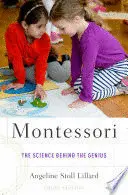
Montessori

Montessori

The Science Behind The Genius

Angeline Stoll Lillard

Traditional American schooling is in constant crisis because it is based on two poor models for children's learning: the school as a factory and the child as a blank slate. School reforms repeatedly fail by not penetrating these models. One hundred years ago, Maria Montessori, the first female physician in Italy, devised a very different method of educating children, based on h...

Editorial:
Oxford
Año de edición:
2017
Materia:
Psicología
ISBN:
978-0-19-998152-6
Páginas:
474
Q. 355
IVA incluido
No disponible
Añadir a favoritos Avisar disponibilidad

Sinopsis

Traditional American schooling is in constant crisis because it is based on two poor models for children's learning: the school as a factory and the child as a blank slate. School reforms repeatedly fail by not penetrating these models. One hundred years ago, Maria Montessori, the first female physician in Italy, devised a very different method of educating children, based on her observations of how they naturally learn. Does Montessori education provide a viable alternative to traditional schooling? Do Dr. Montessori's theories and practices stand up to the scrutiny of modern-day developmental psychology? Can developmental psychology tell us anything about how and why Montessori methods work? In Montessori, the author shows that science has finally caught up with Maria Montessori: Current scientific research provides astounding support for her major insights. She presents the research concerning eight insights that are foundational to Montessori education and describes how each of these insights is applied in the Montessori classroom. In reading this book, parents and teachers alike will develop a clear understanding of what happens in a Montessori classroom and, more important, why it happens and why it works. Montessori however, does much more than explain the scientific basis for Montessori's system. Amid the clamor for evidence-based education, this book presents the studies that show how children learn best, makes clear why many traditional practices come up short, and describes an ingenious alternative that works. Everyone interested in education, at all levels and in all forms, will take from this book a wealth of insights on how to improve teaching effectiveness. Montessori is indispensable reading for anyone interested in what psychologists know about human learning and development.

Artículos relacionados

Dopamina Bajo Control

Dopamina Bajo Control

Long, Michael E.

La continuación del gran éxito internacional Dopamina. ¿Por qué nunca es suficiente? Buscamos más éxito, más placer, más reconocimiento... y aun así seguimos insatisfechos. La respuesta está en la dopamina: la molécula que impulsa nuestro deseo, nos motiva a actuar y nos hace soñar con lo que viene después, pero también nos atrapa en un ciclo de insatisfacción constante. Promet...

Disponible

Q. 220

Trastorno por Déficit de Atención con Hiperactivid

Trastorno por Déficit de Atención con Hiperactivid

Guerrero, Rafa

Cómo se desarrolla el cerebro del niño y del adolescente para entender todas las claves y los secretos de la neuroeducación.El trastorno por déficit de atención con hiperactividad (TDAH) es una patología del neurodesarrollo que afecta a un 5 por ciento de la población infantil. Dadas las manifestaciones del trastorno (problemas para concentrarse, movimiento excesivo e impulsivi...

Disponible

Q. 140

La Hipótesis de la Felicidad

La Hipótesis de la Felicidad

Haidt, Jonathan

Diez grandes ideas de la sabiduría antigua para vivir más felices hoy, del autor de La mente de los justos y La generación ansiosa.Jonathan Haidt, uno de los más destacados representantes de la psicología positiva —una rama de la psicología que busca comprender los procesos que subyacen a las cualidades y emociones positivas del ser humano— conjuga la precisión científica con l...

Disponible

Q. 220

Neuroderechos

Neuroderechos

Yuste Rojas, Rafael

Rafael Yuste, el neurocientífico español más reconocido internacionalmente, nos revela el progreso de las neurotecnologías, y destaca la urgente necesidad de establecer unos neuroderechos que protejan nuestra privacidad e identidad mentales.En este apasionante libro, Rafael Yuste relata su trayectoria científica desde sus microscopios caseros en el barrio madrileño de Argüelles...

Disponible

Q. 210

El Cielo que Olvida Sus Estrellas

El Cielo que Olvida Sus Estrellas

Martínez-Horta, Saul

El cielo que olvida sus estrellas es un libro de divulgación científica que propone una travesía intelectual y emocional por los misterios del cerebro humano y las enfermedades que lo amenazan. Con un enfoque único, profundo y poético, esta obra combina ciencia de vanguardia con una narrativa cercana y evocadora. Dirigido tanto al lector curioso como al profesional en busca de ...

Disponible

Q. 260

Neuroderechos

Neuroderechos

Yuste Rojas, Rafael

Rafael Yuste, el neurocientífico español más reconocido internacionalmente, nos expone la necesidad urgente de establecer neuroderechos que protejan la privacidad y la identidad mental, mientras nos guía a través de los peligros y promesas de estas tecnologías.Rafael Yuste, director del Centro de Neurotecnología de la Universidad de Columbia y presidente de la NeuroRights Found...

Disponible

Q. 260