

0
MONET

MONET

Natalia Brodskaya

Q. 73
IVA incluido
No disponible
Editorial:
PARKSTONE EBOOK
Año de edición:
2014
Materia:
Arte
ISBN:
978-1-78160-968-2
Páginas:
263
Encuadernación:
Epublication content package
Colección:
Mega Square Mega Square
Q. 73
IVA incluido
No disponible
Añadir a favoritos

For Claude Monet the designation impressionist always remained a source of pride. In spite of all the things critics have written about his work, Monet continued to be a true impressionist to the end of his very long life. He was so by deep conviction, and for his Impressionism he may have sacrificed many other opportunities that his enormous talent held out to him. Monet did not paint classical compositions with figures, and he did not become a portraitist, although his professional training included those skills. He chose a single genre for himself, landscape painting, and in that he achieved a degree of perfection none of his contemporaries managed to attain. Yet the little boy began by drawing caricatures. Boudin advised Monet to stop doing caricatures and to take up landscapes instead. The sea, the sky, animals, people, and trees are beautiful in the exact state in which nature created them surrounded by air and light. Indeed, it was Boudin who passed on to Monet his conviction of the importance of working in the open air, which Monet would in turn transmit to his impressionist friends. Monet did not want to enrol at the Ecole des Beaux-Arts. He chose to attend a private school, L Académie Suisse, established by an ex-model on the Quai d Orfèvres near the Pont Saint-Michel. One could draw and paint from a live model there for a modest fee. This was where Monet met the future impressionist Camille Pissarro. Later in Gleyre s studio, Monet met Auguste Renoir Alfred Sisley, and Frédéric Bazille. Monet considered it very important that Boudin be introduced to his new friends. He also told his friends of another painter he had found in Normandy. This was the remarkable Dutchman Jongkind. His landscapes were saturated with colour, and their sincerity, at times even their naïveté, was combined with subtle observation of the Normandy shore s variable nature. At this time Monet s landscapes were not yet characterized by great richness of colour. Rather, they recalled the tonalities of paintings by the Barbizon artists, and Boudin s seascapes. He composed a range of colour based on yellow-brown or blue-grey. At the Third Impressionist Exhibition in 1877 Monet presented a series of paintings for the first time: seven views of the Saint-Lazare train station. He selected them from among twelve he had painted at the station. This motif in Monet s work is in line not only with Manet s Chemin de fer (The Railway) and with his own landscapes featuring trains and stations at Argenteuil, but also with a trend that surfaced after the railways first began to appear. In 1883, Monet had bought a house in the village of Giverny, near the little town of Vernon. At Giverny, series painting became one of his chief working procedures. Meadows became his permanent workplace. When a journalist, who had come from Vétheuil to interview Monet, asked him where his studio was, the painter answered, My studio! I ve never had a studio, and I can t see why one would lock oneself up in a room. To draw, yes to paint, no . Then, broadly gesturing towards the Seine, the hills, and the silhouette of the little town, he declared, There s my real studio. Monet began to go to London in the last decade of the nineteenth century. He began all his London paintings working directly from nature, but completed many of them afterwards, at Giverny. The series formed an indivisible whole, and the painter had to work on all his canvases at one time. A friend of Monet s, the writer Octave Mirbeau, wrote that he had accomplished a miracle. With the help of colours he had succeeded in recreating on the canvas something almost impossible to capture: he was reproducing sunlight, enriching it with an infinite number of reflections. Alone among the impressionists, Claude Monet took an almost scientific study of the possibilities of colour to its limits; it is unlikely that one could have gone any further in that direction.

Artículos relacionados

  • 50 COSAS QUE HAY QUE SABER SOBRE ARTE
    50 COSAS QUE HAY QUE SABER SOBRE ARTE
    SUSIE HODGE
    Una exploración de las ideas, las técnicas y las creaciones que han marcado el devenir del arte desde la prehistoria hasta nuestros días. ¿Cuál es la diferencia entre una pintura del barroco y una del rococó? ¿A qué movimiento pertenecen Los Nenúfares de Monet y Los Girasoles de Van Gogh?50 cosas que hay que saber sobre arte es una perfecta introducción al conocimiento sobre mo...
    Disponible

    Q. 120

  • EL LIBRO DEL AUTOMÓVIL (THE CAR BOOK)
    EL LIBRO DEL AUTOMÓVIL (THE CAR BOOK)
    KINDERSLEY, DORLING
    Una guía visual te muestra todo lo que necesitas saber sobre los autos, desde los primeros carruajes sin caballos hasta los superdeportivos modernos y los autos de Fórmula 1. Si eres un apasionado de los autos clásicos o si en general te encanta el mundo del motor, prepárate para este recorrido inigualable por la historia del automovilismo y del diseño motriz. En sus páginas,...
    Disponible

    Q. 410

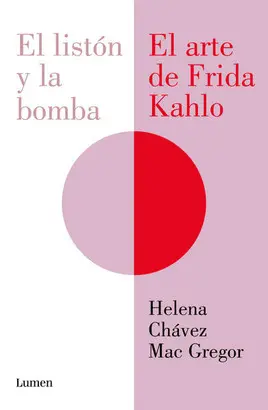
  • LISTON Y LA BOMBA, EL. EL ARTE DE FRIDA
    LISTON Y LA BOMBA, EL. EL ARTE DE FRIDA
    HELENA CHÁVEZ MAC GREGOR
    «En este libro, Helena Chávez Mac Gregor nos hace verlo que no habíamos visto en aquello que ya habíamos visto, nos hace pensar cosas que no habíamos pensado, ahí donde creímos ya haber pensado.» -Emiliano Monge ¿Frida Kahlo de verdad era una artista sobresaliente? ¿Qué hace importante su obra? ¿Por qué es una de las artistas más referidas de nuestro tiempo? ¿Cómo podemos volve...
    Disponible

    Q. 140

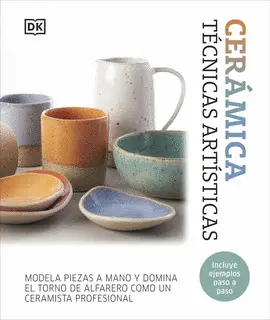
  • CERÁMICA. TÉCNICAS ARTÍSTICAS
    CERÁMICA. TÉCNICAS ARTÍSTICAS
    DK
    Despierta tu creatividad y aprende todo lo que necesitas saber para crear tus propias piezas de cerámica ¿Quieres empezar a explorar tu potencial con la arcilla y encontrar la armonía al trabajar con tus manos? ¿O buscas ampliar tus habilidades como alfarero? ¡Cerámica. Técnicas artísticas es el libro perfecto para ti! Con una amplia gama de técnicas y fotografías inspiradoras...
    Disponible

    Q. 270

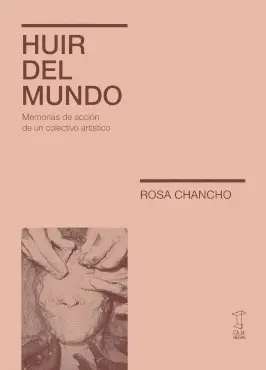
  • HUIR DEL MUNDO
    HUIR DEL MUNDO
    ROSA CHANCHO
    El colectivo Rosa Chancho irrumpe en 2005 en la ciudad de Buenos Aires con un conjunto de operaciones que irradiaban curiosidad crítica por la acelerada expansión del campo vernáculo de las artes visuales. Su nombre encarna una toma de posición frente a los discursos polarizados de la escena local, en la que aún resonaba la controversia entre el "arte rosa light" (decorativo o ...
    Disponible

    Q. 170

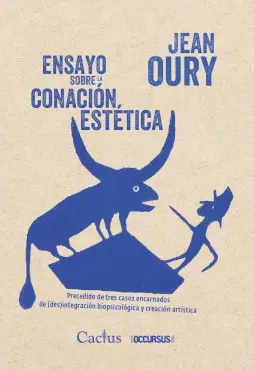
  • ENSAYO SOBRE LA CONACION ESTÉTICA
    ENSAYO SOBRE LA CONACION ESTÉTICA
    JEAN OURY
    ¿Por qué publicar una tesis? Jean Oury -que convivió desde 1947 en Saint-Alban, Saumery y La Borde con las personas que trataba como médico psiquiatra- lo justifica a través de una afirmación clínica y política: "se trata de una ventana abierta hacia el mundo viviente, existente, amenazado por el prejuicio y la inasistencia". Se lee a un Oury joven pero que ya navegaba entre l...
    Disponible

    Q. 180

Otros libros del autor

  • MANET
    MANET
    Natalia Brodskaya
    Manet es uno de los artistas más famosos de la segunda mitad del siglo XIX, ligado por lo general a los impresionistas, aunque en realidad no era uno de ellos. Tuvo gran influencia en la pintura francesa, en parte por la elección de sus temas, que sacaba de la vida cotidiana, pero también por el uso de los colores puros y por su técnica rápida y libre. En su propia obra se mate...
    No disponible

    Q. 73

  • MANET
    MANET
    Natalia Brodskaya
    Manet is one of the most famous artists from the second half of the nineteenth century linked to the impressionists, although he was not really one of them. He had great influence on French painting partly because of the choice he made for his subjects from everyday life, the use of pure colours, and his fast and free technique. He made, in his own work, the transition between ...
    No disponible

    Q. 73

  • NAÏVE ART
    NAÏVE ART
    Natalia Brodskaya
    Until the end of the 19th century Naïve Art, created by untrained artists and characterised by spontaneity and simplicity, enjoyed little recognition from professional artists and art critics. Naïve painting is often distinguished by its clarity of line, vivacity and joyful colours, as well as by its rather clean-cut, simple shapes, as represented by French artists such as Henr...
    No disponible

    Q. 73

  • CÉZANNE
    CÉZANNE
    Natalia Brodskaya
    Since his death 100 years ago, Cézanne has become the most famous painter of the nineteenth century. He was born in Aix-en-Provence in 1839 and the happiest period of his life was his early youth in Provence, in company with Emile Zolá, another Italian. Following Zolá s example, Cézanne went to Paris in his twenty-first year. During the Franco-Prussian war he deserted the ...
    No disponible

    Q. 73

  • IMPRESSIONISM
    IMPRESSIONISM
    Natalia Brodskaya
    Impressionism has always been one of the public s favourite styles of art and Impressionist works continue to enchant beholders with their amazing play of colours and forms. This book offers a well-chosen selection of the most impressive works of artists such as Degas, Monet, Pissarro, Renoir and Sisley. Mega Square Impressionism pays tribute to the subject s popularity. ...
    No disponible

    Q. 73

  • CÉZANNE
    CÉZANNE
    Natalia Brodskaya
    Desde su muerte, hace 100 años, Cézanne se ha convertido en el pintor más famoso del siglo XIX. Nació en Aix-en-Provence en 1839 y el periodo más feliz de su vida fue su primera juventud en Provenza, en compañía de Emile Zolá. Siguiendo el ejemplo de Zolá, al cumplir los veintiún años, Cézanne se marchó a París. Durante la guerra franco-prusiana desertó de la milicia, y dividió...
    No disponible

    Q. 73