0
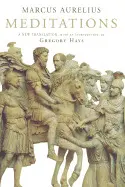
MEDITATIONS: A NEW TRANSLATION

MEDITATIONS: A NEW TRANSLATION

MARCUS AURELIUS (MARCO AURELIO)

Q. 250
IVA incluido
No disponible
Editorial:
VINTAGE
Año de edición:
2017
Materia:
Filosofía
ISBN:
978-0-679-64260-2
Encuadernación:
Otros
Q. 250
IVA incluido
No disponible
Añadir a favoritos

Nearly two thousand years after it was written, Meditations remains profoundly relevant for anyone seeking to lead a meaningful life.

Few ancient works have been as influential as the Meditations of Marcus Aurelius, philosopher and emperor of Rome (A.D. 161-180). A series of spiritual exercises filled with wisdom, practical guidance, and profound understanding of human behavior, it remains one of the greatest works of spiritual and ethical reflection ever written. Marcus's insights and advice—on everything from living in the world to coping with adversity and interacting with others—have made the Meditations required reading for statesmen and philosophers alike, while generations of ordinary readers have responded to the straightforward intimacy of his style. For anyone who struggles to reconcile the demands of leadership with a concern for personal integrity and spiritual well-being, the Meditations remains as relevant now as it was two thousand years ago.

In Gregory Hays's new translation—the first in thirty-five years—Marcus's thoughts speak with a new immediacy. In fresh and unencumbered English, Hays vividly conveys the spareness and compression of the original Greek text. Never before have Marcus's insights been so directly and powerfully presented.

With an Introduction that outlines Marcus's life and career, the essentials of Stoic doctrine, the style and construction of the Meditations, and the work's ongoing influence, this edition makes it possible to fully rediscover the thoughts of one of the most enlightened and intelligent leaders of any era.

Artículos relacionados

  • CARTAS DE UN ESTOICO
    CARTAS DE UN ESTOICO
    SENECA
    Una nutrida selección de las cartas de Séneca, en la que expone la filosofía estoica y aporta las claves para una vida plena Introducción de Rafael Narbona. En estas meditaciones que se presentan bajo la forma de cartas a su amigo Lucilio, Séneca, uno de los mayores exponentes del estoicismo, nos invita a un viaje de introspección y reflexión. Escritas en un momento de crisis p...
    Disponible

    Q. 120

  • UNA FILOSOFÍA DE LA RESISTENCIA
    UNA FILOSOFÍA DE LA RESISTENCIA
    CARLOS JAVIER GONZÁLEZ SERRANO
    UN CONTUNDENTE ENSAYO DE UNO DE LOS FILÓSOFOS CON MÁS PROYECCIÓN DEL MOMENTO.3.ª ediciónUna defensa de la filosofía contra la manipulación intelectual y el totalitarismo emocional Vivimos en una sociedad en la que la tecnología tiene cada vez más protagonismo, donde impera el ruido permanente, la hiperestimulación constante y una violenta rapidez. Un mundo en...
    Disponible

    Q. 130

  • ESTOICISMO PASO A PASO: UNA GUÍA PRÁCTICA PARA LA VIDA (THE STOICISM WORKBOOK SPANISH EDITION)
    ESTOICISMO PASO A PASO: UNA GUÍA PRÁCTICA PARA LA VIDA (THE STOICISM WORKBOOK SPANISH EDITION)
    VARIOS AUTORES / SCOTT WALTMAN / TRENT CODD / KASEY PIERCE
    "Conocerte a ti mismo es el principio de la sabiduría." --Sócrates ¿Cuál es el secreto de la felicidad duradera? ¿Cómo obtener la resiliencia necesaria para afrontar las inevitables tormentas de la vida? ¿Qué puedes hacer cuando te sientes ansioso, deprimido, estresado o agotado por la vida? Para los filósofos antiguos como Sócrates, Marco Aurelio, Zenón y Epicteto, estas pregu...
    Disponible

    Q. 160

  • ARTE DE AMAR
    ARTE DE AMAR
    OVIDIO
    El arte de amar permite observar una de las esferas más íntimas de la sociedad romana: los preceptos que se consideraban infalibles en el arte del cortejo.«Mientras podéis y vivís todavía años primaverales, divertíos: los años se van como el agua que corre.»Así anima Ovidio a mujeres y hombres jóvenes que deseen encontrar un amor fácil. El arte de amar pertenece a la primera et...
    Disponible

    Q. 90

  • GRITO SAGRADO, EL.
    GRITO SAGRADO, EL.
    L.M. OLIVEIRA
    ¿En qué consiste ser libres? En un mitin político en el parque Lezama de Buenos Aires, en septiembre de 2024, Javier Milei, presidente de Argentina, arrancó su discurso gritando tres veces: "¡Viva la libertad, carajo!". Luego continuó su arenga: "¡Ustedes son almas libres, leones que no quisieron ser sacrificados en el altar de la maldita justicia social!". Ante esta euforia ca...
    Disponible

    Q. 120

  • ESPIRITUS DEL PRESENTE
    ESPIRITUS DEL PRESENTE
    EILENBERGER, WOLFRAM
    ¿Que filosofía puede guiarnos todavía hoy?Siguiendo los pasos de Theodor W. Adorno, Susan Sontag, Michel Foucault y Paul K. Feyerabend, Espíritus del presente crea un amplio panorama de las ideas de la posguerra en Occidente. Wolfram Eilenberger ofrece un relato cautivador de los albores de una nueva ilustración que conduce directamente a las fallas de nuestro tiempo.Invierno d...
    Disponible

    Q. 250

Otros libros del autor

  • MEDITATIONS
    MEDITATIONS
    MARCUS AURELIUS (MARCO AURELIO)
    A timely book for today's world, Marcus Aurelius's Meditations explores how to endure hardship, how to cope with change and how to find something positive out of adversity.Part of the Macmillan Collector's Library; a series of stunning, clothbound, pocket-sized classics with gold foiled edges and ribbon markers. These beautiful books make perfect gifts or a treat for any book l...
    Disponible

    Q. 100

  • MEDITATIONS
    MEDITATIONS
    MARCUS AURELIUS (MARCO AURELIO)
    'Do not act as if you had ten thousand years to live ... while you have life in you, while you still can, make yourself good.' The Meditations of Marcus Aurelius (AD 121-180) is a private notebook of philosophical reflections, written by a Roman emperor probably on military campaign in Germany. In short, highly charged comments, Marcus draws on Stoic philosophy to confront chal...
    No disponible

    Q. 110

  • MEDITATIONS
    MEDITATIONS
    MARCUS AURELIUS (MARCO AURELIO)
    The "Meditations" of Roman Emperor Marcus Aurelius are a readable exposition of the system of metaphysics known as stoicism. Stoics maintained that by putting aside great passions, unjust thoughts and indulgence, man could acquire virtue and live at one with nature. The Meditations were composed in periods of inaction during the wars which Marcus hated but was compelled to figh...
    No disponible

    Q. 80