Saltar al contenido principal
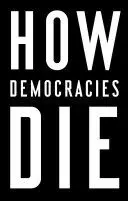
How Democracies Die
-15%

How Democracies Die

Ziblatt, Daniel / Levitsky, Steven

Donald Trump's presidency has raised a question that many of us never thought we'd be asking: Is our democracy in danger? Harvard professors Steven Levitsky and Daniel Ziblatt have spent more than twenty years studying the breakdown of democracies in Europe and Latin America, and they believe the answer is yes. Democracy no longer ends with a bang--in a revolution or military c...

Editorial:
Ace Books
Año de edición:
2019
ISBN:
978-1-9848-2577-3
Páginas:
385
Q. 110
Q. 94
IVA incluido
No disponible
Añadir a favoritos Avisar disponibilidad

Sinopsis

Donald Trump's presidency has raised a question that many of us never thought we'd be asking: Is our democracy in danger? Harvard professors Steven Levitsky and Daniel Ziblatt have spent more than twenty years studying the breakdown of democracies in Europe and Latin America, and they believe the answer is yes. Democracy no longer ends with a bang--in a revolution or military coup--but with a whimper: the slow, steady weakening of critical institutions, such as the judiciary and the press, and the gradual erosion of long-standing political norms. The good news is that there are several exit ramps on the road to authoritarianism. The bad news is that, by electing Trump, we have already passed the first one. Drawing on decades of research and a wide range of historical and global examples, from 1930s Europe to contemporary Hungary, Turkey, and Venezuela, to the American South during Jim Crow, Levitsky and Ziblatt show how democracies die--and how ours can be saved.

Artículos relacionados

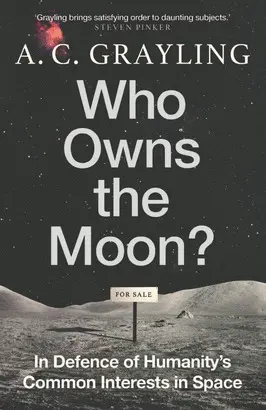
Who Owns The Moon? -15%

Who Owns The Moon?

A. C. Grayling

A Defence of Our Intergalactic Common InterestsAs the world's superpowers and corporations jostle for control in space, A. C. Grayling asks: who really owns our planet? 'Grayling brings satisfying order to daunting subjects.' STEVEN PINKER Silicon for microchips; manganese for batteries; titanium for missiles. The moon contains a wealth of natural resources. So, as the Earth's ...

Disponible
Q. 170

Q. 145

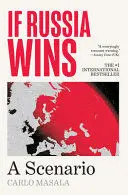
If Russia Wins -15%

If Russia Wins

Carlo Masala

A #1 international bestseller from a NATO expert, this deeply researched and chillingly plausible scenario imagines what might happen should Putin defeat Ukraine and not stop there March 2028. Russian troops capture the small Estonian town of Narva and the island of Hiiumaa in the Baltic Sea. After a victorious peace deal in Ukraine, Putin's long-mooted encroachment into the Ba...

Disponible
Q. 185

Q. 157

War And Power -15%

War And Power

O'brien, Phillips Payson

A bold, revisionist study of modern warfare, showing that military victory is rooted not in large armies and decisive battles, but in the full spectrum of economic, political, and social power--"vital reading for anyone grappling with America's uncertain place in today's global order" (Alexander Vindman, New York Times-bestselling author of The Folly of Realism) For nearly two...

Disponible
Q. 310

Q. 264

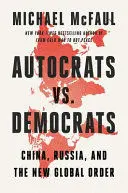
Autocrats Vs. Democrats -15%

Autocrats Vs. Democrats

Michael Mcfaul

"A history, an analysis, and a set of prescriptions for the greatest geopolitical challenge of our time: the threat to the democratic world posed by China and Russia." --Anne Applebaum, author of Autocracy, Inc. "A monumental account of contemporary geopolitics"--Francis Fukuyama, author of Liberalism and Its Discontents The rise of China, Russia's invasion of Ukraine, and th...

Disponible
Q. 360

Q. 306

1929 -15%

1929

Andrew Ross Sorkin

From the bestselling author of Too Big to Fail, "the definitive history of the 2008 banking crisis,"* comes a spellbinding narrative of the most infamous stock market crash in history. With the depth of a classic history and the drama of a thriller, 1929 unravels the greed, blind optimism, and human folly that led to an era-defining collapse—one with ripple effects that still s...

Disponible
Q. 350

Q. 298

Unit X -15%

Unit X

Raj M. Shah / Christopher Kirchhoff

Shortlisted for the 2024 Financial Times Business Book of the Year "An exceedingly important book!" —General David Petraeus, US Army (Ret.), former Director of the CIA "Essential reading for understanding how technology will change the future of warfare." —Chris Miller, New York Times bestselling author of Chip War "Inspiring. A riveting reminder of how hard protecting our nati...

Disponible
Q. 190

Q. 162