Saltar al contenido principal
Hellenistic Philosophy

Hellenistic Philosophy

Sellars, John

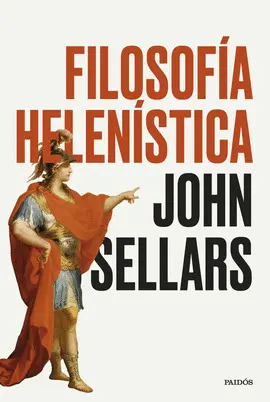
The Hellenistic period was a rich and exciting time for philosophy. It saw the birth of two new schools of thought, Epicureanism and Stoicism, and important developments in Plato's Academy. Aristotelians and Cynics were also active during the period, all of which created a vibrant philosophical landscape. Many of the ideas now associated with early modern and enlightenment phi...

Editorial:
Oxford
Año de edición:
2018
ISBN:
978-0-19-967412-1
Páginas:
260
Q. 515
IVA incluido
Disponible
Añadir a favoritos

Sinopsis

The Hellenistic period was a rich and exciting time for philosophy. It saw the birth of two new schools of thought, Epicureanism and Stoicism, and important developments in Plato's Academy. Aristotelians and Cynics were also active during the period, all of which created a vibrant philosophical landscape.

Many of the ideas now associated with early modern and enlightenment philosophy - such as empiricism, materialism, and religious scepticism - were widely discussed by Hellenistic philosophers. In Hellenistic Philosophy, Sellars offers a thematic introduction to the philosophy of this era. The author highlights the very practical outlook common of the time, in which philosophy was seen as a guide for life, and summarizes the key debates on a series of topics, ranging from epistemology to political philosophy.

The works of Hellenistic philosophers had a vital influence on later thought, and especially on the development of early modern philosophy. In providing an accessible outline of this important era, the book is of particular use to students and general readers interested in the period. It is also an invaluable resource for teaching with its guide to Hellenistic philosophers, chronology, and extensive cross-references to standard collections of ancient texts.

Artículos relacionados

How To Dream

How To Dream

Nhat Hanh, Thich

In the final book of the best-selling Mindfulness Essentials series, Zen Master Thich Nhat Hanh shows us how to realize our dreams in this very moment.We all want our lives to be useful and meaningful. The aspiration to transform suffering—our own, each other's, and the Earth's—can give us the energy we need to continue on a wholesome path. In How to Dream, Thich Nhat Hanh expl...

Disponible

Q. 110

Catastrophe Ethics

Catastrophe Ethics

Travis Rieder

Philosopher Travis Rieder outlines a new ethics for the age of humanmade catastrophe. We are all asking, in a hyperglobalised world hurtling towards environmental destruction: how do we determine the right actions? Do our individual efforts to avoid plastic or air travel, or to drive electric, make any real difference? We urgently need to expand our ethical toolkit. The mental ...

Disponible

Q. 130

How To Be

How To Be

Adam Nicolson

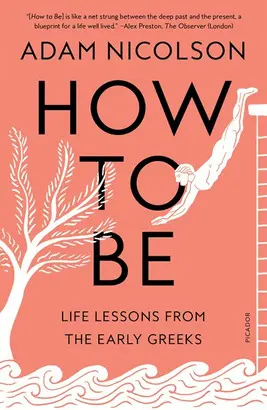
Nicolson crafts a geography of the ancient world and a brilliant exploration of our connections to the past.What is the nature of things?What is justice? How can I be myself?How should we treat each other?Before the Greeks, the idea of the world was dominated by god-kings and their priests. Twenty-five hundred years ago, in a succession of small eastern Mediterranean harbor cit...

Disponible

Q. 230

The Invention Of Good And Evil

The Invention Of Good And Evil

Sauer, Hanno

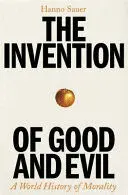
For almost five million years, humans have been locked in a relationship with morality, inventing and reinventing the concepts of 'Good' and 'Evil', and weaving them into our cities, laws and customs. Morality is often associated with restraint and coercion; restriction and sacrifice; inquisition, confession and a guilty conscience. Joyless and claustrophobic, it is a device us...

Disponible

Q. 340

What Are Children For?

What Are Children For?

Anastasia Berg / Wise, Rachel

Having children is one of the biggest decisions you'll make in your life. Increasingly, we aren't making it at all. A NEW STATESMAN BEST BOOK OF 2024 'A book for lovers of sound reasoning.' THE NEW YORKER Across the developed world, fewer and fewer people are becoming parents. We seek self-fulfilment; we want women to find meaning and self-worth outside the household; we wish t...

Disponible

Q. 310

How To Think Like a Philosopher

How To Think Like a Philosopher

Peter Cave

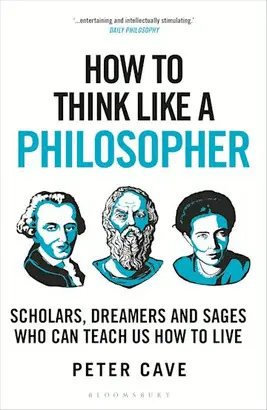
An entertaining guide to history's most fascinating philosophers - from Sappho to Kant, and Aristotle to Simone de Beauvoir - which seeks to help us answer life's big questions.In showing how the great philosophers of human history lived and thought - and what they thought about - Peter Cave provides an accessible and enjoyable introduction to thinking philosophically and how i...

Disponible

Q. 130

Otros libros del autor

Filosofía Helenística

Filosofía Helenística

Sellars, John

Una introducción a la filosofía helenística, que incluye el cinismo, el epicureísmo, el estoicismo y el escepticismo, de la mano del aclamado filósofo John Sellars, en la que destaca su relevancia práctica y su influencia en la filosofía moderna.El periodo helenístico fue una época fascinante con un panorama filosófico vibrante y diverso: no solo nacieron dos nuevas escuelas de...

Disponible

Q. 260

Lecciones de Aristóteles

Lecciones de Aristóteles

Sellars, John

¿Por qué ha tenido Aristóteles una influencia tan asombrosa en el mundo? ¿Cuáles son sus ideas clave y qué puede enseñarnos aún hoy? «A todo el mundo debería interesarle Aristóteles, ya que su filosofía es una base crucial para la ética, la ciencia, la lógica, la política y la estética del mundo occidental. Este libro breve es una introducción brillante y clara a todo el abanic...

Disponible

Q. 190

Lecciones de Epicureísmo

Lecciones de Epicureísmo

Sellars, John

Filosofía antigua y mediterránea para la vida moderna. Un antídoto epicúreo para la ansiedad. ¿Cómo vivir una vida feliz? Hace más de dos mil años, el filósofo griego Epicuro ofreció una respuesta simple: lo único que realmente necesitamos es placer. Hoy tendemos a asociar la palabra «epicúreo» con el exceso indulgente y el simple disfrute de la comida y el vino, pero el hedon...

Único ejemplar, sujeto
a disponibilidad

Q. 170

Lecciones de Aristóteles

Lecciones de Aristóteles

Sellars, John

El Liceo de Atenas, hoy en ruinas, puede presumir de haber sido uno de los lugares más significativos de la historia del pensamiento. En lo que fue la sede de su escuela, Aristóteles discutió las respuestas a los misterios más profundos de la condición humana, y cambió nuestra forma de reflexionar. Hoy puede resultar difícil comprender plenamente la impresionante influencia de ...

Único ejemplar, sujeto
a disponibilidad

Q. 130

Estoicismo

Estoicismo

Sellars, John

El estoicismo fue una de las escuelas filosóficas más influyentes de la antigüedad y su influencia sigue vigente hoy en día. Surgió en Atenas hacia el 300 a. C. y se convirtió en una de las filosofías más populares del mundo romano; sus doctrinas atraían a personas de todos los estratos de la sociedad antigua, desde el esclavo Epicteto hasta el emperador Marco Aurelio. Con un l...

No disponible

Q. 230

Lecciones de Estoicismo

Lecciones de Estoicismo

Sellars, John

¿Qué nos enseñan los estoicos sobre cómo vivir? Un libro elegante y profundamente reconfortante que muestra por qué el estoicismo es la filosofía de nuestro tiempo. En los últimos tiempos se habla mucho de esta corriente, pero ¿cómo pensaban realmente sus miembros? John Sellars destila y entrelaza las ideas clave de los tres grandes estoicos romanos (Séneca, Epicteto y Marc...

No disponible

Q. 190