Saltar al contenido principal
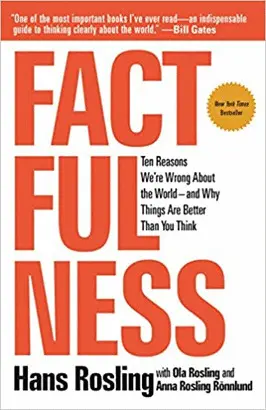
Factfulness: Ten Reasons We're Wrong About The World--And Why Things Are Better Than You Think
-15%

Factfulness: Ten Reasons We're Wrong About The World--And Why Things Are Better Than You Think

Rosling, Hans / Ronnlund, Anna Rosling / Rosling, Ola

"One of the most important books I've ever read--an indispensable guide to thinking clearly about the world." - Bill Gates"Hans Rosling tells the story of 'the secret silent miracle of human progress' as only he can. But Factfulness does much more than that. It also explains why progress is so often secret and silent and teaches readers how to see it clearly." --Melinda GatesFa...

Editorial:
Griffin
Materia:
Psicología
ISBN:
978-1-250-10781-7
Q. 285
Q. 242
IVA incluido
No disponible
Añadir a favoritos Avisar disponibilidad

Sinopsis

"One of the most important books I've ever read--an indispensable guide to thinking clearly about the world." - Bill Gates

"Hans Rosling tells the story of 'the secret silent miracle of human progress' as only he can. But Factfulness does much more than that. It also explains why progress is so often secret and silent and teaches readers how to see it clearly." --Melinda Gates

Factfulness: The stress-reducing habit of only carrying opinions for which you have strong supporting facts.

When asked simple questions about global trends--what percentage of the world's population live in poverty; why the world's population is increasing; how many girls finish school--we systematically get the answers wrong. So wrong that a chimpanzee choosing answers at random will consistently outguess teachers, journalists, Nobel laureates, and investment bankers.

In Factfulness, Professor of International Health and global TED phenomenon Hans Rosling, together with his two long-time collaborators, Anna and Ola, offers a radical new explanation of why this happens. They reveal the ten instincts that distort our perspective--from our tendency to divide the world into two camps (usually some version of us and them) to the way we consume media (where fear rules) to how we perceive progress (believing that most things are getting worse).

Our problem is that we don't know what we don't know, and even our guesses are informed by unconscious and predictable biases.

It turns out that the world, for all its imperfections, is in a much better state than we might think. That doesn't mean there aren't real concerns. But when we worry about everything all the time instead of embracing a worldview based on facts, we can lose our ability to focus on the things that threaten us most.

Inspiring and revelatory, filled with lively anecdotes and moving stories, Factfulness is an urgent and essential book that will change the way you see the world and empower you to respond to the crises and opportunities of the future.

---

"This book is my last battle in my life-long mission to fight devastating ignorance...Previously I armed myself with huge data sets, eye-opening software, an energetic learning style and a Swedish bayonet for sword-swallowing. It wasn't enough. But I hope this book will be." Hans Rosling, February 2017.

Artículos relacionados

Trastorno por Déficit de Atención con Hiperactivid -15%

Trastorno por Déficit de Atención con Hiperactivid

Guerrero, Rafa

Cómo se desarrolla el cerebro del niño y del adolescente para entender todas las claves y los secretos de la neuroeducación.El trastorno por déficit de atención con hiperactividad (TDAH) es una patología del neurodesarrollo que afecta a un 5 por ciento de la población infantil. Dadas las manifestaciones del trastorno (problemas para concentrarse, movimiento excesivo e impulsivi...

Disponible
Q. 140

Q. 119

La Hipótesis de la Felicidad -15%

La Hipótesis de la Felicidad

Haidt, Jonathan

Diez grandes ideas de la sabiduría antigua para vivir más felices hoy, del autor de La mente de los justos y La generación ansiosa.Jonathan Haidt, uno de los más destacados representantes de la psicología positiva —una rama de la psicología que busca comprender los procesos que subyacen a las cualidades y emociones positivas del ser humano— conjuga la precisión científica con l...

Disponible
Q. 220

Q. 187

Dopamina Bajo Control -15%

Dopamina Bajo Control

Long, Michael E.

La continuación del gran éxito internacional Dopamina. ¿Por qué nunca es suficiente? Buscamos más éxito, más placer, más reconocimiento... y aun así seguimos insatisfechos. La respuesta está en la dopamina: la molécula que impulsa nuestro deseo, nos motiva a actuar y nos hace soñar con lo que viene después, pero también nos atrapa en un ciclo de insatisfacción constante. Promet...

Disponible
Q. 220

Q. 187

Neuroderechos -15%

Neuroderechos

Yuste Rojas, Rafael

Rafael Yuste, el neurocientífico español más reconocido internacionalmente, nos revela el progreso de las neurotecnologías, y destaca la urgente necesidad de establecer unos neuroderechos que protejan nuestra privacidad e identidad mentales.En este apasionante libro, Rafael Yuste relata su trayectoria científica desde sus microscopios caseros en el barrio madrileño de Argüelles...

Disponible
Q. 210

Q. 179

Neuroderechos -15%

Neuroderechos

Yuste Rojas, Rafael

Rafael Yuste, el neurocientífico español más reconocido internacionalmente, nos expone la necesidad urgente de establecer neuroderechos que protejan la privacidad y la identidad mental, mientras nos guía a través de los peligros y promesas de estas tecnologías.Rafael Yuste, director del Centro de Neurotecnología de la Universidad de Columbia y presidente de la NeuroRights Found...

Disponible
Q. 260

Q. 221

El Cielo que Olvida Sus Estrellas -15%

El Cielo que Olvida Sus Estrellas

Martínez-Horta, Saul

El cielo que olvida sus estrellas es un libro de divulgación científica que propone una travesía intelectual y emocional por los misterios del cerebro humano y las enfermedades que lo amenazan. Con un enfoque único, profundo y poético, esta obra combina ciencia de vanguardia con una narrativa cercana y evocadora. Dirigido tanto al lector curioso como al profesional en busca de ...

Disponible
Q. 260

Q. 221

Otros libros del autor

Factfulness: Ten Reasons We're Wrong About The World -15%

Factfulness: Ten Reasons We're Wrong About The World

Rosling, Hans / Ronnlund, Anna Rosling / Rosling, Ola

When asked simple questions about global trends?what percentage of the world's population live in poverty; why the world's population is increasing; how many girls finish school?we systematically get the answers wrong. So wrong that a chimpanzee choosing answers at random will consistently outguess teachers, journalists, Nobel laureates, and investment bankers.In Factfulness, P...

No disponible
Q. 110

Q. 94