

0
CHAGALL

CHAGALL

Sylvie Forestier

Q. 73
IVA incluido
No disponible
Editorial:
PARKSTONE EBOOK
Año de edición:
2014
Materia:
Arte
ISBN:
978-1-78160-935-4
Páginas:
271
Encuadernación:
Epublication content package
Colección:
Mega Square Mega Square
Q. 73
IVA incluido
No disponible
Añadir a favoritos

Marc Chagall was born into a strict Jewish family for whom the ban on representations of the human figure had the weight of dogma. A failure in the entrance examination for the Stieglitz School did not stop Chagall from later joining that famous school founded by the Imperial Society for the Encouragement of the Arts and directed by Nicholas Roerich. Chagall moved to Paris in 1910. The city was his second Vitebsk . At first, isolated in the little room on the Impasse du Maine at La Ruche, Chagall soon found numerous compatriots also attracted by the prestige of Paris: Lipchitz, Zadkine, Archipenko and Soutine, all of whom were to maintain the smell of his native land. From his very arrival Chagall wanted to discover everything . And to his dazzled eyes painting did indeed reveal itself. Even the most attentive and partial observer is at times unable to distinguish the Parisian , Chagall from the Vitebskian . The artist was not full of contradictions, nor was he a split personality, but he always remained different; he looked around and within himself and at the surrounding world, and he used his present thoughts and recollections. He had an utterly poetical mode of thought that enabled him to pursue such a complex course. Chagall was endowed with a sort of stylistic immunity: he enriched himself without destroying anything of his own inner structure. Admiring the works of others he studied them ingenuously, ridding himself of his youthful awkwardness, yet never losing his authenticity for a moment. At times Chagall seemed to look at the world through magic crystal overloaded with artistic experimentation of the Ecole de Paris. In such cases he would embark on a subtle and serious play with the various discoveries of the turn of the century and turned his prophetic gaze like that of a biblical youth, to look at himself ironically and thoughtfully in the mirror. Naturally, it totally and uneclectically reflected the painterly discoveries of Cézanne, the delicate inspiration of Modigliani, and the complex surface rhythms recalling the experiments of the early Cubists (See-Portrait at the Easel, 1914). Despite the analyses which nowadays illuminate the painter s Judaeo-Russian sources, inherited or borrowed but always sublime, and his formal relationships, there is always some share of mystery in Chagall s art. The mystery perhaps lies in the very nature of his art, in which he uses his experiences and memories. Painting truly is life, and perhaps life is painting.

Artículos relacionados

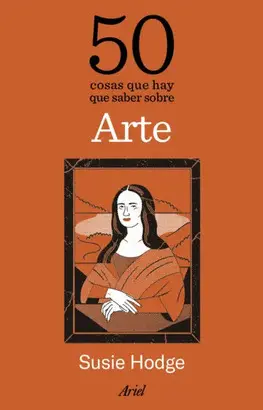
  • 50 COSAS QUE HAY QUE SABER SOBRE ARTE
    50 COSAS QUE HAY QUE SABER SOBRE ARTE
    SUSIE HODGE
    Una exploración de las ideas, las técnicas y las creaciones que han marcado el devenir del arte desde la prehistoria hasta nuestros días. ¿Cuál es la diferencia entre una pintura del barroco y una del rococó? ¿A qué movimiento pertenecen Los Nenúfares de Monet y Los Girasoles de Van Gogh?50 cosas que hay que saber sobre arte es una perfecta introducción al conocimiento sobre mo...
    Disponible

    Q. 120

  • EL LIBRO DEL AUTOMÓVIL (THE CAR BOOK)
    EL LIBRO DEL AUTOMÓVIL (THE CAR BOOK)
    KINDERSLEY, DORLING
    Una guía visual te muestra todo lo que necesitas saber sobre los autos, desde los primeros carruajes sin caballos hasta los superdeportivos modernos y los autos de Fórmula 1. Si eres un apasionado de los autos clásicos o si en general te encanta el mundo del motor, prepárate para este recorrido inigualable por la historia del automovilismo y del diseño motriz. En sus páginas,...
    Disponible

    Q. 410

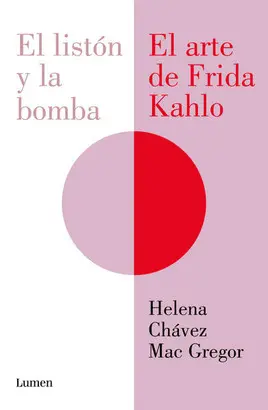
  • LISTON Y LA BOMBA, EL. EL ARTE DE FRIDA
    LISTON Y LA BOMBA, EL. EL ARTE DE FRIDA
    HELENA CHÁVEZ MAC GREGOR
    «En este libro, Helena Chávez Mac Gregor nos hace verlo que no habíamos visto en aquello que ya habíamos visto, nos hace pensar cosas que no habíamos pensado, ahí donde creímos ya haber pensado.» -Emiliano Monge ¿Frida Kahlo de verdad era una artista sobresaliente? ¿Qué hace importante su obra? ¿Por qué es una de las artistas más referidas de nuestro tiempo? ¿Cómo podemos volve...
    Disponible

    Q. 140

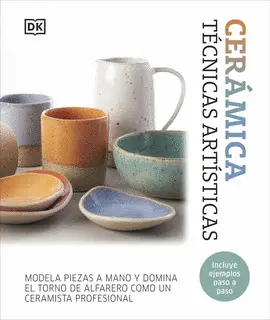
  • CERÁMICA. TÉCNICAS ARTÍSTICAS
    CERÁMICA. TÉCNICAS ARTÍSTICAS
    DK
    Despierta tu creatividad y aprende todo lo que necesitas saber para crear tus propias piezas de cerámica ¿Quieres empezar a explorar tu potencial con la arcilla y encontrar la armonía al trabajar con tus manos? ¿O buscas ampliar tus habilidades como alfarero? ¡Cerámica. Técnicas artísticas es el libro perfecto para ti! Con una amplia gama de técnicas y fotografías inspiradoras...
    Disponible

    Q. 270

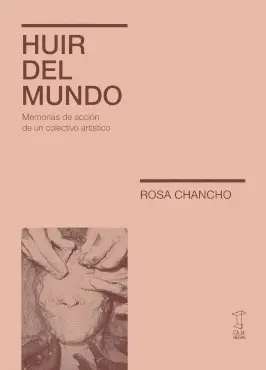
  • HUIR DEL MUNDO
    HUIR DEL MUNDO
    ROSA CHANCHO
    El colectivo Rosa Chancho irrumpe en 2005 en la ciudad de Buenos Aires con un conjunto de operaciones que irradiaban curiosidad crítica por la acelerada expansión del campo vernáculo de las artes visuales. Su nombre encarna una toma de posición frente a los discursos polarizados de la escena local, en la que aún resonaba la controversia entre el "arte rosa light" (decorativo o ...
    Disponible

    Q. 170

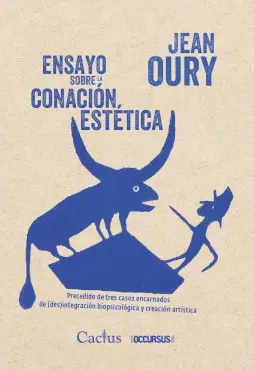
  • ENSAYO SOBRE LA CONACION ESTÉTICA
    ENSAYO SOBRE LA CONACION ESTÉTICA
    JEAN OURY
    ¿Por qué publicar una tesis? Jean Oury -que convivió desde 1947 en Saint-Alban, Saumery y La Borde con las personas que trataba como médico psiquiatra- lo justifica a través de una afirmación clínica y política: "se trata de una ventana abierta hacia el mundo viviente, existente, amenazado por el prejuicio y la inasistencia". Se lee a un Oury joven pero que ya navegaba entre l...
    Disponible

    Q. 180

Otros libros del autor

  • CHAGALL
    CHAGALL
    Sylvie Forestier
    Marc Chagall nació en el seno de una familia judía sumamente estricta, para la cual la prohibición de la representación de la figura humana tenía la fuerza de un dogma. El no haber pasado el examen de admisión de la escuela Stieglitz no evitó que Chagall se uniera posteriormente a esa famosa escuela fundada por la sociedad imperial para el fomento de las artes, dirigida por Nic...
    No disponible

    Q. 73