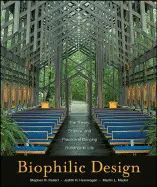
Biophilic Design
The Theory, Science And Practice Of Bringing Buildings To Life
Kellert, Stephen R
Publisher Marketing:"When nature inspires our architecture-not just how it looks but how buildings and communities actually function-we will have made great strides as a society. Biophilic Design provides us with tremendous insight into the 'why, ' then builds us a road map for what is sure to be the next great design journey of our times."-Rick Fedrizzi, President, CEO and Fou...
Sinopsis
Publisher Marketing:
"When nature inspires our architecture-not just how it looks but how buildings and communities actually function-we will have made great strides as a society. Biophilic Design provides us with tremendous insight into the 'why, ' then builds us a road map for what is sure to be the next great design journey of our times."
-Rick Fedrizzi, President, CEO and Founding Chairman, U.S. Green Building Council
"Having seen firsthand in my company the power of biomimicry to stimulate a wellspring of profitable innovation, I can say unequivocably that biophilic design is the real deal. Kellert, Heerwagen, and Mador have compiled the wisdom of world-renowned experts to produce this exquisite book; it is must reading for scientists, philosophers, engineers, architects and designers, and-most especially-businesspeople. Anyone looking for the key to a new type of prosperity that respects the earth should start here."
-Ray C. Anderson, founder and Chair, Interface, Inc.
The groundbreaking guide to the emerging practice of biophilic design
This book offers a paradigm shift in how we design and build our buildings and our communities, one that recognizes that the positive experience of natural systems and processes in our buildings and constructed landscapes is critical to human health, performance, and well-being. Biophilic design is about humanity's place in nature and the natural world's place in human society, where mutuality, respect, and enriching relationships can and should exist at all levels and should emerge as the norm rather than the exception.
Written for architects, landscape architects, planners, developers, environmental designers, as well as building owners, Biophilic Design: The Theory, Science, and Practice of Bringing Buildings to Life is a guide to the theory, science, and practice of biophilic design. Twenty-three original and timely essays by world-renowned scientists, designers, and practitioners, including Edward O. Wilson, Howard Frumkin, David Orr, Grant Hildebrand, Stephen Kieran, Tim Beatley, Jonathan Rose, Janine Benyus, Roger Ulrich, Bert Gregory, Robert Berkebile, William Browning, and Vivian Loftness, among others, address:
*
The basic concepts of biophilia, its expression in the built environment, and how biophilic design connects to human biology, evolution, and development.
*
The science and benefits of biophilic design on human health, childhood development, healthcare, and more.
*
The practice of biophilic design-how to implement biophilic design strategies to create buildings that connect people with nature and provide comfortable and productive places for people, in which they can live, work, and study.
Biophilic design at any scale-from buildings to cities-begins with a few simple questions: How does the built environment affect the natural environment? How will nature affect human experience and aspiration? Most of all, how can we achieve sustained and reciprocal benefits between the two?
This prescient, groundbreaking book provides the answers.
Comentarios
Sé el primero en comentar este libroArtículos relacionados