Saltar al contenido principal
A Culture Of Growth

A Culture Of Growth

The Origins Of The Modern Economy

Joel Mokyr

Why Enlightenment culture sparked the Industrial RevolutionDuring the late eighteenth century, innovations in Europe triggered the Industrial Revolution and the sustained economic progress that spread across the globe. While much has been made of the details of the Industrial Revolution, what remains a mystery is why it took place at all. Why did this revolution begin in the We...

Editorial:
Princeton
Año de edición:
2018
ISBN:
978-0-691-18096-0
Páginas:
424
Q. 280
IVA incluido
Disponible
Añadir a favoritos

Sinopsis

Why Enlightenment culture sparked the Industrial Revolution

During the late eighteenth century, innovations in Europe triggered the Industrial Revolution and the sustained economic progress that spread across the globe. While much has been made of the details of the Industrial Revolution, what remains a mystery is why it took place at all. Why did this revolution begin in the West and not elsewhere, and why did it continue, leading to today's unprecedented prosperity? In this groundbreaking book, celebrated economic historian Joel Mokyr argues that a culture of growth specific to early modern Europe and the European Enlightenment laid the foundations for the scientific advances and pioneering inventions that would instigate explosive technological and economic development. Bringing together economics, the history of science and technology, and models of cultural evolution, Mokyr demonstrates that culture—the beliefs, values, and preferences in society that are capable of changing behavior—was a deciding factor in societal transformations.

Mokyr looks at the period 1500-1700 to show that a politically fragmented Europe fostered a competitive "market for ideas" and a willingness to investigate the secrets of nature. At the same time, a transnational community of brilliant thinkers known as the "Republic of Letters" freely circulated and distributed ideas and writings. This political fragmentation and the supportive intellectual environment explain how the Industrial Revolution happened in Europe but not China, despite similar levels of technology and intellectual activity. In Europe, heterodox and creative thinkers could find sanctuary in other countries and spread their thinking across borders. In contrast, China's version of the Enlightenment remained controlled by the ruling elite.

Combining ideas from economics and cultural evolution, A Culture of Growth provides startling reasons for why the foundations of our modern economy were laid in the mere two centuries between Columbus and Newton.

Artículos relacionados

Freakonomics Twentieth Anniversary Edition

Freakonomics Twentieth Anniversary Edition

Steven D. Levitt / Stephen J. Dubner

The legendary bestseller that made millions look at the world in a radically different way returns in a beautiful 20th anniversary edition featuring a new foreword Which is more dangerous: a gun or a swimming pool? Why do drug dealers still live with their moms? What do real estate agents and the KKK have in common? These may not sound like typical questions for an economist to...

Disponible

Q. 210

Capitalism And Its Critics

Capitalism And Its Critics

John Cassidy

A Financial Times Most Anticipated Book of 2025A Publishers Weekly Top 10 Book of 2025A sweeping, dramatic history of capitalism as seen through the eyes of its fiercest critics. Capitalism has long been understood as a driving force behind the biggest political, economic, and social dislocations of our time. But in this sweeping, kaleidoscopic history of the economic system th...

Disponible

Q. 410

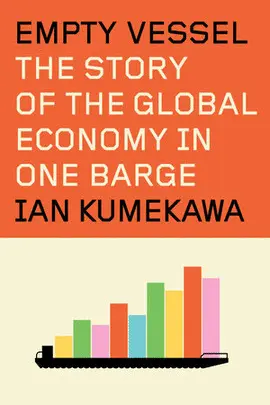
Empty Vessel

Empty Vessel

Ian Kumekawa

The rise of globalization and financialization as seen from a barge—one Swedish barge, to be exact, built in 1979What do a barracks for British troops in the Falklands War, a floating jail off the Bronx, and temporary housing for VW factory workers in Germany have in common? The Balder Scapa: a single barge that served all three roles. Though the name would eventually change to...

Disponible

Q. 200

Hubris Maximus

Hubris Maximus

Faiz Siddiqui

The rise, fall, and revival of the Caesar of Silicon Valley. Elon Musk has cast himself as the savior of humanity, an altruistic force whose fortune is tied to noble pursuits from halting our dependence on fossil fuels to colonizing Mars. Once frequently heralded as a modern-day Edison, Musk has taken up a new place in the public consciousness with his growing desire to disrupt...

Disponible

Q. 290

Ai Valley

Ai Valley

Gary Rivlin

A veteran Pulitzer Prize-winning journalist shadows the top thinkers in the field of Artificial Intelligence, introducing the breakthroughs and developments that will change the way we live and work. Artificial Intelligence has been "just around the corner" for decades, continually disappointing those who long believed in its potential. But now, with the emergence and growing u...

Disponible

Q. 330

Welcome To The Metaverse

Welcome To The Metaverse

David L. Shrier

A clear-eyed guide to the metaverse and how this powerful technology--along with advances in spatial computing, VR, and AR--will impact our economy, our lives, and our world. The metaverse. That term elicits a wide range of ideas and opinions. For many, it represents the next evolutionary phase of the internet--a fully immersive, digital universe where people can interact, work...

Disponible

Q. 330

Otros libros del autor