Saltar al contenido principal
An Essay Concerning Human Understanding

An Essay Concerning Human Understanding

Locke, John

John Locke (1632-1704) was perhaps the most influential English writer of his time. His Essay concerning Human Understanding (1690) and Two Treatises of Government (1690) weighed heavily on the history of ideas in the eighteenth century, and Locke's works are often - rightly - presented as foundations of the Age of Enlightenment. Both the Essay and the Second Treatise (by far t...

Editorial:
Wordsworth
ISBN:
978-1-84022-732-1
Q. 80
IVA incluido
No disponible
Añadir a favoritos Avisar disponibilidad

Sinopsis

John Locke (1632-1704) was perhaps the most influential English writer of his time. His Essay concerning Human Understanding (1690) and Two Treatises of Government (1690) weighed heavily on the history of ideas in the eighteenth century, and Locke's works are often - rightly - presented as foundations of the Age of Enlightenment. Both the Essay and the Second Treatise (by far the more influential of the Two Treatises) were widely read by Locke's contemporaries and near contemporaries. His eighteenth-century readers included philosophers, historians and political theorists, but also community and political leaders, engaged laypersons, and others eager to participate in the expanding print culture of the era. His epistemological message that the mind at birth was a blank slate, waiting to be filled, complemented his political message that human beings were free and equal and had the right to create and direct the governments under which they lived. Today, Locke continues to be an accessible author. He provides food for thought to university professors and their students, but has no less to offer the general reader who is eager to enjoy the classics of world literature.

Artículos relacionados

How To Dream

How To Dream

Nhat Hanh, Thich

In the final book of the best-selling Mindfulness Essentials series, Zen Master Thich Nhat Hanh shows us how to realize our dreams in this very moment.We all want our lives to be useful and meaningful. The aspiration to transform suffering—our own, each other's, and the Earth's—can give us the energy we need to continue on a wholesome path. In How to Dream, Thich Nhat Hanh expl...

Disponible

Q. 110

Catastrophe Ethics

Catastrophe Ethics

Travis Rieder

Philosopher Travis Rieder outlines a new ethics for the age of humanmade catastrophe. We are all asking, in a hyperglobalised world hurtling towards environmental destruction: how do we determine the right actions? Do our individual efforts to avoid plastic or air travel, or to drive electric, make any real difference? We urgently need to expand our ethical toolkit. The mental ...

Disponible

Q. 130

How To Be

How To Be

Adam Nicolson

Nicolson crafts a geography of the ancient world and a brilliant exploration of our connections to the past.What is the nature of things?What is justice? How can I be myself?How should we treat each other?Before the Greeks, the idea of the world was dominated by god-kings and their priests. Twenty-five hundred years ago, in a succession of small eastern Mediterranean harbor cit...

Disponible

Q. 230

The Invention Of Good And Evil

The Invention Of Good And Evil

Sauer, Hanno

For almost five million years, humans have been locked in a relationship with morality, inventing and reinventing the concepts of 'Good' and 'Evil', and weaving them into our cities, laws and customs. Morality is often associated with restraint and coercion; restriction and sacrifice; inquisition, confession and a guilty conscience. Joyless and claustrophobic, it is a device us...

Disponible

Q. 340

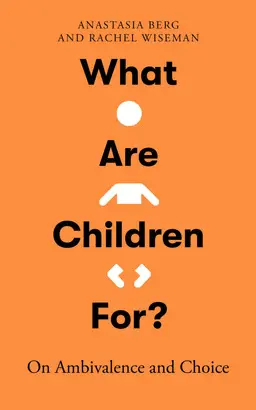
What Are Children For?

What Are Children For?

Anastasia Berg / Wise, Rachel

Having children is one of the biggest decisions you'll make in your life. Increasingly, we aren't making it at all. A NEW STATESMAN BEST BOOK OF 2024 'A book for lovers of sound reasoning.' THE NEW YORKER Across the developed world, fewer and fewer people are becoming parents. We seek self-fulfilment; we want women to find meaning and self-worth outside the household; we wish t...

Disponible

Q. 310

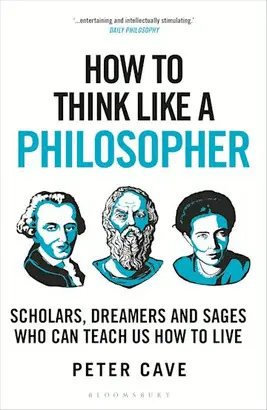
How To Think Like a Philosopher

How To Think Like a Philosopher

Peter Cave

An entertaining guide to history's most fascinating philosophers - from Sappho to Kant, and Aristotle to Simone de Beauvoir - which seeks to help us answer life's big questions.In showing how the great philosophers of human history lived and thought - and what they thought about - Peter Cave provides an accessible and enjoyable introduction to thinking philosophically and how i...

Disponible

Q. 130

Otros libros del autor

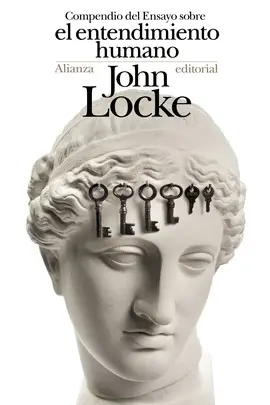
Compendio del Ensayo Sobre el Entendimiento Humano

Compendio del Ensayo Sobre el Entendimiento Humano

Locke, John

Resumen de la obra fundamental de John Locke (1632-1704), el " Compendio del «Ensayo sobre el entendimiento humano» " sintetiza las ideas fundamentales del trabajo publicado con este título en 1689 y que habría de procurarle un lugar destacado en el ámbito de la filosofía. En el " Ensayo " se examinan la naturaleza y los límites del conocimiento humano. Para ello se atiende...

No disponible

Q. 110

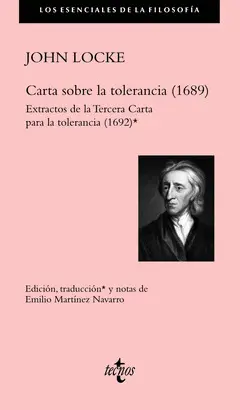
Carta Sobre la Tolerancia (1689)

Carta Sobre la Tolerancia (1689)

Locke, John

El presente volumen recoge la traducción de dos obras de John Locke en torno a la tolerancia precedidas de un estudio introductorio sobre el contenido de las mismas. Por una parte, se reedita la traducción de la Carta sobre la tolerancia de 1689 realizada por Pedro Bravo Gala y publicada por la Editorial Tecnos en 1985. Por otra parte, se publica por primera vez la traducción ...

No disponible

Q. 100

La Razonabilidad del Cristianismo

La Razonabilidad del Cristianismo

Locke, John

El libro de Locke La razonabilidad del Cristianismo es una obra de trascendencia clave para comprender los fenómenos del mundo moderno. Más allá de su significación teológica como explicación de la diferencia entre una secta y una religión, aporta el descubrimiento de la categoría clave de credibilidad. Reasobleness es aquello que resulta creíble por sus propios hechos. Lo que ...

No disponible

Q. 170

Segundo Tratado Sobre el Gobierno Civil

Segundo Tratado Sobre el Gobierno Civil

Locke, John

El Segundo Tratado sobre el Gobierno Civil, ha estado desde sus inicios indisolublemente unido a la doctrina liberal anglosajona. En el seno de ésta ocupó su autor durante algún tiempo, un sitial preferente y respetado, y en ella encontró esa obra la reverencia algo hierática que se debe a los textos fundadores. Pero la introducción de nuevos conceptos y la revisión de postulad...

No disponible

Q. 210