0
AGAINST EMPATHY

AGAINST EMPATHY

THE CASE FOR RATIONAL COMPASSION

BLOOM, PAUL

Q. 210
IVA incluido
No disponible
Editorial:
HARPER
Año de edición:
2018
ISBN:
978-0-06-233934-8
Páginas:
304
Q. 210
IVA incluido
No disponible
Añadir a favoritos

u003cpu003eNew York Post Best Book of 2016u003c/pu003eu003cpu003eWe often think of our capacity to experience the suffering of others as the ultimate source of goodness. Many of our wisest policy-makers, activists, scientists, and philosophers agree that the only problem with empathy is that we don't have enough of it.u003c/pu003eu003cpu003eNothing could be farther from the truth, argues Yale researcher Paul Bloom. In AGAINST EMPATHY, Bloom reveals empathy to be one of the leading motivators of inequality and immorality in society. Far from helping us to improve the lives of others, empathy is a capricious and irrational emotion that appeals to our narrow prejudices. It muddles our judgment and, ironically, often leads to cruelty. We are at our best when we are smart enough not to rely on it, but to draw instead upon a more distanced compassion. u003c/pu003eu003cpu003eBasing his argument on groundbreaking scientific findings, Bloom makes the case that some of the worst decisions made by individuals and nations—who to give money to, when to go to war, how to respond to climate change, and who to imprison—are too often motivated by honest, yet misplaced, emotions. With precision and wit, he demonstrates how empathy distorts our judgment in every aspect of our lives, from philanthropy and charity to the justice system; from medical care and education to parenting and marriage. Without empathy, Bloom insists, our decisions would be clearer, fairer, and—yes—ultimately more moral.u003c/pu003eu003cpu003eBrilliantly argued, urgent and humane, AGAINST EMPATHY shows us that, when it comes to both major policy decisions and the choices we make in our everyday lives, limiting our impulse toward empathy is often the most compassionate choice we can make.u003c/pu003e

Artículos relacionados

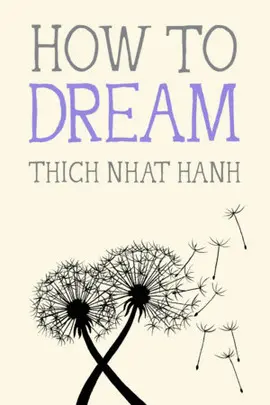
  • HOW TO DREAM
    HOW TO DREAM
    NHAT HANH, THICH
    In the final book of the best-selling Mindfulness Essentials series, Zen Master Thich Nhat Hanh shows us how to realize our dreams in this very moment.We all want our lives to be useful and meaningful. The aspiration to transform suffering—our own, each other's, and the Earth's—can give us the energy we need to continue on a wholesome path. In How to Dream, Thich Nhat Hanh expl...
    Disponible

    Q. 110

  • STOICISM 101
    STOICISM 101
    ERICK CLOWARD
    Discover all the essential wisdom of the stoics with this engaging, informative, and easy-to-understand guide to all the key philosophers, concepts, and principles of the stoic philosophy.You've seen the memes and quotes everywhere—from Reddit to TikTok—but what is stoicism really about? Stoicism 101 teaches you everything you need to know about this influential philosophy—from...
    Disponible

    Q. 180

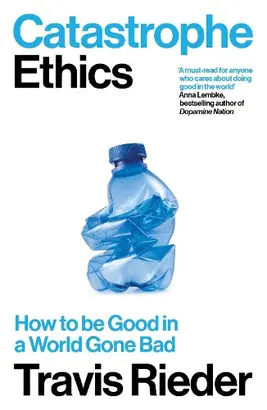
  • CATASTROPHE ETHICS
    CATASTROPHE ETHICS
    TRAVIS RIEDER
    Philosopher Travis Rieder outlines a new ethics for the age of humanmade catastrophe. We are all asking, in a hyperglobalised world hurtling towards environmental destruction: how do we determine the right actions? Do our individual efforts to avoid plastic or air travel, or to drive electric, make any real difference? We urgently need to expand our ethical toolkit. The mental ...
    Disponible

    Q. 130

  • THE INVENTION OF GOOD AND EVIL
    THE INVENTION OF GOOD AND EVIL
    SAUER, HANNO
    For almost five million years, humans have been locked in a relationship with morality, inventing and reinventing the concepts of 'Good' and 'Evil', and weaving them into our cities, laws and customs. Morality is often associated with restraint and coercion; restriction and sacrifice; inquisition, confession and a guilty conscience. Joyless and claustrophobic, it is a device us...
    Disponible

    Q. 340

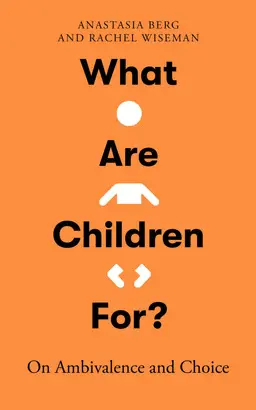
  • WHAT ARE CHILDREN FOR?
    WHAT ARE CHILDREN FOR?
    ANASTASIA BERG / WISE, RACHEL
    Having children is one of the biggest decisions you'll make in your life. Increasingly, we aren't making it at all. A NEW STATESMAN BEST BOOK OF 2024 'A book for lovers of sound reasoning.' THE NEW YORKER Across the developed world, fewer and fewer people are becoming parents. We seek self-fulfilment; we want women to find meaning and self-worth outside the household; we wish t...
    Disponible

    Q. 310

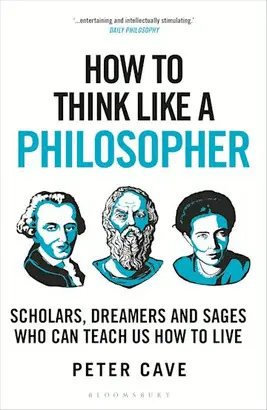
  • HOW TO THINK LIKE A PHILOSOPHER
    HOW TO THINK LIKE A PHILOSOPHER
    PETER CAVE
    An entertaining guide to history's most fascinating philosophers - from Sappho to Kant, and Aristotle to Simone de Beauvoir - which seeks to help us answer life's big questions.In showing how the great philosophers of human history lived and thought - and what they thought about - Peter Cave provides an accessible and enjoyable introduction to thinking philosophically and how i...
    Disponible

    Q. 130

Otros libros del autor

  • PSYCH
    PSYCH
    BLOOM, PAUL
    A Next Big Idea Club Must-Read A compelling and accessible new perspective on the modern science of psychology, based on one of Yale's most popular courses of all time How does the brain--a three-pound wrinkly mass--give rise to intelligence and conscious experience? Was Freud right that we are all plagued by forbidden sexual desires? What is the function of emotions such as di...
    Único ejemplar, sujeto
    a disponibilidad

    Q. 230

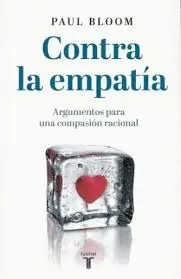
  • CONTRA LA EMPATÍA
    CONTRA LA EMPATÍA
    BLOOM, PAUL
    Es habitual que pensemos que nuestra capacidad de experimentar el sufrimiento de los otros es una especie de fuente de nuestra bondad; sin embargo, no hay nada más equivocado. Paul Bloom, maestro de la universidad de Yale, revela que la empatía es uno de, los principales motores de la inequidad y la inmoralidad en la sociedad. Lejos de ayudarnos a mejorar nuestras relaciones, l...
    Disponible

    Q. 110

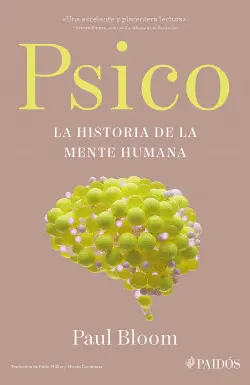
  • PSICO: LA HISTORIA DE LA MENTE HUMANA
    PSICO: LA HISTORIA DE LA MENTE HUMANA
    BLOOM, PAUL
    Una fascinante aproximación a la ciencia del cerebro para entender por qué actuamos, sentimos y pensamos como lo hacemos¿Cómo puede el cerebro, una masa arrugada, dar lugar a la inteligencia y la experiencia consciente? ¿Estaba en lo cierto Freud cuando afirmaba que estamos infestados de deseos sexuales prohibidos? ¿Cuál es la función de emociones como el asco, la gratitud o la...
    Disponible

    Q. 220

  • PSYCH
    PSYCH
    BLOOM, PAUL
    u003cpu003eA Next Big Idea Club Must-Readu003c/pu003e u003cpu003eA compelling and accessible new perspective on the modern science of psychology, based on one of Yale's most popular courses of all timeu003c/pu003e u003cpu003eHow does the brain--a three-pound wrinkly mass--give rise to intelligence and conscious experience? Was Freud right that we are all plagued by forbidden se...
    No disponible

    Q. 330

  • THE SWEET SPOT
    THE SWEET SPOT
    BLOOM, PAUL
    "This book will challenge you to rethink your vision of a good life. With sharp insights and lucid prose, Paul Bloom makes a captivating case that pain and suffering are essential to happiness. It's an exhilarating antidote to toxic positivity." --Adam Grant, #1 New York Times bestselling author of Think Again and host of the TED podcast WorkLifeOne of Behavioral Scientist's "N...
    No disponible

    Q. 210

  • HOW PLEASURE WORKS: THE NEW SCIENCE OF WHY WE LIKE WHAT WE LIKE
    HOW PLEASURE WORKS: THE NEW SCIENCE OF WHY WE LIKE WHAT WE LIKE
    BLOOM, PAUL
    Yale psychologist Paul Bloom presents a striking and thought-provoking new understanding of pleasure, desire, and value.The thought of sex with a virgin is intensely arousing for many men. The average American spends more than four hours a day watching television. Abstract art can sell for millions of dollars. People slow their cars to look at gory accidents, and go to movies t...
    No disponible

    Q. 270