Saltar al contenido principal
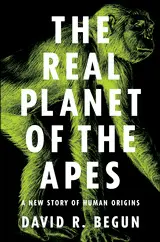
The Real Planet Of The Apes

The Real Planet Of The Apes

David R. Begun

Was Darwin wrong when he traced our origins to Africa? The Real Planet of the Apes makes the explosive claim that it was in Europe, not Africa, where apes evolved the most important hallmarks of our human lineage—such as dexterous hands and larger brains. In this compelling and accessible book, David Begun, one of the world's leading paleoanthropologists, transports readers to ...

Editorial:
Princeton
Materia:
Ciencia - STEM
ISBN:
978-0-691-14924-0
Q. 300
IVA incluido
No disponible
Añadir a favoritos Avisar disponibilidad

Sinopsis

Was Darwin wrong when he traced our origins to Africa? The Real Planet of the Apes makes the explosive claim that it was in Europe, not Africa, where apes evolved the most important hallmarks of our human lineage—such as dexterous hands and larger brains. In this compelling and accessible book, David Begun, one of the world's leading paleoanthropologists, transports readers to an epoch in the remote past when the Earth was home to many migratory populations of ape species.

Drawing on the latest astonishing discoveries in the fossil record as well as his own experiences conducting field expeditions across Europe and Asia, Begun provides a sweeping evolutionary history of great apes and humans. He tells the story of how one of the earliest members of our evolutionary group—a new kind of primate called Proconsul—evolved from lemur-like monkeys in the primeval forests of Africa. Begun vividly describes how, over the next 10 million years, these hominoids expanded into Europe and Asia and evolved climbing and hanging adaptations, longer maturation times, and larger brains, setting the stage for the emergence of humans. As the climate deteriorated in Europe around 10 million years ago, these apes either died out or migrated south, reinvading the African continent and giving rise to the lineages of the gorilla, chimpanzee, and, ultimately, the human.

Presenting startling new insights about our fossil ape ancestors, The Real Planet of the Apes is a book that fundamentally alters our understanding of human origins.

Artículos relacionados

El Pulgar del Violinista

El Pulgar del Violinista

Kean, Sam

Del autor del best seller internacional La cuchara menguante, este libro nos descubre los secretos que esconde nuestro código genético, y cómo su inminente decodificación está a punto de resolver cuestiones que llevamos siglos planteándonos.Paganini fue un violinista con un don tan grande que toda su vida tuvo que despejar los rumores de que había vendido su alma al diablo. Sin...

Disponible

Q. 220

El Viaje Cósmico de Merlín

El Viaje Cósmico de Merlín

Degrasse Tyson, Neil

El autor del bestseller Astrofísica para gente con prisa lleva ahora a los lectores a un entretenido y edificante recorrido por el universo.En este maravilloso viaje por el cosmos, Neil deGrasse Tyson, a través de un personaje legendario como el mago Merlín, responde a preguntas populares que le han formulado tanto niños como adultos. Merlín, un visitante atemporal del planeta ...

Disponible

Q. 180

Si Einstein lo Hubiera Sabido

Si Einstein lo Hubiera Sabido

Aspect, Alain

Dios sí juega a los dados con el universo: el ganador del Nobel de Física en 2022 reúne un siglo de debates y avances científicos. Este libro presenta el trabajo por el cual Alain Aspect se ganó el título de «pionero de la segunda revolución cuántica». Es también el resultado de su fascinación por la historia de la física del último siglo, que aquí nos narra en un recorrido des...

Disponible

Q. 295

La Ilusión del Tiempo

La Ilusión del Tiempo

Casas, Alberto

¿ES EL PASO DEL TIEMPO ALGO REAL... O ES UNA ILUSIÓN? El investigador y divulgador de referencia en física cuántica nos adentra en el misterio más fascinante de la ciencia. MÁS DE 10.000 LECTORES. «En cada parada de ese itinerario se despliegan respuestas y preguntas sobre cuestiones fundamentales de la existencia cotidiana». El País «Hay científicos capaces de conducirnos en u...

Disponible

Q. 260

Agujeros Negros

Agujeros Negros

Riazuelo, Alain

Tras el nombre de agujeros negros, que alimenta el imaginario colectivo, se esconden cuerpos celestes conceptualmente muy simples y, al mismo tiempo, muy difíciles de estudiar. Simples por definición: son objetos capaces de atrapar la luz en su interior. Difíciles, por un lado, porque son el escenario de fenómenos gravitacionales extremos, y por otro, porque, p...

Disponible

Q. 260

Un Trip de Ciencia Psicodélica

Un Trip de Ciencia Psicodélica

Ortiz Medrano, Alejandra

Quizá últimamente hayas escuchado hablar de rituales con veneno de sapo, retiros de ayahuasca o terapias con psilocibina, y seguro ese mundo ha despertado tu curiosidad. Sentir atracción o rechazo por él es fácil; pero navegar de manera segura en el mar de información sobre los psicodélicos resulta más complejo, porque, entre noticias o experiencias ajenas, ¿a quién creerle? Y ...

Disponible

Q. 170