Saltar al contenido principal
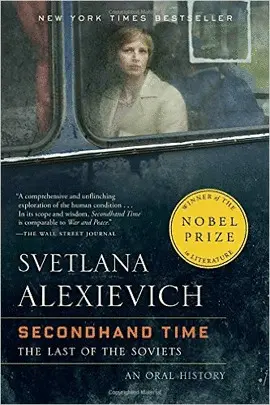
Secondhand Time

Secondhand Time

The Last Of The Soviets

Alexievich, Svetlana / Alexiévich, Svetlana

NEW YORK TIMES BESTSELLER • The magnum opus and latest work from Svetlana Alexievich, the 2015 winner of the Nobel Prize in Literature—a symphonic oral history about the disintegration of the Soviet Union and the emergence of a new RussiaNAMED ONE OF THE TEN BEST BOOKS OF THE YEAR BY THE WASHINGTON POST AND PUBLISHERS WEEKLYNAMED ONE OF THE BEST BOOKS OF THE YEAR BY THE NEW YOR...

Editorial:
Tarcher Putnam
Año de edición:
2017
ISBN:
978-0-399-58882-2
Encuadernación:
Otros
Q. 200
IVA incluido
No disponible
Añadir a favoritos Avisar disponibilidad

Sinopsis

NEW YORK TIMES BESTSELLER • The magnum opus and latest work from Svetlana Alexievich, the 2015 winner of the Nobel Prize in Literature—a symphonic oral history about the disintegration of the Soviet Union and the emergence of a new Russia

NAMED ONE OF THE TEN BEST BOOKS OF THE YEAR BY THE WASHINGTON POST AND PUBLISHERS WEEKLY
NAMED ONE OF THE BEST BOOKS OF THE YEAR BY THE NEW YORK TIMES • THE WASHINGTON POST • THE BOSTON GLOBE • THE WALL STREET JOURNAL • NPR • FINANCIAL TIMES • KIRKUS REVIEWS

When the Swedish Academy awarded Svetlana Alexievich the Nobel Prize, it cited her for inventing "a new kind of literary genre," describing her work as "a history of emotions—a history of the soul." Alexievich's distinctive documentary style, combining extended individual monologues with a collage of voices, records the stories of ordinary women and men who are rarely given the opportunity to speak, whose experiences are often lost in the official histories of the nation.

In Secondhand Time, Alexievich chronicles the demise of communism. Everyday Russian citizens recount the past thirty years, showing us what life was like during the fall of the Soviet Union and what it's like to live in the new Russia left in its wake. Through interviews spanning 1991 to 2012, Alexievich takes us behind the propaganda and contrived media accounts, giving us a panoramic portrait of contemporary Russia and Russians who still carry memories of oppression, terror, famine, massacres—but also of pride in their country, hope for the future, and a belief that everyone was working and fighting together to bring about a utopia. Here is an account of life in the aftermath of an idea so powerful it once dominated a third of the world.

A magnificent tapestry of the sorrows and triumphs of the human spirit woven by a master, Secondhand Time tells the stories that together make up the true history of a nation. "Through the voices of those who confided in her," The Nation writes, "Alexievich tells us about human nature, about our dreams, our choices, about good and evil—in a word, about ourselves."

Praise for Svetlana Alexievich and Secondhand Time

"The nonfiction volume that has done the most to deepen the emotional understanding of Russia during and after the collapse of the Soviet Union of late is Svetlana Alexievich's oral history Secondhand Time."—David Remnick, The New Yorker

"Like the greatest works of fiction, Secondhand Time is a comprehensive and unflinching exploration of the human condition. . . . In its scope and wisdom, Secondhand Time is comparable to War and Peace."—The Wall Street Journal

"Already hailed as a masterpiece across Europe, Secondhand Time is an intimate portrait of a country yearning for meaning after the sudden lurch from Communism to capitalism in the 1990s plunged it into existential crisis."—The New York Times

"This is the kind of history, otherwise almost unacknowledged by today's dictatorships, that matters."—The Christian Science Monitor

"In this spellbinding book, Svetlana Alexievich orchestrates a rich symphony of Russian voices telling their stories of love and death, joy and sorrow, as they try to make sense of the twentieth century."—J. M. Coetzee

Artículos relacionados

100 Fragmentos del Mundo Clásico

100 Fragmentos del Mundo Clásico

Hernández De La Fuente, David

Un compendio fascinante de mitos, leyendas y realidades históricas¿Existió la ciudad de la Atlántida? ¿Pronunció Julio César las famosas palabras «¿Tú también, hijo?», antes de morir? A veces, la narración patrimonial y literaria difiere de los hechos. Así, este libro, escrito con afán divulgativo, pretende transitar por la delgada línea roja que separa los relatos de tintes le...

Disponible

Q. 150

Érase una Vez Tenochtitlán

Érase una Vez Tenochtitlán

Rosas, Alejandro

Aunque nos separan siete siglos, mexicas y chilangos compartimos un pasado común escrito sobre un lugar donde alguna vez hubo un lago. La historia de Tenochtitlán es el preludio de la historia de la Ciudad de México y ha llegado la hora de mirarla a través de sus dioses y tlatoanis. Este es un relato al más puro estilo de Game of Thrones, pero mexica y verídico, en el que, mie...

Disponible

Q. 190

¿Quién Teme a los Griegos y a los Romanos?

¿Quién Teme a los Griegos y a los Romanos?

Bettini, Maurizio

Entre la cancelación y la veneración acrítica de los clásicos existe otro camino: el diálogo respetuoso pero sincero con un pasado que, aunque nos incomode, sigue siendo parte fundamental de quiénes somos.En las aulas de todo el mundo se están sometiendo a examen crítico los textos que hasta hace no tanto se consideraban los pilares sagrados de la civilización occidental. Los a...

Disponible

Q. 160

Rusia Contra Napoleón

Rusia Contra Napoleón

Dominic Lieven

En verano de 1812, Napoleón, en el apogeo de su dominio de Europa, marchó hacia Rusia con el mayor ejército de la historia y la convicción de que la expansión de su imperio era imparable. Sin embargo, apenas dos años después sus ejércitos fueron derrotados y Rusia salió victoriosa. Gracias a un profundo conocimiento de la singular realidad social, política y económica en tiempo...

Disponible

Q. 515

Un Pueblo en el Tercer Reich

Un Pueblo en el Tercer Reich

Julia Boyd / Patel, Angelika / Boyd, Julia

Los tentáculos del nazismo en la vida cotidiana Oberstdorf es un hermoso pueblo de los Alpes. Allí, durante siglos, las personas llevaron vidas sencillas, al margen de la gran historia. Sin embargo, incluso en este idílico pueblo, el nacionalsocialismo llegó a controlar la vida y la mente de sus habitantes. Basado en material de archivo, cartas, entrevistas y relatos orales, U...

Disponible

Q. 325

Días de Sol y Piedra

Días de Sol y Piedra

Pérez-Muelas, Pepe

El nuevo libro del autor de Homo viatorUn apasionante viaje repleto de arte, historia y literatura para todos los enamorados de Italia. Un hombre quiere volver a Roma. Lo hace en bicicleta desde los Alpes, cargado de equipaje. Lleva consigo miedos, ansiedad, problemas familiares: un laberinto que necesita recorrer. No es una huida, sino un encuentro. El viajero aspira a hallar ...

Único ejemplar, sujeto
a disponibilidad

Q. 265

Otros libros del autor

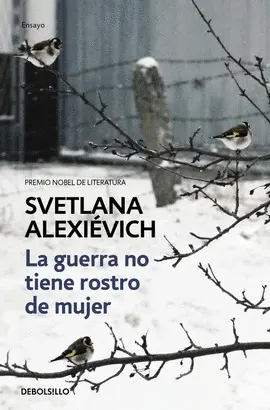
La Guerra no Tiene Rostro de Mujer

La Guerra no Tiene Rostro de Mujer

Alexiévich, Svetlana / Alexievich, Svetlana

Casi un millón de mujeres combatió en las filas del Ejército Rojo durante la segunda guerra mundial, pero su historia nunca ha sido contada. Este libro reúne los recuerdos de cientos de ellas, mujeres que fueron francotiradoras, condujeron tanques o trabajaron en hospitales de campaña. Su historia no es una historia de la guerra, ni de los combates, es la historia de hombres y ...

No disponible

Q. 150

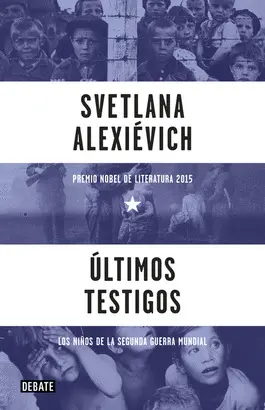
Últimos Testigos

Últimos Testigos

Alexiévich, Svetlana / Alexievich, Svetlana

De la Premio Nobel de Literatura 2015, una obra maestra inédita hasta ahora que recoge el recuerdo de los niños que sobrevivieron a la segunda guerra mundial. Un tema de gran interés desde una perspectiva totalmente distinta.La Segunda Guerra Mundial dejó casi trece millones de niños muertos y, en 1945, solo en Bielorrusia, vivían en los orfanatos unos veintisiete mil huérf...

No disponible

Q. 240

Los Muchachos de Zinc

Los Muchachos de Zinc

Alexievich, Svetlana / Alexiévich, Svetlana

Una obra maestra con una perspectiva única y desgarradora sobre la guerra de Afganistán, de la Premio Nobel de Literatura 2015, Svetlana Alexiévich, «la voz de los sin voz». Entre 1979 y 1989 un millón de tropas soviéticas combatieron en una guerra devastadora en Afganistán que provocó más de 50.000 bajas y acabó con la juventud y la humanidad de varias decenas de miles de s...

No disponible

Q. 235