Saltar al contenido principal
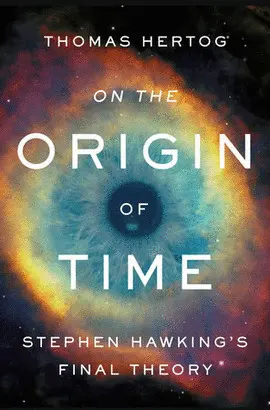
On The Origin Of Time

On The Origin Of Time

Stephen Hawking's Final Theory

Thomas Hertog

Stephen Hawking's closest collaborator offers the intellectual superstar's final thoughts on the cosmos—a dramatic revision of the theory he put forward in A Brief History of Time.Perhaps the biggest question Stephen Hawking tried to answer in his extraordinary life was how the universe could have created conditions so perfectly hospitable to life. Pondering this mystery led Ha...

Editorial:
Penguin
Año de edición:
2023
Materia:
Ciencia - STEM
ISBN:
978-0-593-72262-6
Páginas:
352
Q. 210
IVA incluido
No disponible
Añadir a favoritos Avisar disponibilidad

Sinopsis

Stephen Hawking's closest collaborator offers the intellectual superstar's final thoughts on the cosmos—a dramatic revision of the theory he put forward in A Brief History of Time.

Perhaps the biggest question Stephen Hawking tried to answer in his extraordinary life was how the universe could have created conditions so perfectly hospitable to life. Pondering this mystery led Hawking to study the big bang origin of the universe, but his early work ran into a crisis when the math predicted many big bangs produce a multiverse, most of which would be far too bizarre to ?harbor life.

Holed up in the theoretical physics department at Cambridge, Stephen Hawking and his friend and collaborator Thomas Hertog worked shoulder to shoulder for twenty years, developing a new theory of the cosmos that could account for the emergence of life. Peering into the extreme quantum physics of cosmic holograms and venturing far back in time to our deepest roots, they were startled to find a deeper level of evolution in which the physical laws themselves transform and simplify until particles, forces, and even time itself fades away. This discovery led them to a revolutionary idea: the laws of physics are not set in stone but are born and co-evolve as the universe they govern takes shape. As Hawking's final days drew near, the two collaborators published their theory, proposing a radical new Darwinian perspective on the origins of our universe.

On the Origin of Time offers a striking fresh vision of the universe's birth that will profoundly transform the way we think about our place in the order of the cosmos and may ultimately prove to be Hawking's greatest scientific legacy.

Artículos relacionados

Profecía

Profecía

Véliz, Carissa

Un ensayo para reflexionar sobre los peligros de los nuevos oráculos que dominan nuestra era. «De los oráculos y horóscopos a los algoritmos, de los dados a los datos: cómo intentamos predecir el futuro y los riesgos de la seguridad que anhelamos. Carissa Véliz lo explica con una inteligencia abrumadora y un humor irónico que desnuda a los emperadores.» Irene Vallejo El lugar m...

Disponible

Q. 240

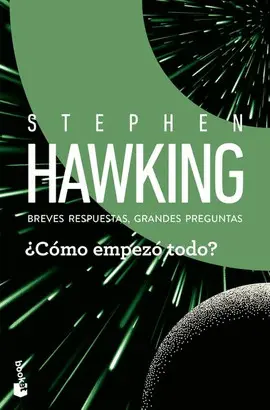
¿Cómo Empezó Todo?

¿Cómo Empezó Todo?

Stephen Hawking

Las grandes preguntas del universo respondidas brevemente por Stephen Hawking, una de las mentes más brillantes de nuestro tiempo.Breves respuestas a las grandes preguntas de Stephen Hawking: ¿Cómo empezó todo?, ¿Qué hay dentro de un agujero negro?, ¿Sobreviviremos en la Tierra?,¿Nos sobrepasará la inteligencia artificial? ¿Cómo empezó tod...

Disponible

Q. 80

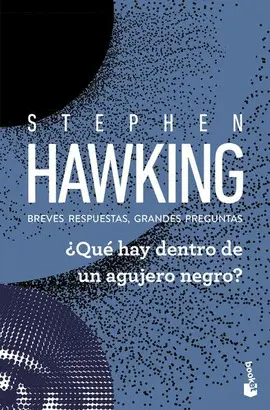
¿Qué Hay dentro de un Agujero Negro?

¿Qué Hay dentro de un Agujero Negro?

Hawking, Stephen

Las grandes preguntas del universo respondidas brevemente por Stephen Hawking, una de las mentes más brillantes de nuestro tiempo.Tras su éxito en el Reino Unido, llegan a España cuatro volúmenes que reúnen los capítulos esenciales del famoso libro Breves respuestas a las grandes preguntas de Stephen Hawking:¿Cómo empezó todo?, ¿Qué hay dentro de un agujero negro?, ¿Sobrevivire...

Disponible

Q. 80

La Vida Secreta de los Dinosaurios

La Vida Secreta de los Dinosaurios

Hone, David

Lo que Jurassic Park no te contó: la ciencia real detrás del comportamiento de los dinosaurios. ¿Cómo cazaban realmente los grandes depredadores? ¿Cómo se cortejaban, combatían o criaban a sus crías? Durante décadas, los dinosaurios fueron poco más que esqueletos: formas sin comportamiento ni vida interior, vestigios de un mundo perdido hace más de sesenta y cinco millones de...

Disponible

Q. 275

Nevaban Mariposas

Nevaban Mariposas

Darwin, Charles

Viajamos a La Patagonia a bordo del Beagle. La Marina Real envió al HMS Beagle y a un naturalista experto a los confines del planeta con el objetivo de descubrir... cosas. No les importaba demasiado qué: mejores cartas náuticas, frascos llenos de especímenes, la abolición del Génesis; con tal de que mantuviera ocupados a los oficiales y a la tripulación. Lo que vieron durante l...

Disponible

Q. 220

La Vida de los Bichos

La Vida de los Bichos

Julia Rothman

Si eres de los que aún crees que los insectos son «solo bichos», Julia Rothman ha puesto en marcha su desbordante talento para llevarte la contraria.En estas páginas encontrarás obreras incansables y arquitectas diminutas, maestras del camuflaje, acróbatas del aire y algún que otro personaje con armadura. Abejas, escarabajos, mariposas... y muchos más: cómo vuelan, cómo se comu...

Disponible

Q. 310

Otros libros del autor

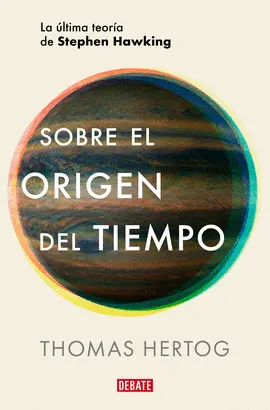
Sobre el Origen del Tiempo

Sobre el Origen del Tiempo

Thomas Hertog

El último discípulo de Stephen Hawking presenta los más recientes descubrimientos del astrofísico sobre el universo. «Un libro maravilloso sobre el mayor legado de Stephen Hawking».The Spectator Quizá la cuestión más importante que Stephen Hawking abordó en su extraordinaria carrera fue cómo el universo pudo desarrollar las condiciones perfectas para que surgiera la vida. Buscó...

No disponible

Q. 270

On The Origin Of Time

On The Origin Of Time

Thomas Hertog

NEW YORK TIMES BESTSELLER - Stephen Hawking's closest collaborator offers the intellectual superstar's final thoughts on the cosmos--a dramatic revision of the theory he put forward in A Brief History of Time."This superbly written book offers insight into an extraordinary individual, the creative process, and the scope and limits of our current understanding of the cosmos."--L...

No disponible

Q. 300