Saltar al contenido principal
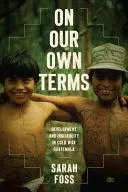
On Our Own Terms

On Our Own Terms

Development And Indigeneity In Cold War Guatemala

Foss, Sarah

During the Cold War, U.S. intervention in Latin American politics, economics, and society grew in scope and complexity, with diplomatic legacies evident in today's hemispheric policies. Development became a key form of intervention as government officials and experts from the United States and Latin America believed that development could foster hemispheric solidarity and secur...

Editorial:
University Of North Carolina
Año de edición:
2022
ISBN:
978-1-4696-7033-1
Páginas:
334
Q. 455
IVA incluido
No disponible
Añadir a favoritos Avisar disponibilidad

Sinopsis

During the Cold War, U.S. intervention in Latin American politics, economics, and society grew in scope and complexity, with diplomatic legacies evident in today's hemispheric policies. Development became a key form of intervention as government officials and experts from the United States and Latin America believed that development could foster hemispheric solidarity and security. In parts of Latin America, its implementation was especially intricate because recipients of these programs were diverse Indigenous peoples with their own politics, economics, and cultures. Contrary to project planners' expectations, Indigenous beneficiaries were not passive recipients but actively engaged with development interventions and, in the process, redefined racialized ideas about Indigeneity.u003cbru003e u003cbru003e u003cbru003e u003cbru003e Sarah Foss illustrates how this process transpired in Cold War Guatemala, spanning democratic revolution, military coups, and genocidal civil war. Drawing on previously unused sources such as oral histories, anthropologists' field notes, military records, municipal and personal archives, and a private photograph collection, Foss analyzes the uses and consequences of development and its relationship to ideas about race from multiple perspectives, emphasizing its historical significance as a form of intervention during the Cold War.u003cbru003e u003cbru003e

Artículos relacionados

Immigrant

Immigrant

Antil, Marcos

I am Marcos Antil, Guatemalan, Mayan Q'anjob'al, immigrant, family man, tech entrepreneur, founder of the company XumaK in the United States, Colombia and in Guatemala. With clients in more than twenty-five countries, which include companies from the Fortune 500. Born and raised in Santa Eulalia, Huehuetenango, Guatemala; at fourteen I migrated, undocumented, to the U.S.A. unac...

Disponible

Q. 210

State-Society Relations In Guatemala

State-Society Relations In Guatemala

Omar Sanchez-Sibony

By embedding Guatemala in recent conceptual and theoretical work in comparative politics and political economy, this volume advances knowledge about country's politics, economy, and state-society interactions. The contributors examine the stubborn realities and challenges afflicting Guatemala during the post-Peace-Accords-era across the following subjects: the state, subnationa...

Único ejemplar, sujeto
a disponibilidad

Q. 2.075

Agrotropolis

Agrotropolis

Way, J.t.

u003cpu003eIn u003ciu003eAgrotropolis,u003c/iu003e historian J. T. Way traces the developments of Guatemalan urbanization and youth culture since 1983. In case studies that bring together political economy, popular music, and everyday life, Way explores the rise of urban space in towns seen as quintessentially "rural" and showcases grassroots cultural assertiveness. In a post-r...

Disponible

Q. 410

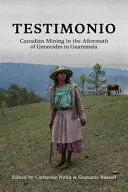
Testimonio

Testimonio

Nolin, Catherine / Russell, Grahame

What is land? A resource to be exploited? A commodity to be traded? A home to cherish? In Guatemala, a country still reeling from thirty-six years of US-backed state repression and genocides, dominant Canadian mining interests cash in on the transformation of land into "property," while those responsible act with near-total impunity. Editors Catherine Nolin and Grahame Russell ...

Disponible

Q. 290

The Woman On The Windowsill

The Woman On The Windowsill

Sellers-Garcia, Sylvia

A true story of violence and punishment that illuminates a transformative moment in Guatemalan history. On the morning of July 1, 1800, a surveyor and mapmaker named Cayetano Dâiaz opened the window of his study in Guatemala City to find a horrific sight: a pair of severed breasts. Offering a meticulously researched and evocative account of the quest to find the perpetrator and...

Disponible

Q. 590

Cuaresma y Semana Santa la Antigua Guatemala

Cuaresma y Semana Santa la Antigua Guatemala

Bell, Elizabeth

Learn about the largest celebration in the world for Holy Week with chapters on its history of the processions, the carpets, holy vigils, processions, sculptures, funeral marches, calendar and explanation of more than 60 activities and bibliography. Focus on the processions and sculptures through color photographs by Nelo Mijangos. ...

Disponible

Q. 110