Saltar al contenido principal
How Brands Become Icons

How Brands Become Icons

The Principles Of Cultural Branding

Douglas B. Holt

Coca-Cola. Harley-Davidson. Nike. Budweiser. Valued by customers more for what they symbolize than for what they do, products like these are more than brands--they are cultural icons. How do managers create brands that resonate so powerfully with consumers? Based on extensive historical analyses of some of America's most successful iconic brands, including ESPN, Mountain Dew, V...

Editorial:
Harvard Business School Press
Año de edición:
2004
ISBN:
978-1-57851-774-9
Páginas:
265
Q. 230
IVA incluido
No disponible
Añadir a favoritos Avisar disponibilidad

Sinopsis

Coca-Cola. Harley-Davidson. Nike. Budweiser. Valued by customers more for what they symbolize than for what they do, products like these are more than brands--they are cultural icons. How do managers create brands that resonate so powerfully with consumers? Based on extensive historical analyses of some of America's most successful iconic brands, including ESPN, Mountain Dew, Volkswagen, Budweiser, and Harley-Davidson, this book presents the first systematic model to explain how brands become icons. Douglas B. Holt shows how iconic brands create "identity myths" that, through powerful symbolism, soothe collective anxieties resulting from acute social change. Holt warns that icons can't be built through conventional branding strategies, which focus on benefits, brand personalities, and emotional relationships. Instead, he calls for a deeper cultural perspective on traditional marketing themes like targeting, positioning, brand equity, and brand loyalty--and outlines a distinctive set of "cultural branding" principles that will radically alter how companies approach everything from marketing strategy to market research to hiring and training managers. Until now, Holt shows, even the most successful iconic brands have emerged more by intuition and serendipity than by design. With How Brands Become Icons, managers can leverage the principles behind some of the most successful brands of the last half-century to build their own iconic brands. Douglas B. Holt is associate professor of Marketing at Harvard Business School.

Artículos relacionados

Unreasonable Hospitality: The Field Guide

Unreasonable Hospitality: The Field Guide

Guidara, Will

From the New York Times bestselling author, former co-owner of the #1 restaurant in the world, and co-producer of the Emmy Award-winning series The Bear comes the much-awaited interactive guide to putting the principles of Unreasonable Hospitality into action in your organization.With over one million copies sold to date, Will Guidara's book Unreasonable Hospitality issued a co...

Único ejemplar, sujeto
a disponibilidad

Q. 260

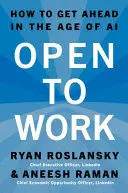
Open To Work

Open To Work

Ryan Roslansky / Aneesh Raman

Work is changing for everyone, everywhere. Standing still isn't an option. Ryan Roslansky and Aneesh Raman, CEO and Chief Economic Opportunity Officer at LinkedIn, show you how to take control of this moment with clarity and confidence. The future of work is not a distant horizon. It is being built right now. While some of us are experimenting and adapting with AI, most of us a...

Disponible

Q. 235

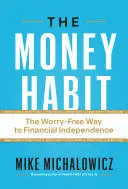
The Money Habit

The Money Habit

Mike Michalowicz

Money. What if you never had to worry about it again?In the follow-up to his international bestseller Profit First, entrepreneur and money expert Mike Michalowicz reveals how to achieve financial freedom by working with your natural habits rather than trying to change them. His Profit First model has already helped over a million businesses and entrepreneurs achieve financial i...

Único ejemplar, sujeto
a disponibilidad

Q. 310

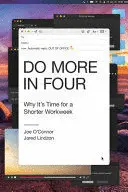
Do More In Four

Do More In Four

Joe O'connor / Jared Lindzon

An impassioned--and data-driven--case for a four-day workweek. The five-day workweek is a pillar of modern life, but it isn't backed by science, ancient wisdom, or divine decree. It's simply a relic of the industrial age--and it's time for an upgrade. What if we could accomplish more while working fewer days? A shortened workweek once seemed like a radical idea. Today, it's emb...

Disponible

Q. 295

Powered By Projects

Powered By Projects

Nieto-Rodriguez, Antonio

Rewire your organization--and your leadership--for a world driven by projects. It's time to stop treating projects as side work. In the age of constant transformation, projects are the primary way organizations create value and accelerate innovation. In this new paradigm--the project economy--traditional agile approaches are no longer enough. The next evolution is the project-d...

Disponible

Q. 330

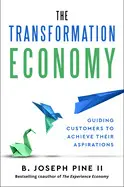
The Transformation Economy

The Transformation Economy

Pine, B. Joseph

From the author who defined the Experience Economy comes the next big shift: the Transformation Economy. A fundamental economic shift is emerging. Goods, services--even memorable experiences--are no longer enough to attract and keep your customers. Customers are clamoring to change, eager to reach their aspirations and to become better versions of themselves. Welcome to the Tra...

Disponible

Q. 330