Saltar al contenido principal
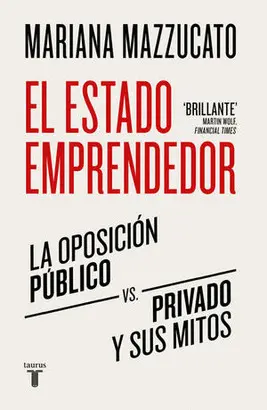
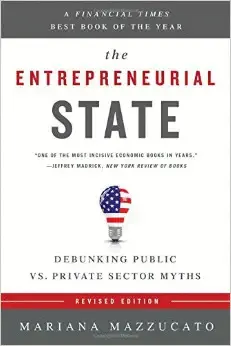
Entrepreneurial State

Entrepreneurial State

Mazzucato, Mariana

Companies like Google and Apple heralded the information revolution, and opened the doors for Silicon Valley to grow into an engine of dazzling technological development, that today champions the free market that engendered it against the supposedly stifling encroachment of government regulation. But is that really the case? In this sharp and controversial expose, The Entrepren...

Editorial:
Public Affairs
Materia:
Política
ISBN:
978-1-61039-613-4
Q. 175
IVA incluido
No disponible
Añadir a favoritos Avisar disponibilidad

Sinopsis

Companies like Google and Apple heralded the information revolution, and opened the doors for Silicon Valley to grow into an engine of dazzling technological development, that today champions the free market that engendered it against the supposedly stifling encroachment of government regulation. But is that really the case? In this sharp and controversial expose, The Entrepreneurial State, Mariana Mazzucato debunks the pervasive myth that the state is a laggard, bureaucratic apparatus at odds with a dynamic private sector. Instead she reveals in case study after case study that, in fact, the opposite is true: the state is our boldest and most valuable innovator.

The technology revolution would never have happened without support from the US Government. The breakthroughs—GPS, touch-screen displays, the Internet, and voice-activated AI—that enabled legendary Apple products to be smart successes were, in fact, all developed with support from the state. Mazzucato reveals that many successful entrepreneurs like Steve Jobs integrated state-funded technological developments into their products and then reaped the rewards themselves. The algorithm behind Google's search engine was initially sponsored by NASA. And 75% of NMEs—new, often-ground-breaking drugs not derivative of existing substances—trace their research to National Institutes of Health (NIH) labs. The American government, it turns out, has been enormously successfully at stimulating scientific and technological advancement.

But by 2009, just some months following the Great Recession—the US government, constrained by austerity measures, started disinvesting from its holdings in research fields like health, energy, electronics. The trend is likely to continue, and the repercussions of these policies could wreak havoc on our technology and science sectors. But Mazzucato remains optimistic. If managed correctly, state-sponsored development of Green technology, for instance, could be as efficacious as suburbanization & post-war reconstruction in the mid-twentieth century, and unleash a wide-spread golden age in the global economy.

The limitations of natural resources and the threat of global warming could become the most powerful driver of growth, employment, and innovation within just one generation—but to be successful, the Green Revolution will depend on the initiatives of proactive governments. By not admitting the State's role in economic and technological progress, we are socializing only the risks of investing in innovation, while privatizing the rewards in the hands of only a few businesses. This, Mazzucato argues, hurts both future of innovation and equity in modern-day capitalism.

For policy-makers, Silicon Valley start-up founders, venture-capitalists, and economists alike, The Entrepreneurial State stirs up much needed debate and offers up a brilliant corrective to spurious beliefs: to thrive, American businesses have always and will need to depend on the support of our country's most audacious entrepreneur, the state.

Artículos relacionados

El Iv Reich

El Iv Reich

Cardeñosa, Bruno

Cuando Hitler se suicidó, dejó dicho que en el futuro llegaría un IV Reich... ¿Ha llegado ese tiempo? ¿Es Donald Trump el líder de esa nueva corriente de Ilustración oscura?Después de su llegada al poder, en abril de 2025, creyéndose un nuevo dios del mundo, Trump puso en marcha el mayor ataque al comercio que se ha efectuado tras la segunda guerra mundial. Aunque se ha echado ...

Disponible

Q. 170

Rusia Contra el Mundo

Rusia Contra el Mundo

Marc Marginedas

Más de dos décadas de terrorismo de Estado, secuestros, mafia y propagandaTras la caída de la Unión Soviética en 1991, Rusia era un país empobrecido y caótico que parecía destinado a la irrelevancia internacional. Pero bajo el liderazgo de Vladímir Putin, ha recuperado una influencia que desafía el orden global. ¿Qué sostiene este «imperio» que con los años ha derivado hacia el...

Disponible

Q. 170

Todos los que se Han Ido Están Aquí

Todos los que se Han Ido Están Aquí

Jonathan Blitzer

LIBRO DEL AÑO PARA THE NEW YORK TIMES,THE NEW YORKER, CHICAGO TRIBUNE Y NEWSWEEK FINALISTA DEL PREMIO BAILLIE GIFFORD SELECCIÓN DE LA LISTA DE LECTURAS DE VERANODE BARACK OBAMA Jonathan Blitzer, periodista de The New Yorker, ha cubierto la crisis migratoria en la frontera sur de Estados Unidos durante casi una década, pero la emergencia actual es el desenlace de una historia mu...

Disponible

Q. 255

La Otra Guerra Fría

La Otra Guerra Fría

González Férriz, Ramón

Durante la guerra fría se enfrentaron dos visiones del mundo irreconciliables: el capitalismo y el comunismo. Fue un conflicto político, económico y militar. Pero también un choque cultural y simbólico. Las dos partes, lideradas por Washington y Moscú, querían ganar la batalla de las ideas. Y para ello dedicaron una gran cantidad de recursos, en forma de dinero, espionaje, dipl...

Único ejemplar, sujeto
a disponibilidad

Q. 215

Escritos Sobre el Colonialismo

Escritos Sobre el Colonialismo

Weil, Simone

La presente edición reúne ensayos, artículos y fragmentos inéditos que Simone Weil (1909-1943) dedicó a la reflexión sobre la cuestión colonial desde 1936 hasta el final de su vida.Voz pionera del anticolonialismo, su pensamiento va más allá de la crítica de la dominación colonial (que sitúa en el diagnóstico de una política basada en una visión estatalista, imperialista y euro...

Disponible

Q. 150

El Imperio de la Sombra

El Imperio de la Sombra

El Grand Continent

Un manifiesto político para el siglo de la inteligencia artificial. Con contribuciones de grandes pensadores como Daron Acemoglu, Sam Altman, Marc Andreessen, Mario Draghi, Peter Thiel o Svetlana Tijanóvskaya. En el escenario: Donald Trump, Vladímir Putin, Xi Jinping. Una fiebre planetaria —y el riesgo real de una explosión global—. El espectáculo impresiona, pero ¿qué ocurre ...

Disponible

Q. 240

Otros libros del autor

Misión Economía

Misión Economía

Mazzucato, Mariana

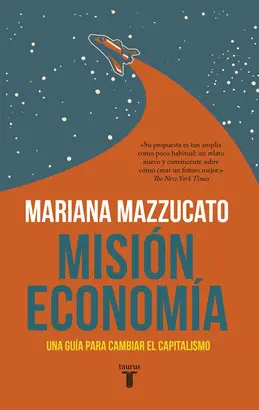
¿Y si aplicáramos a nuestros problemas actuales el espíritu, la audacia y los medios que nos llevaron a la Luna? Una crítica contundente y muy necesaria del capitalismo moderno en la que la galardonada economista internacional sostiene que, para resolver las crisis a las que nos enfrentamos, debemos ser innovadores. Llegar a la Luna fue un extraordinario logro que requirió n...

Disponible

Q. 230

El Valor de las Cosas

El Valor de las Cosas

Mazzucato, Mariana

¿En qué mundo queremos vivir? Mariana Mazzucato, la economista del momento, prende la mecha de un debate necesario. «Mucho ojo con Mazzucato, la economista más temible del mundo.»Helen Rumbelow, The Times ¿Quién crea realmente la riqueza? ¿Qué actividades la impulsan? ¿Cuáles se limitan a extraerla? ¿Cuáles la destruyen? Nuestras economías tienden a premiar la extracción de ...

Único ejemplar, sujeto
a disponibilidad

Q. 260

El Estado Emprendedor

El Estado Emprendedor

Mazzucato, Mariana

Suele pensarse que es mejor dejar la innovación en manos de los empresarios dinámicos del sector privado, y que el Estado, ese ente anquilosado? debería mantenerse al margen. En El Estado emprendedor, su libro más emblemático, Mariana Mazzucato desmonta este falso mito para demostrar que el Estado, lejos de limitarse a intervenir en el mercado para subsanar posibles errores o a...

Único ejemplar, sujeto
a disponibilidad

Q. 210