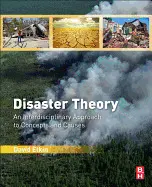
Disaster Theory
And Interdisciplinary Approach To Concepts And Causes.
David Etkin
Marc Notes:'Disaster Theory' offers a theoretical background in the important topics related to understanding disaster. Drawing on related disciplines including sociology, risk theory, and seminal research on disasters and emergency management, 'Disaster Theory' clearly lays out the conceptual framework of the emerging field of disaster studies. Tailored to the needs of advance...
Sinopsis
Marc Notes:
'Disaster Theory' offers a theoretical background in the important topics related to understanding disaster. Drawing on related disciplines including sociology, risk theory, and seminal research on disasters and emergency management, 'Disaster Theory' clearly lays out the conceptual framework of the emerging field of disaster studies. Tailored to the needs of advanced undergraduates and graduate students, this unique text also makes an ideal capstone for students who have already been introduced to the fundamentals of emergency management.
Review Quotes:
"Professor David Etkin has developed a standout text that not only provides foundational information but does so in such a way as to actively engage students to gain a deeper understanding of the material, encouraging them to contemplate and learn more, rather than simply absorb what is given." --Jane Kushma, Doctoral Program Director, Department of Emergency Management, Jacksonville State University
"["Disaster Theory"] is rather a very broad, sweeping analysis and eclectic tour of the field of disaster studies, both local and global, ancient and modern, theoretical and practical...[It] draws upon an impressive range of fields and literature to raise questions about disasters."
--Ian Burton, Scientist Emeritus, Meteorological Service of Canada; Emeritus Professor, University of Toronto
Table of Contents:
Foreword by Ian Burton
1. What is a Disaster?
2. Disaster Data (with Susan MacGregor)
3. Disaster Risk
4. Hazard, Vulnerability, and Resilience
5. Disasters and Complexity
6. Disaster Models
7. Myths and Fallacies
8. The Poetry of Disaster
9. Ethics and Disaster (with Peter Timmerman)
10. Workshop on Principles of Disaster Management (with Ian Davis)
11. Final Reflections
Appendix I
Appendix II: Statistics Canada
Appendix III: Interviews with Ian Burton and Ken Hewitt
Publisher Marketing:
"Disaster Theory: An Interdisciplinary Approach to Concepts and Causes "offers the theoretical background needed to understand what disasters are and why they occur. Drawing on related disciplines, including sociology, risk theory, and seminal research on disasters and emergency management, "Disaster Theory" clearly lays out the conceptual framework of the emerging field of disaster studies. Tailored to the needs of advanced undergraduates and graduate students, this unique text also provides an ideal capstone for students who have already been introduced to the fundamentals of emergency management. "Disaster Theory" emphasizes the application of critical thinking in understanding disasters and their causes by synthesizing a wide range of information on theory and practice, including input from leading scholars in the field.
Offers the first cohesive depiction of disaster theoryIncorporates material from leading thinkers in the field, as well as student exercises and critical thinking questions, making this a rich resource for advanced coursesWritten from an international perspective and includes case studies of disasters and hazards from around the world for comparing the leading models of emergency responseChallenges the reader to think critically about important questions in disaster management from various points of view
Contributor Bio: Etkin, David
David Etkin is assistant professor and coordinator of the Program in Emergency Management at York University.
Comentarios
Sé el primero en comentar este libroArtículos relacionados