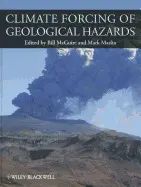
Climate Forcing Of Geological Hazards
Mark Maslin & Bill Macguire
Review Quotes:"Further, this book convincingly demonstrates the need for greater inclusion of the geoscience research community in discussions on climate change adaptation and disaster risk reduction planning." ("Geological Journal", 25 February 2014)"I heartily recommend this book. We all have a stake in surviving climate change." ("International Journal of Environmental Studi...
Sinopsis
Review Quotes:
"Further, this book convincingly demonstrates the need for greater inclusion of the geoscience research community in discussions on climate change adaptation and disaster risk reduction planning." ("Geological Journal", 25 February 2014)
"I heartily recommend this book. We all have a stake in surviving climate change." ("International Journal of Environmental Studies", 20July 2013)
"There is useful and interesting material in the book, very much worthy of attention..." ("Geology Today", 1 May 2013)
Jacket Description/Back:
"Climate Forcing of Geological Hazards" provides a valuable new insight into how climate change is able to influence, modulate and trigger geological and geomorphological phenomena, such as earthquakes, tsunamis, volcanic eruptions and landslides; ultimately increasing the risk of natural hazards in a warmer world. Taken together, the chapters build a panorama of a field of research that is only now becoming recognized as important in the context of the likely impacts and implications of anthropogenic climate change. The observations, analyses and interpretations presented in the volume reinforce the idea that a changing climate does not simply involve the atmosphere and hydrosphere, but also elicits potentially hazardous responses from the solid Earth, or geosphere.
"Climate Forcing of Geological Hazards" is targeted particularly at academics, graduate students and professionals with an interest in environmental change and natural hazards. As such, we are hopeful that it will encourage further investigation of those mechanisms by which contemporary climate change may drive potentially hazardous geological and geomorphological activity, and of the future ramifications for society and economy.
Table of Contents:
List of Contributors
ForewordBill McGuire and Mark Maslin
Chapter 1: Hazardous responses of the solid Earth to a changingclimateBill McGuire
Chapter 2: Future climate changes in the context of geologicaland geomorphological hazardsFelicity Liggins, Richard Betts and Bill McGuire
Chapter 3: Climate change and collapsing volcanoes: evidencefrom Mount Etna, SicilyKim Deeming, Bill McGuire and Paul Harrop
Chapter 4: Melting ice and volcanic hazards in the twenty-firstcenturyHugh Tuffen
Chapter 5: Multiple effects of ice load changes and associatedstress change on magmatic systemsFreysteinn Sigmundsson and others
Chapter 6: Response of faults to climate-driven changes in iceand water volumes at the surface of the EarthAndrea Hampel, Ralf Hetzel and Georgios Maniatis
Chapter 7: Does the El-Nino - Southern Oscillationand influence earthquake activity in the eastern tropicalPacific?Serge Guillas, Simon Day and Bill McGuire
Chapter 8: Submarine landslides and tsunamis in a changingclimateDave Tappin
Chapter 9: Heat waves and slope stability in high mountainterrainChristian Huggel and others
Chapter 10: Impacts of recent and future climate change onnatural hazards in the European AlpsJasper Knight, Margreth Keiler and Stephan Harrison
Chapter 11: Assessing the past and future stability of globalgas hydrate reservoirsMark Maslin, Matthew Owen, Richard Betts, Simon Day, Tom DunkleyJones and Andrew Ridgwell
Chapter 12: Methane hydrate instability: a view from thePalaeogeneTom Dunkley Jones, Andrew Ridgwell, D. J. Lunt, Mark Maslin, D. N.Schmidt and Paul Valdez
Index
Brief Description:
"This book addresses a wide range of issues relating to the ways in which climate change may force geological and geomorphological hazards"--Provided by publisher.
Review Quotes:
"There is useful and interesting material in the book, very much worthy of attention..." ("Geology Today", 1 May 2013)
Review Quotes:
"I heartily recommend this book. We all have a stake in surviving climate change." ("International Journal of Environmental Studies", 20July 2013)
"There is useful and interesting material in the book, very much worthy of attention..." ("Geology Today", 1 May 2013)
Marc Notes:
Originating from a theme issue published in Philosophical transactions A: mathematical, physical and enginering sciences.; Includes bibliographical references and index.; This book addresses a wide range of issues relating to the ways in which climate change may force geological and geomorphological hazards--Provided by publisher..
Review Quotes:
"Overall, this publication should be on the bookshelf ofgeologists, physical geographers, hydrologists, ecologists, environmental scientists, politicians, and anyone interested orinvolved in climate change. The wealth of concise information makesit an excellent reference for teaching the interdisciplinaryaspects of environmental science and climate change." ("Int. J. Environment and Pollution," 1 October 2013)
"Further, this book convincingly demonstrates the need forgreater inclusion of the geoscience research community indiscussions on climate change adaptation and disaster riskreduction planning." ("Geological Journal," 25February 2014)
"I heartily recommend this book. We all have a stake insurviving climate change." ("International Journal ofEnvironmental Studies," 20July 2013)
"There is useful and interesting material in the book, very muchworthy of attention..." ("Geology Today," 1May 2013)
Biographical Note:
Bill McGuire is Professor of Geophysical and ClimateHazards at University College London. In 2005 he was a member ofthe UK Government's Natural Hazards Working Group, established inthe wake of the Indian Ocean tsunami, and in 2010 was part of theGovernment Scientific Advisory Group for Emergencies, set up toaddress the ash problem associated with the IcelandicEyjafjallajokull eruption. He is a contributing author of the2012 IPCC report on climate change and extreme events.
Mark Maslin is Professor of Palaeoclimatology andClimate Change at University College London. He is a leadingscientist with particular expertise in past and future global andregional climatic change and has published over 120 papers injournals such as "Science," "Nature," and "Geology."He is a Royal Society Wolfson Research Merit Scholar and currentlyholds a Royal Society Industrial Fellowship.
Contributor Bio: McGuire, Bill
With a wide range of clients, including Nickelodeon and Disney World, Bill McGuire has been a professional illustrator for more than fifteen years. After earning a degree in illustration from Furman University, he started out making vinyl signs and corporate logos. Today, he specializes in comic art, animation, and his favorite, character development.
Contributor Bio: Maslin, Mark
Mark Maslin is Associate Professor at the Environmental Change Research Center in the Department of Geography at the University of London.
Comentarios
Sé el primero en comentar este libroArtículos relacionados