Saltar al contenido principal
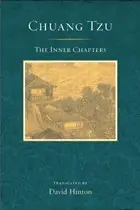
Chuang Tzu

Chuang Tzu

David Hinton

Revered for millennia in the Chinese spiritual tradition, Chuang Tzu stands alongside the Tao Te Ching as a founding classic of Taoism. The Inner Chapters are the only sustained section of this text widely believed to be the work of Chuang Tzu himself, dating to the fourth century B.C.E. Witty and engaging, spiced with the lyricism of poetry, Chuang Tzu's Taoist insights are ti...

Editorial:
Soft Skull Press
ISBN:
978-1-61902-443-4
Páginas:
144
Encuadernación:
TAPA BLANDA
Q. 150
IVA incluido
No disponible
Añadir a favoritos Avisar disponibilidad

Sinopsis

Revered for millennia in the Chinese spiritual tradition, Chuang Tzu stands alongside the Tao Te Ching as a founding classic of Taoism. The Inner Chapters are the only sustained section of this text widely believed to be the work of Chuang Tzu himself, dating to the fourth century B.C.E. Witty and engaging, spiced with the lyricism of poetry, Chuang Tzu's Taoist insights are timely and eternal, profoundly concerned with spiritual ecology. Indeed, the Tao of Chuang Tzu was a wholesale rejection of a human-centered approach. Zen traces its sources back to these Taoist roots - roots at least as deep as those provided by Buddhism.

But this is an ancient text that yields a surprisingly modern effect. In bold and startling prose, David Hinton's translation captures the "zany texture and philosophical abandon" of the original. The Inner Chapters' fantastical passages - in which even birds and trees teach us what they know - offer up a wild menagerie of characters, freewheeling play with language, and surreal humor. And interwoven with Chuang Tzu's sharp instruction on the Tao are short-short stories that are often rough and ribald, rich with satire and paradox.

On their deepest level, the Inner Chapters are a meditation on the mysteries of knowledge itself. "Chuang Tzu's propositions," the translator's introduction reminds us, "seem to be in constant transformation, for he deploys words and concepts only to free us of words and concepts." Hinton's vital new translation makes this ancient text from the golden age of Chinese philosophy come alive for contemporary readers.
down Contributor Bio(s)
?

Artículos relacionados

100 Fragmentos del Mundo Clásico

100 Fragmentos del Mundo Clásico

Hernández De La Fuente, David

Un compendio fascinante de mitos, leyendas y realidades históricas¿Existió la ciudad de la Atlántida? ¿Pronunció Julio César las famosas palabras «¿Tú también, hijo?», antes de morir? A veces, la narración patrimonial y literaria difiere de los hechos. Así, este libro, escrito con afán divulgativo, pretende transitar por la delgada línea roja que separa los relatos de tintes le...

Disponible

Q. 150

Érase una Vez Tenochtitlán

Érase una Vez Tenochtitlán

Rosas, Alejandro

Aunque nos separan siete siglos, mexicas y chilangos compartimos un pasado común escrito sobre un lugar donde alguna vez hubo un lago. La historia de Tenochtitlán es el preludio de la historia de la Ciudad de México y ha llegado la hora de mirarla a través de sus dioses y tlatoanis. Este es un relato al más puro estilo de Game of Thrones, pero mexica y verídico, en el que, mie...

Disponible

Q. 190

Fernando el Católico

Fernando el Católico

Belenguer, Ernest

La cara oculta, tras la larga sombra de Isabel, del reinado que reconfiguró el mapa político del mundo e inauguró el Renacimiento.En 1469, Isabel I de Castilla y Fernando II de Aragón contrajeron matrimonio tras firmar las Capitulaciones de Cervera, mucho más favorables para Isabel que para Fernando. De alguna manera, el espíritu de ese acuerdo ha llegado hasta la historiograf...

Disponible

Q. 200

El Temperamento Revolucionario

El Temperamento Revolucionario

Darnton, Robert

¿Qué llevó a Francia a la Revolución? Un ensayo excepcional sobre el temperamento responsable de cambiar el curso de la Historia. «Este libro es, sencillamente, un festín que, gracias a su magnífica narración, es fácil de digerir». Gerard de Groot, The Times Cuando una multitud asaltó la Bastilla en julio de 1789, se cerró una etapa histórica y nació un mundo nuevo. La mayoría ...

Disponible

Q. 470

Las Mujeres que Empuñaron la Espada

Las Mujeres que Empuñaron la Espada

Bendriss, Ernest Y.

Guerreras olvidadas. Heroínas silenciadas. Durante siglos, la historia de la guerra ha sido contada de forma casi exclusiva en masculino. Pero desde los campos de batalla de la Antigüedad hasta las trincheras de la Segunda Guerra Mundial, miles de mujeres empuñaron armas, lideraron ejércitos y combatieron en primera línea, ignorando los roles que sus tiempos les imponían. Un vi...

Disponible

Q. 275

Las Entrevistas de Núremberg

Las Entrevistas de Núremberg

Goldensohn, Leon

Un documento único: la transcripción de las conversaciones que mantuvo Leon Goldensohn, psiquiatra del Ejército Estadounidense, con los principales encausados en el proceso de Núremberg. En 1946, con los juicios de Núremberg en marcha, el psiquiatra del ejército estadounidense Leon Goldensohn recibió el encargo de entrevistar a dos docenas de líderes alemanes encausados, así co...

Disponible

Q. 390

Otros libros del autor

Analects

Analects

David Hinton

While Confucius failed in his lifetime to rescue a crumbling civilization with his teachings, he was to become the most influential sage in human history. His thought, still remarkably current and even innovative after 2500 years, survives here in The Analects - a collection of brief aphoristic sayings that has had a deeper impact on more people's lives over a longer period of ...

No disponible

Q. 150